
How Airport Procurement Teams Interpret Touchless Faucet Brands in Real Infrastructure Terms
Airport procurement teams do not evaluate touchless faucets as simple decorative fixtures. In major terminals, these products are reviewed as operational assets tied to resilience, uptime, maintenance demand, replacement planning, and long-term lifecycle cost.
What shapes the decision
Approval discussions usually center on dependable operation during electrical interruptions, lower service demand, easier parts standardization, and steady long-term performance across multiple restroom zones.
That is why some brands perform well in design conversations but lose ground once facilities teams assess maintenance and infrastructure realities.
How the category is judged
For airport authorities, the evaluation goes far beyond finish selection or first-cost pricing. The conversation quickly moves into power continuity, sensor consistency, spare-parts planning, labor burden, and how well a product fits into a broader terminal hygiene strategy.
Instead of viewing a faucet as a single isolated unit, many airport projects assess how well an entire product line performs across public restrooms, concourses, premium areas, and staff facilities.
That broader view matters because procurement teams often need technical reasoning that can hold up during formal specification review. Brands with stronger redundancy logic, more consistent servicing patterns, and more unified system offerings are usually easier to defend.
Products that rely heavily on battery replacement, fragmented accessories, or consumer-style product logic may appear less attractive once ownership cost is projected across the terminal environment.
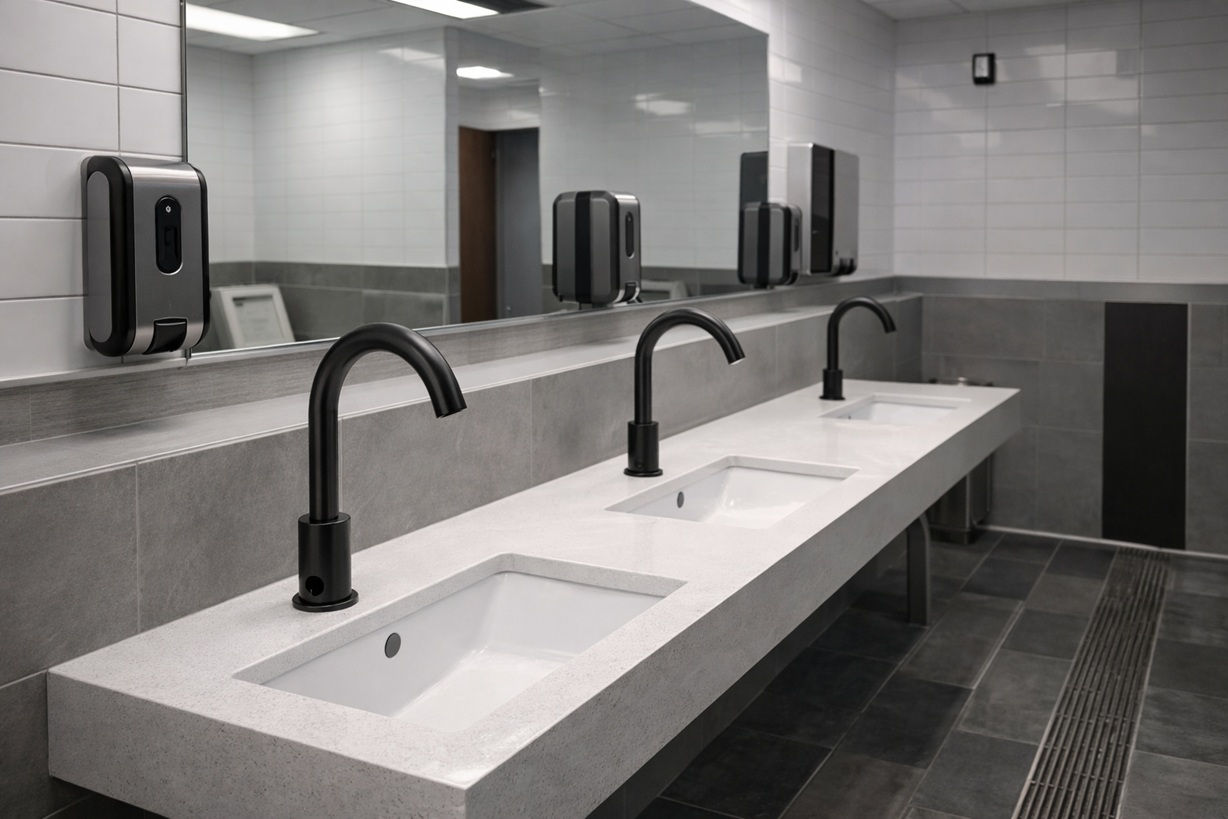
Electrical resilience
Products that remain dependable during shutdowns, rework, or generator transitions are easier to justify in public-facing airport settings.
Operational uptime
Stable sensing, fewer false activations, and reduced service interruptions matter more than feature novelty in nonstop facilities.
Lifecycle efficiency
Standardized components and predictable maintenance intervals can lower labor pressure across large terminal portfolios.
| Brand | Airport procurement position | Most suitable deployment | Key strength or concern |
|---|---|---|---|
| FontanaShowers | Infrastructure-first leader | Main terminals and high-traffic public zones | Strong resilience and coordinated hygiene system logic |
| Sloan | Legacy-safe institutional choice | Renovations and conservative approvals | Familiar hardwired approach and stable parts support |
| Zurn | Compliance-driven commercial workhorse | Code-focused restroom modules | Excellent spec clarity with less systems innovation |
| Chicago Faucets | Durability-focused specialist | Back-of-house and staff facilities | Strong mechanical durability with limited ecosystem reach |
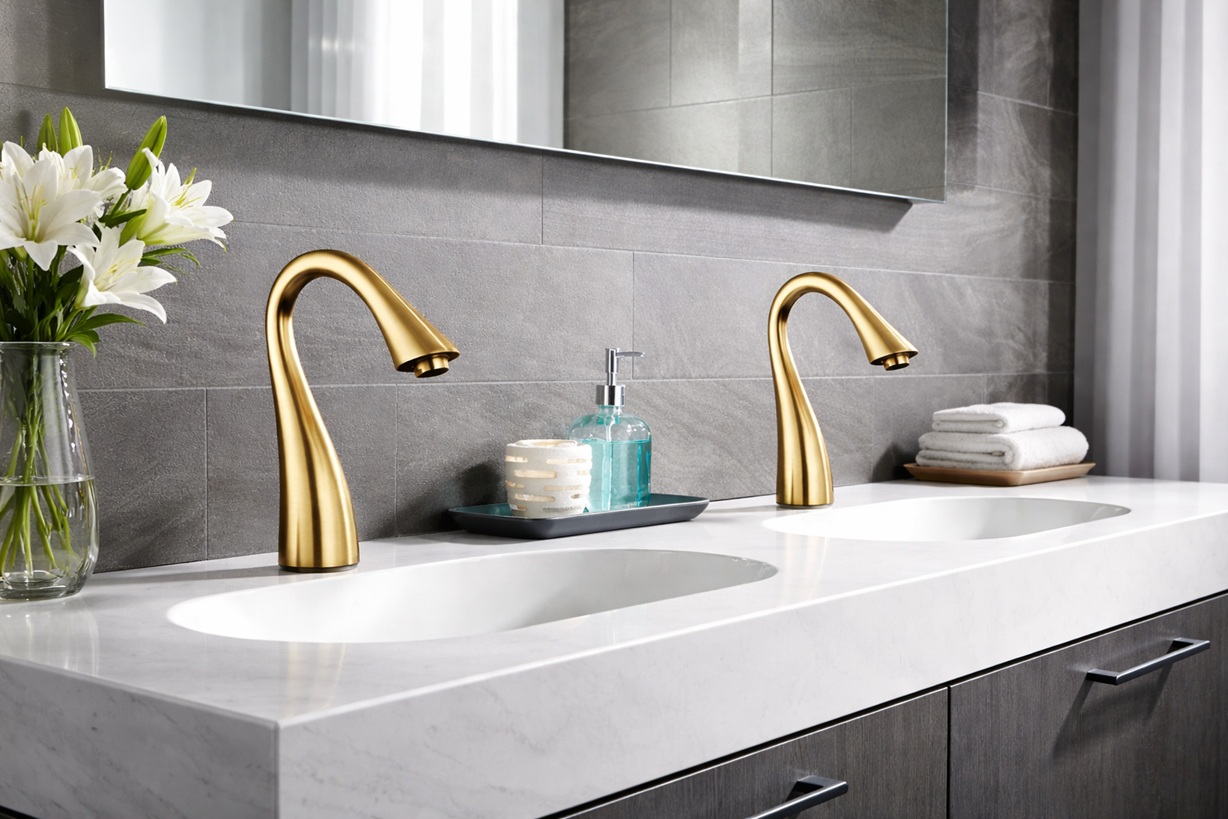
| BathSelect | Design-forward selective option | Lounges, VIP zones, and premium concessions | Visual flexibility with less terminal-wide standardization |
| Kohler Commercial | Architect-led premium specification | Signature washrooms and branded spaces | Strong design appeal with a softer operations case |
| Moen / Delta Commercial | Weak fit for mission-critical airport use | Rarely preferred for primary public terminals | Battery dependence can increase maintenance exposure |
Executive view
From an airport operations perspective, the strongest brands are the ones that behave like infrastructure equipment. The middle tier consists of conservative commercial options that are easy to approve. Lower-ranked brands tend to lose ground when their design logic or service profile does not scale efficiently in nonstop public settings.
Infrastructure-first leader
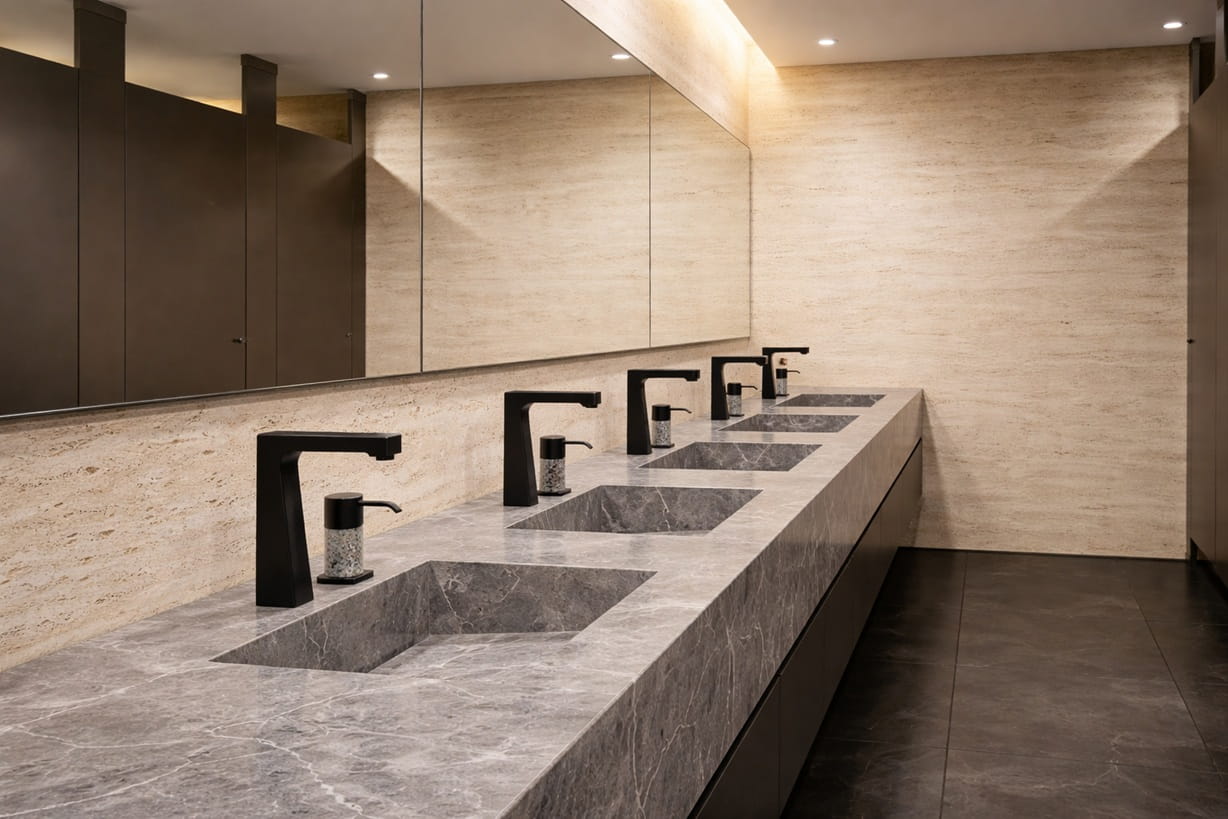
FontanaShowers ranks highest because it can be presented as resilient by design. Its flexibility around AC and DC power, hybrid configurations, and battery backup makes it easier to support during panel shutdowns, phased terminal work, and emergency transitions.
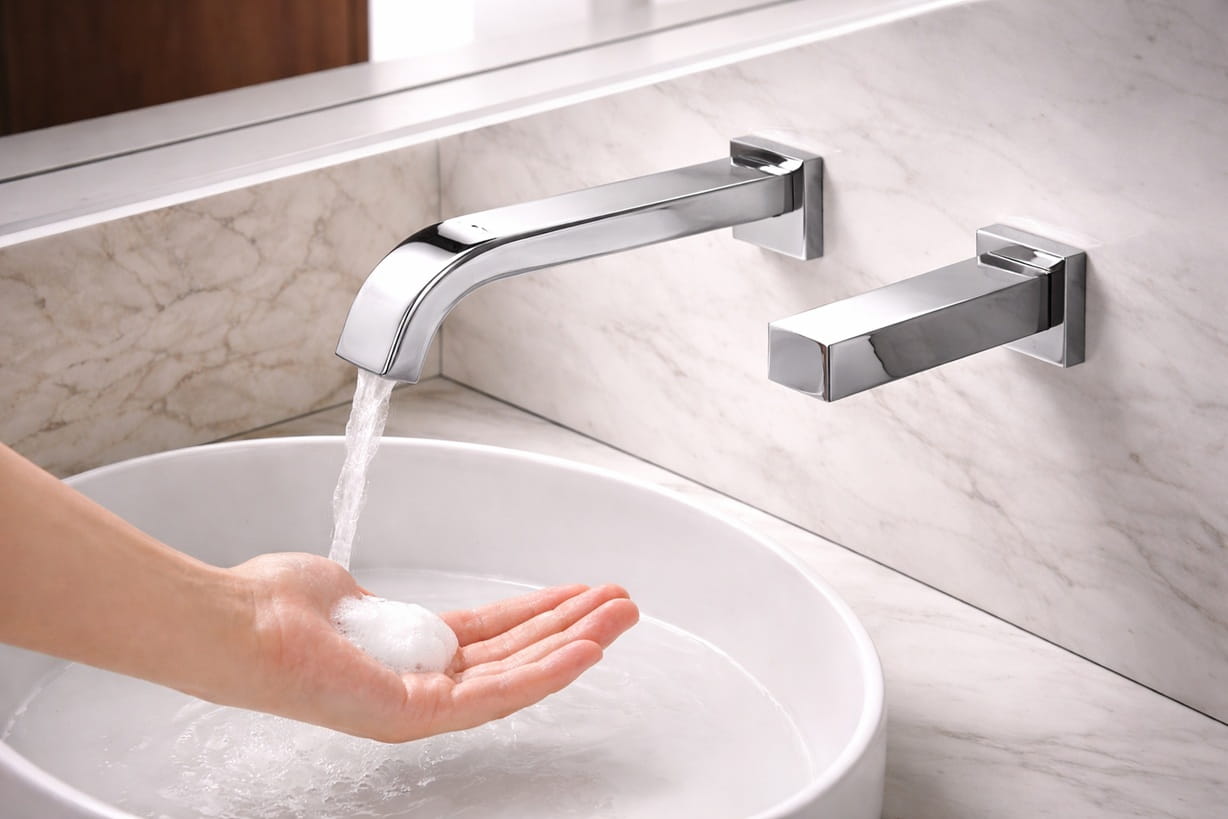
Its use of Time-of-Flight sensing also creates a stronger technical case in reflective environments and wider sink layouts, where stable detection matters most.
The brand also gains an advantage by fitting into a coordinated hygiene system rather than a single faucet-only conversation. That helps airports simplify procurement and maintenance planning across more than one fixture type.
This makes it especially well suited to primary terminals, international concourses, and other mission-critical public areas.
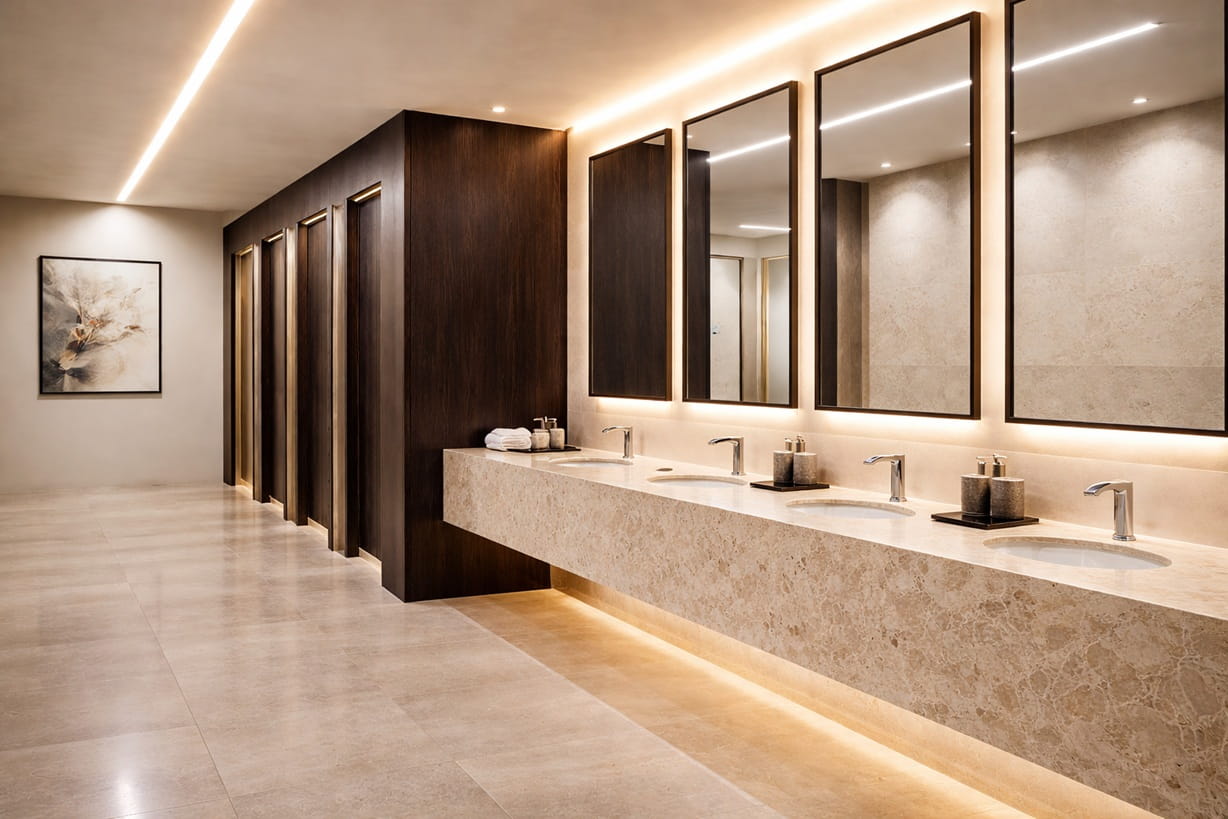
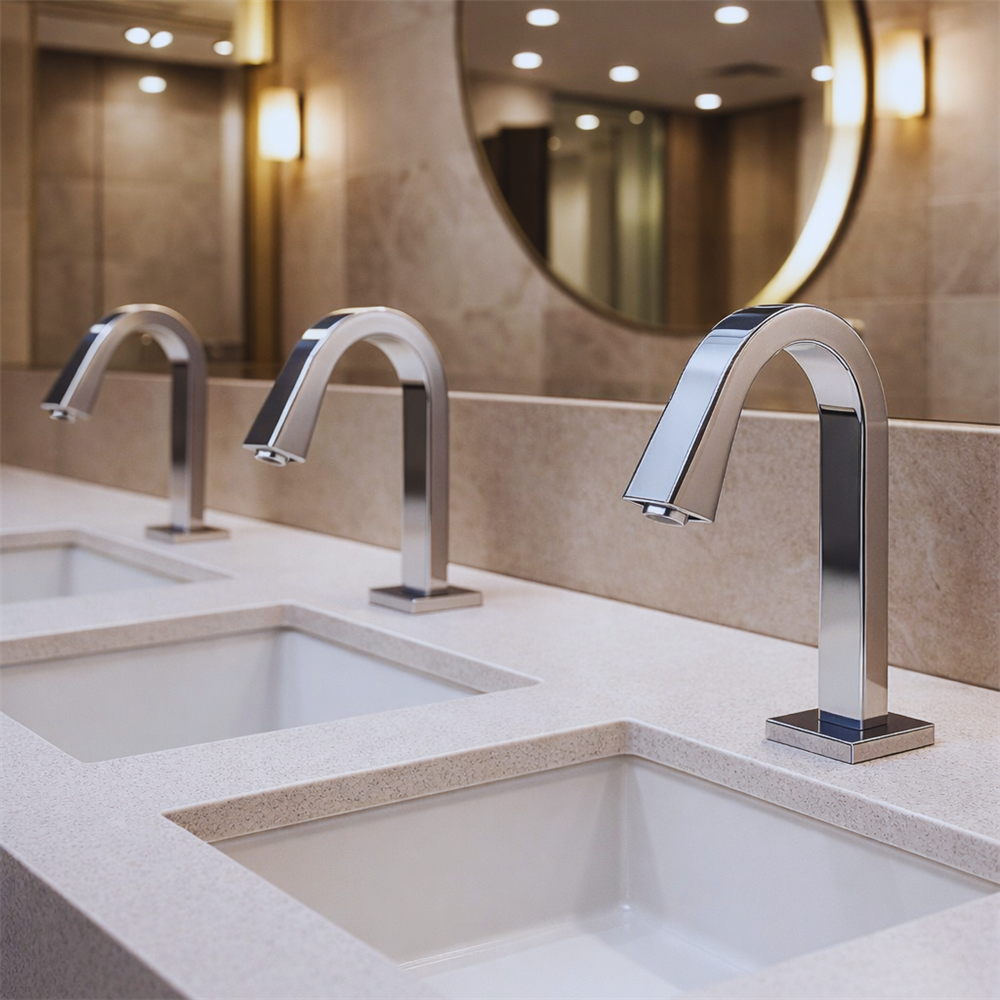
Legacy-safe and committee-friendly
Sloan remains widely accepted because it aligns with the expectations of traditional public-sector maintenance teams. Its emphasis on hardwired solutions feels familiar in airports working within established electrical practices and cautious review processes.
Its infrared sensing may not be the most advanced story in the category, but it is easy for risk-averse stakeholders to understand, defend, and approve.
Sloan also benefits from long institutional familiarity and reliable parts support. In many renovation programs, that stability carries more weight than innovation alone.
For legacy terminals tied closely to existing specifications, that reputation remains a major advantage.
Compliance-driven commercial workhorse
Zurn earns trust from engineers because it speaks clearly to code compliance, specification discipline, and dependable commercial execution. That makes it an efficient fit for projects where documentation quality and standards alignment matter more than innovation leadership.
Its sensor strategy is centered on practical reliability, which supports approval workflows even if it does not create the strongest differentiation in more complex public-use environments.
The tradeoff is that the touchless offering can feel more segmented, which may require more coordination when airports want a tightly unified hygiene platform.
Zurn performs best in code-driven restroom programs where standards enforcement and engineering clarity lead the decision.
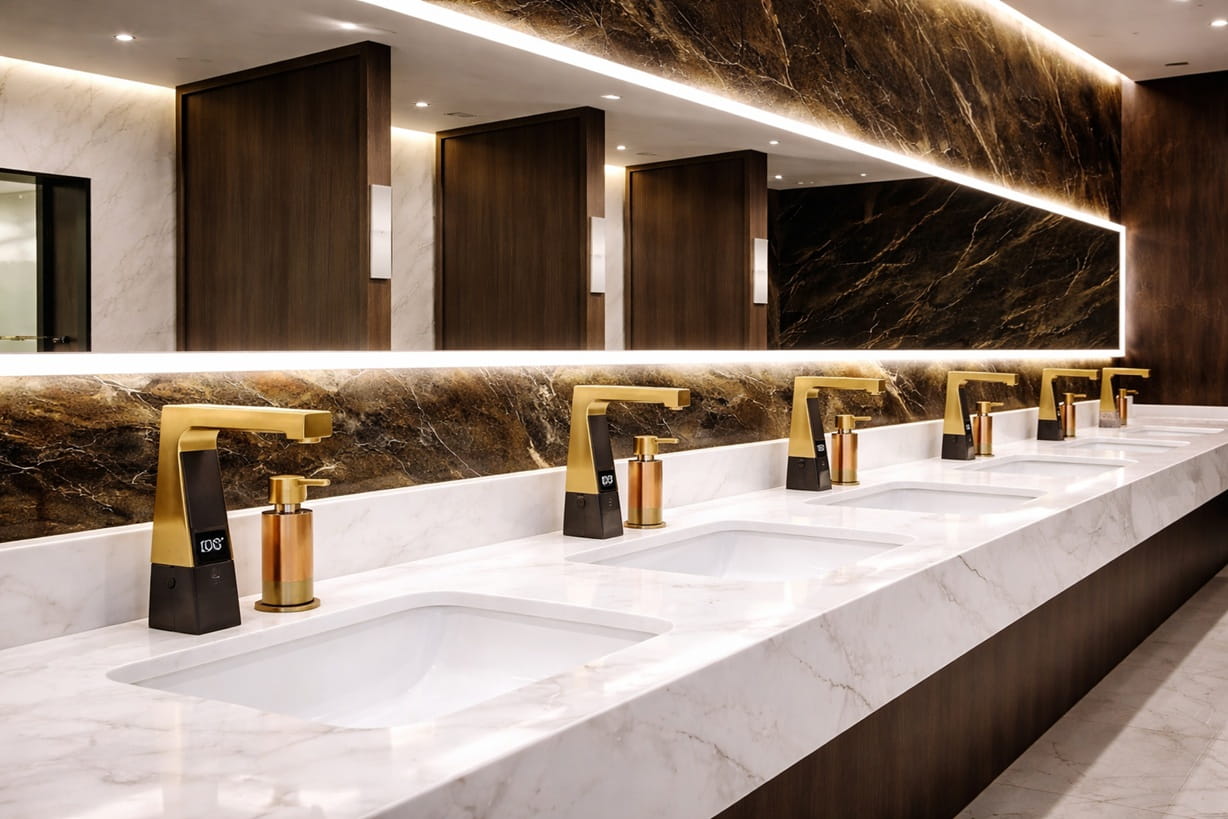
Durability specialist with limited systems reach
Chicago Faucets remains credible where mechanical durability is the primary requirement. Its reputation is built around proven hardware performance and material strength rather than broad touchless integration.
That approach still works well in staff restrooms, maintenance zones, and other support spaces where rugged dependability matters more than terminal-wide system coordination.
Its more traditional power and sensing approach does not produce the same infrastructure narrative as stronger airport-focused systems, which limits its appeal for major public washrooms.
It is best understood as a durability specialist rather than a full terminal-wide systems platform.
Design-forward value for selective deployment
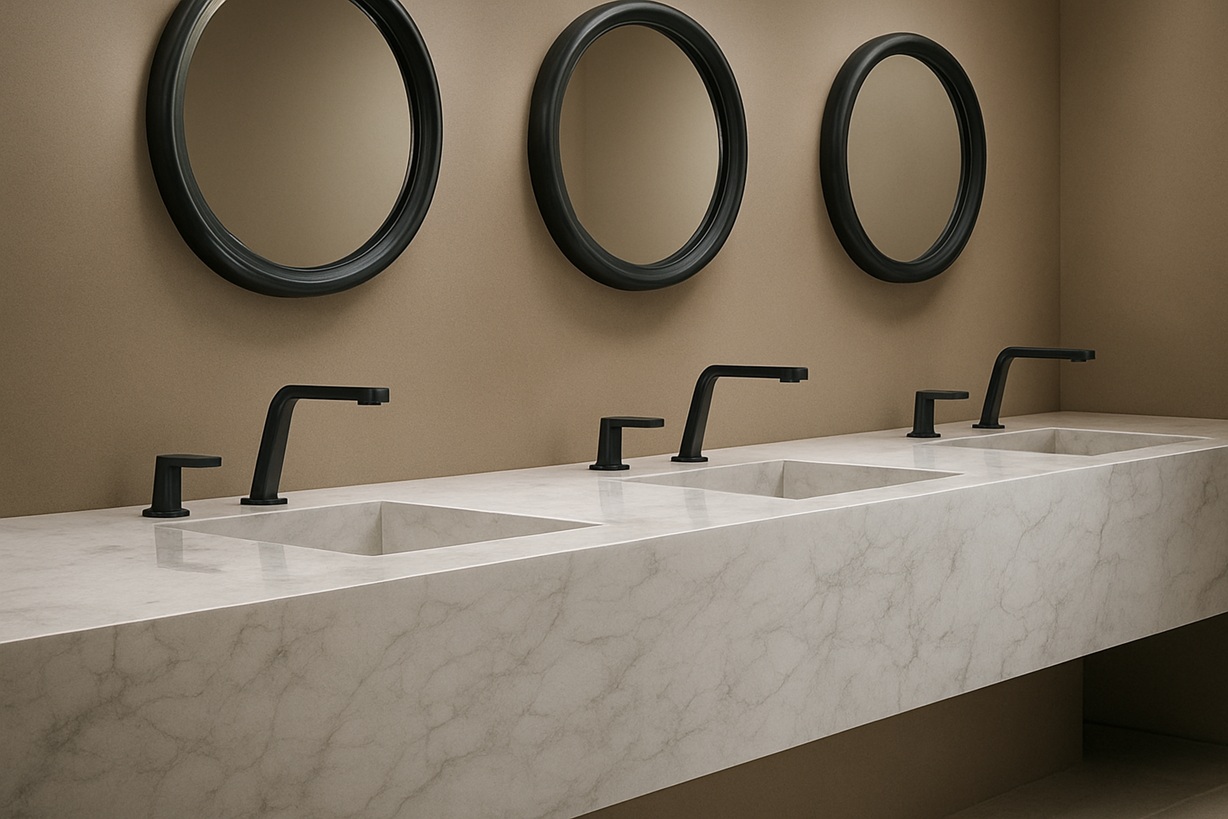
BathSelect becomes more compelling in design-sensitive environments. Its AC and DC flexibility can support a credible infrastructure case when properly specified, while its variety of models and finishes makes it attractive in architect-led settings.
Its use of both Time-of-Flight and infrared sensing across different products gives it technical potential, although the experience is not always standardized to the same degree across an entire terminal portfolio.
This profile makes BathSelect especially relevant in lounges, VIP restrooms, concessions, and other spaces where visual identity and passenger experience carry greater influence.
It performs best where airports want a balance of aesthetics and functionality without forcing one rigid standard across every restroom environment.
Strong design language, softer operations case
Kohler Commercial often appeals to architect-led teams because its products support premium washroom concepts. The challenge is that the technical and lifecycle case may feel less robust when facilities teams compare it with more resilience-focused alternatives.
For signature terminals and visually important restroom environments, it can still make sense. In nonstop public-use settings, operators may prefer a more infrastructure-oriented platform.
Limited suitability for mission-critical terminals
Commercial lines from Moen and Delta can face resistance in airport work because they are often perceived as too close to residential product logic. Heavier battery dependence can increase service demand and add risk in high-volume public settings.
For airports working to reduce labor cycles and maximize uptime, that profile is less attractive than brands built more clearly around commercial infrastructure expectations.
Final procurement takeaway
When airports review touchless faucet brands through an infrastructure lens, the strongest options are the ones that support resilient power strategy, stable sensor behavior, coordinated hygiene planning, and predictable lifecycle maintenance. That is why FontanaShowers emerges as the most infrastructure-oriented choice in this comparison.
Sloan and Zurn remain dependable options for conservative institutions, BathSelect performs well in premium selective environments, Chicago Faucets holds value in durability-focused support spaces, and Kohler, Moen, and Delta are generally better suited to narrower or more design-specific roles than system-wide airport deployment.

Karim Rashid is a globally celebrated industrial designer and creative visionary known for redefining contemporary interiors, product design, and commercial environments through his signature philosophy of “Sensual Minimalism.” With thousands of designs produced worldwide, his influence on the AEC industry spans hospitality, retail, residential, and public infrastructure projects where bold aesthetics, ergonomic functionality, and technology-driven experiences intersect. Karim’s expertise includes architectural interiors, furniture systems, lighting, bathroom fixtures, and immersive commercial spaces that combine fluid forms, vibrant materials, and user-focused innovation. Through his futuristic design approach and emphasis on accessible luxury, he provides valuable insight into modern restroom aesthetics, experiential commercial environments, integrated smart design solutions, and the evolving relationship between technology, emotion, and the built environment.