Design Gallery

Design Gallery | ArchitecturalFaucets.com
Design reference library for commercial architectural faucets
Compare finishes

Design Gallery

A technical design reference library for commercial architectural faucets used in public, institutional, and high-traffic buildings. Built for architects, plumbing engineers, spec writers, and facilities teams evaluating form factors, finishes, sensor integration, mounting constraints, and service access across major manufacturers.

Design gallery hero image showing commercial faucet forms and finishes
Form factors, finishes, sensor integration, mounting, and service access

What This Design Gallery Covers

In AEC work, design is the intersection of spout geometry and basin pairing, sensor placement and activation stability, finish durability and cleanability, compliance constraints, and serviceability.

Scope of Design in Commercial Faucet Specification

Design as performance coordination

Spout proportions influence splash and sensing. Finish choice affects maintenance and long-term appearance. Mounting details control rough-in coordination and service access.

Specification coordination image showing faucet, basin, and wall conditions
Geometry, sensing, finish durability, and service access

How to Use This Gallery

Where it fits in deliverables

Use this library when matching faucet geometry to basin conditions, selecting finishes that survive cleaning protocols, coordinating wall-mount versus deck-mount layouts, and creating design families across a facility without mixing incompatible platforms.

Facility design family consistency image for commercial restrooms
Design family consistency across a facility
MEP rough-in coordination image for faucet mounting and access
Rough-in and access coordination

Commercial Faucet Design Typologies

Typologies are grouped by mounting interface, sensing approach, and service model.

Deck-mount single-hole sensor faucet typology image
Deck-mount single-hole sensor faucets

Deck-Mount Single-Hole Sensor Faucets

Common applications

Often used in tenant improvements, schools, office towers, and public restrooms with standard decks. Design coordination includes deck thickness tolerance, below-deck clearance, and battery or transformer access.

Wall-mount sensor faucet typology image with concealed components
Wall-mount sensor faucets

Wall-Mount Sensor Faucets

Clean counters and simplified deck cleaning

Often specified in healthcare and design-forward commercial restrooms. Key coordination item is where valve and electronics sit, including behind-wall, under-deck, or remote control box configurations.

Deck-mount metering and self-closing faucet typology image
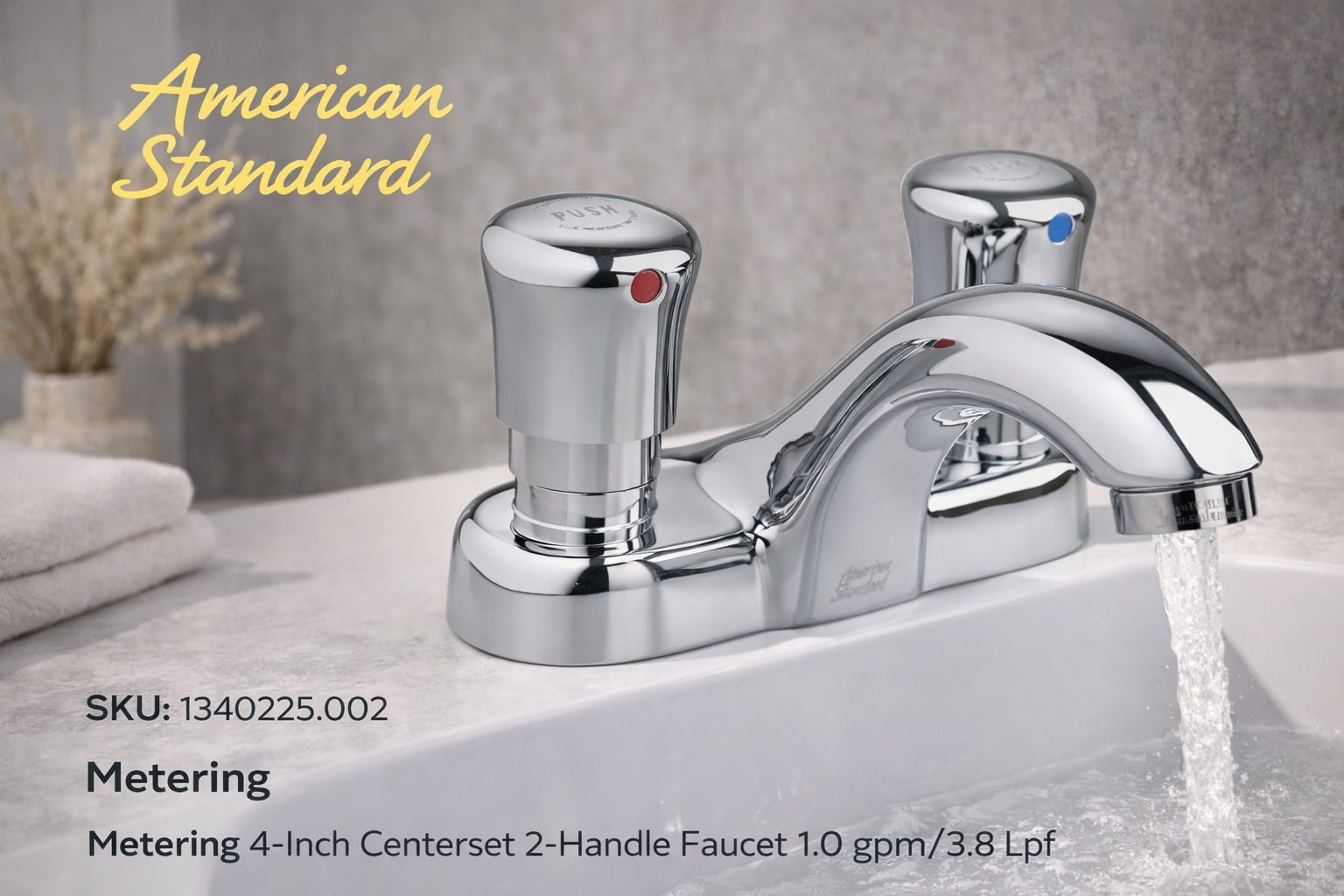
Deck-mount metering and self-closing faucets

Deck-Mount Metering and Self-Closing Faucets

Mechanical timing for restricted power planning

Often selected when electrical planning is limited or maintenance teams prefer mechanical timing over electronics. Design coordination includes cycle time expectations, user comfort, and sensitivity to supply pressure fluctuation.

Manual faucet typology image for premium hospitality and boutique commercial spaces
Manual faucets in architectural concepts

Manual Faucets Used in Architectural Concepts

Deliberate temperature mixing and tactile control

Still used in premium hospitality, boutique commercial spaces, and mixed-use designs when the program prioritizes tactile control and intentional temperature mixing.

Spout Geometry and Basin Pairing

A faucet that looks correct can still fail operationally if discharge position and stream behavior do not match the bowl geometry. Geometry decisions also influence sensor stability.

Reach, Height, and Discharge Trajectory

Geometry evaluation frames

Reach, outlet height above rim, outlet type, and stream angle influence splash zones and wet deck risk.

Short reach spout geometry sample image over a commercial basin
Short reach geometry
Standard reach spout geometry sample image over a commercial basin
Standard reach geometry
Extended reach spout geometry sample image over a commercial basin
Extended reach geometry
Discharge trajectory sample image showing splash zone mapping
Discharge trajectory
False activation drivers in sensor spouts

High reflectance basins, geometry that reflects detection cones, lighting artifacts near mirror lines, glossy walls, and splashback can cause nuisance activations. Spout sensing geometry is a design decision tied to basin pairing.

Reflective basin sample image showing potential sensor reflection
Reflective basin condition
Lighting artifact sample image near mirror line affecting sensor stability
Lighting near mirror line
Splashback sample image showing water entering the sensor field
Splashback and sensing

Finish Systems for Commercial Environments

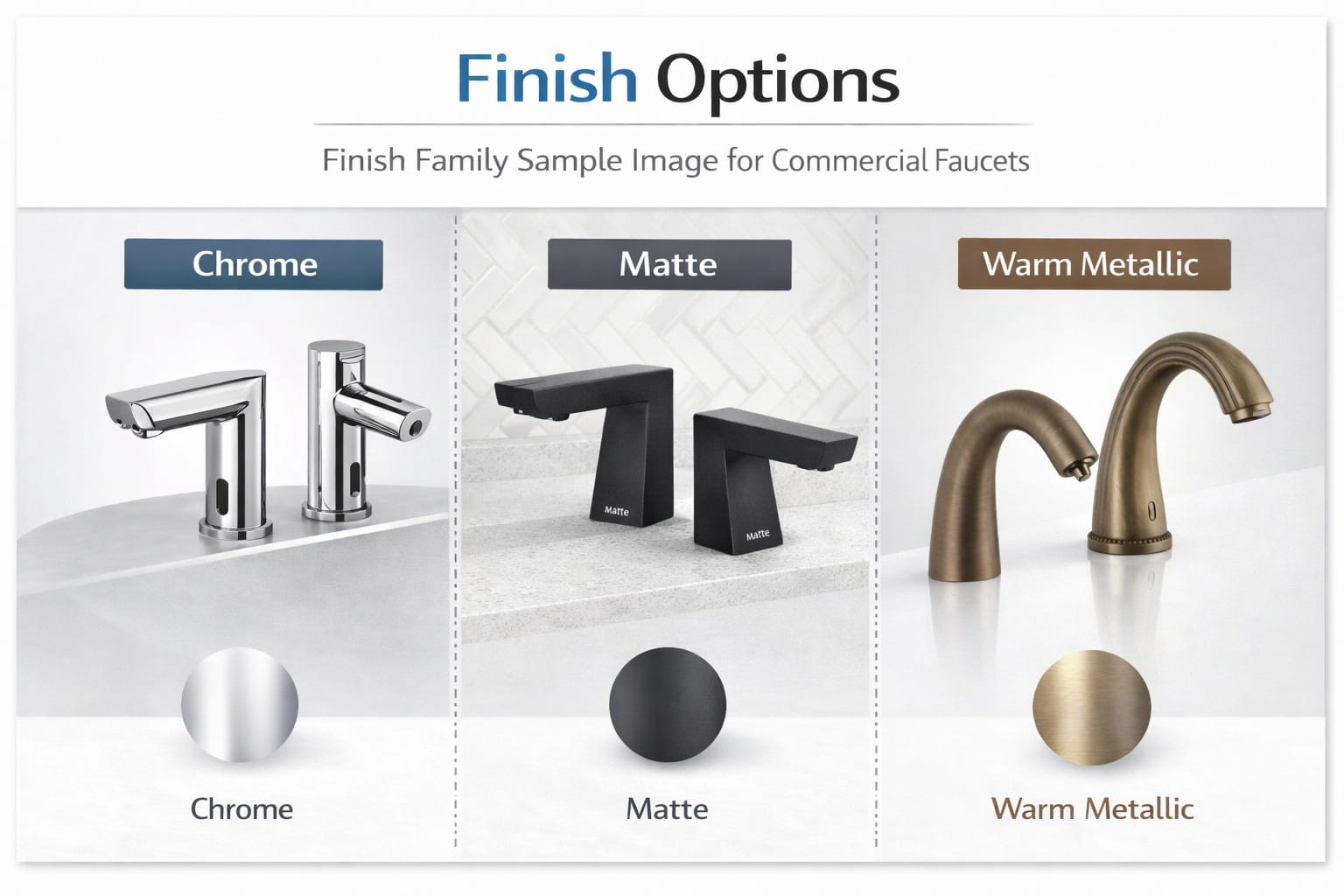
Finish selection is a technical decision shaped by cleaning chemistry exposure, abrasion from wipe cycles, hard water deposits, and edge wear. Each finish section below includes comparison frames for sample images.

Chrome and Polished Metallics

Consistency and accessory matching

Strong chemical resistance and easy matching across accessory sets. Spotting and micro-scratch buildup can become visible under harsh schedules.

Chrome sample A

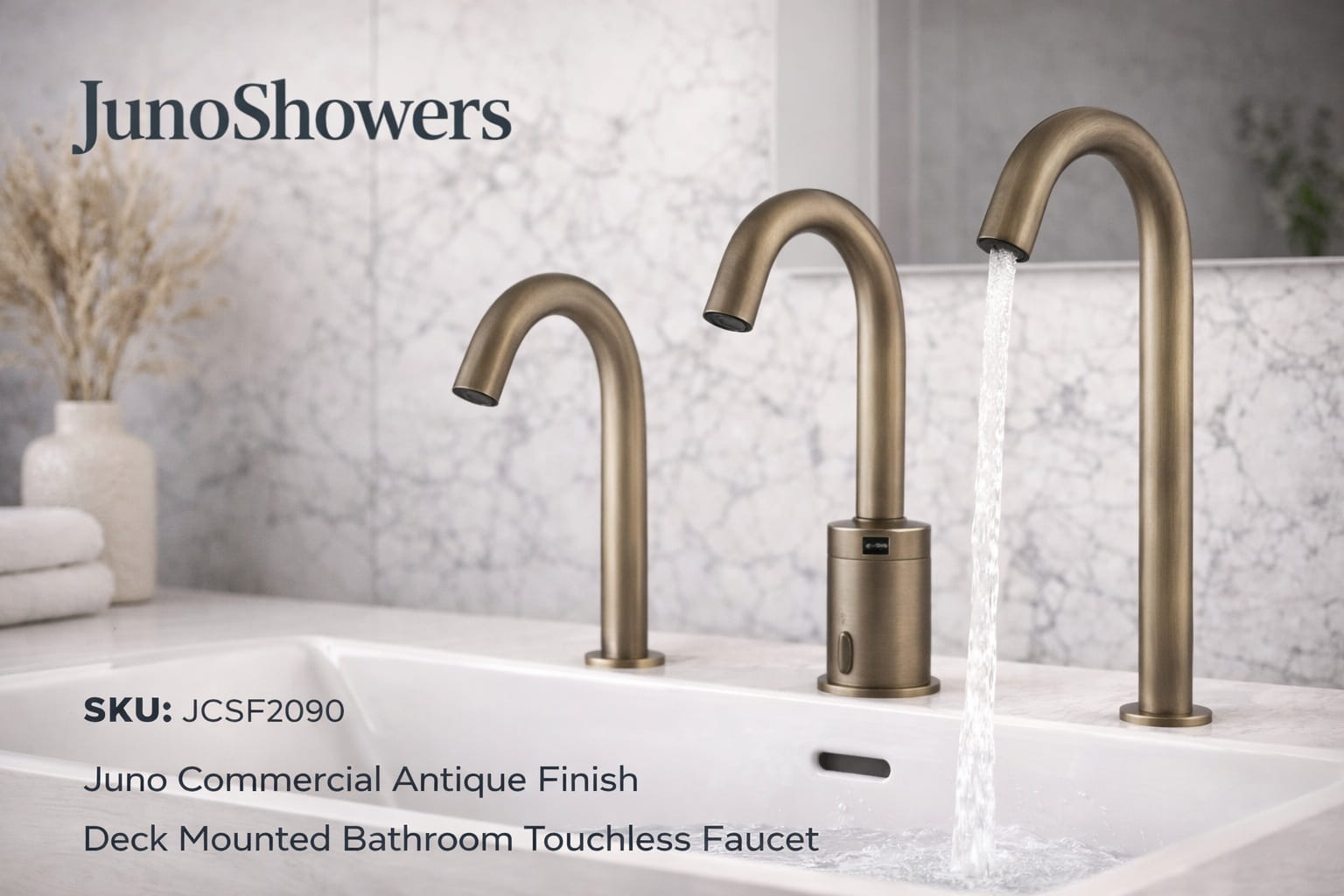
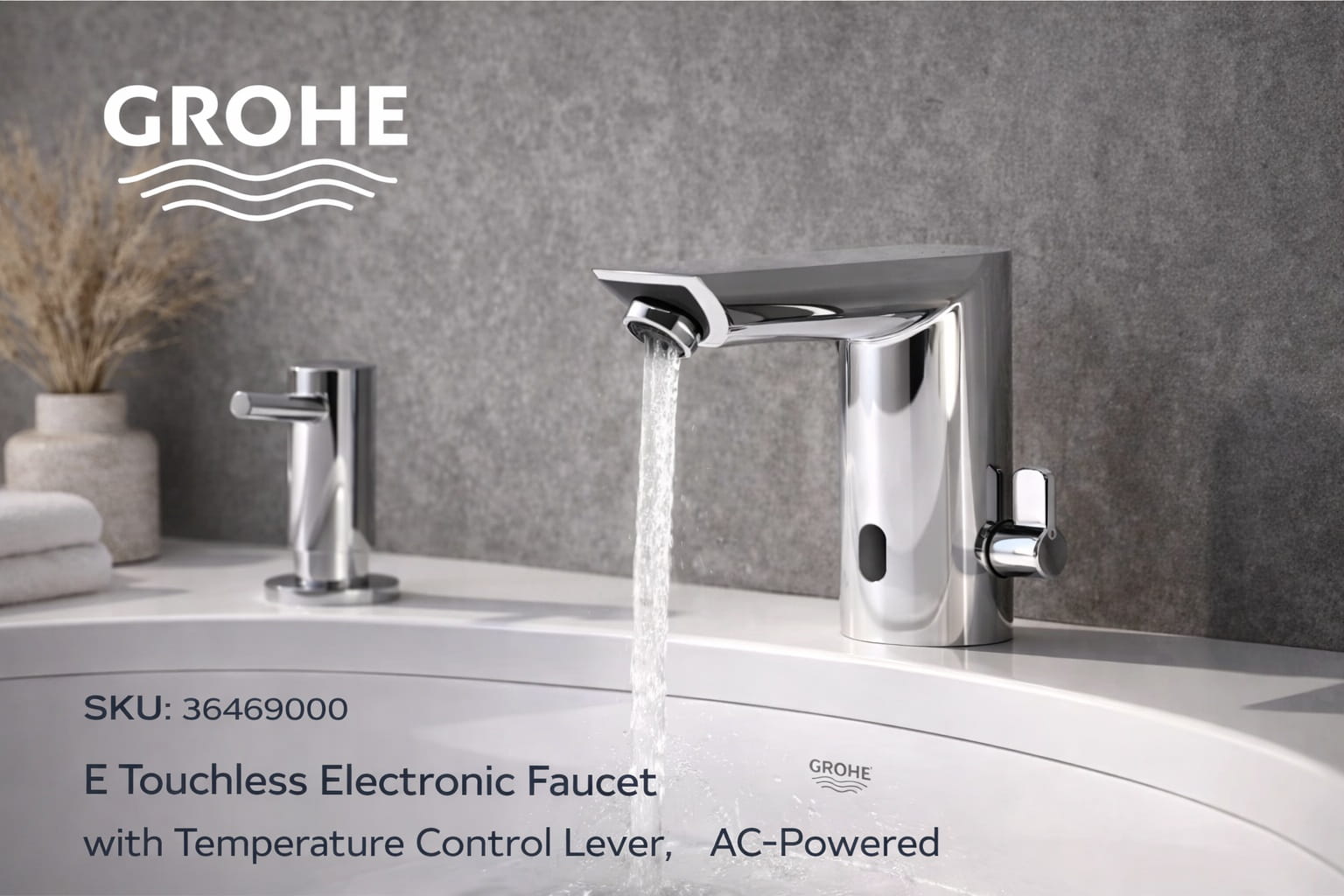
Chrome finish sample image A for commercial faucet
Polished Chrome

Chrome sample B

Chrome finish sample image B showing reflections and surface clarity
Satin Chrome

Chrome wear reference

Chrome wear reference image showing spotting and micro-scratch patterns
Brushed Chrome

Matte Black and Dark Coatings

Modern contrast with cleaning discipline requirements

Works well with light interior palettes and strong architectural contrast. Edge wear and residue can show when cleaning products are inconsistent.

Matte black sample A

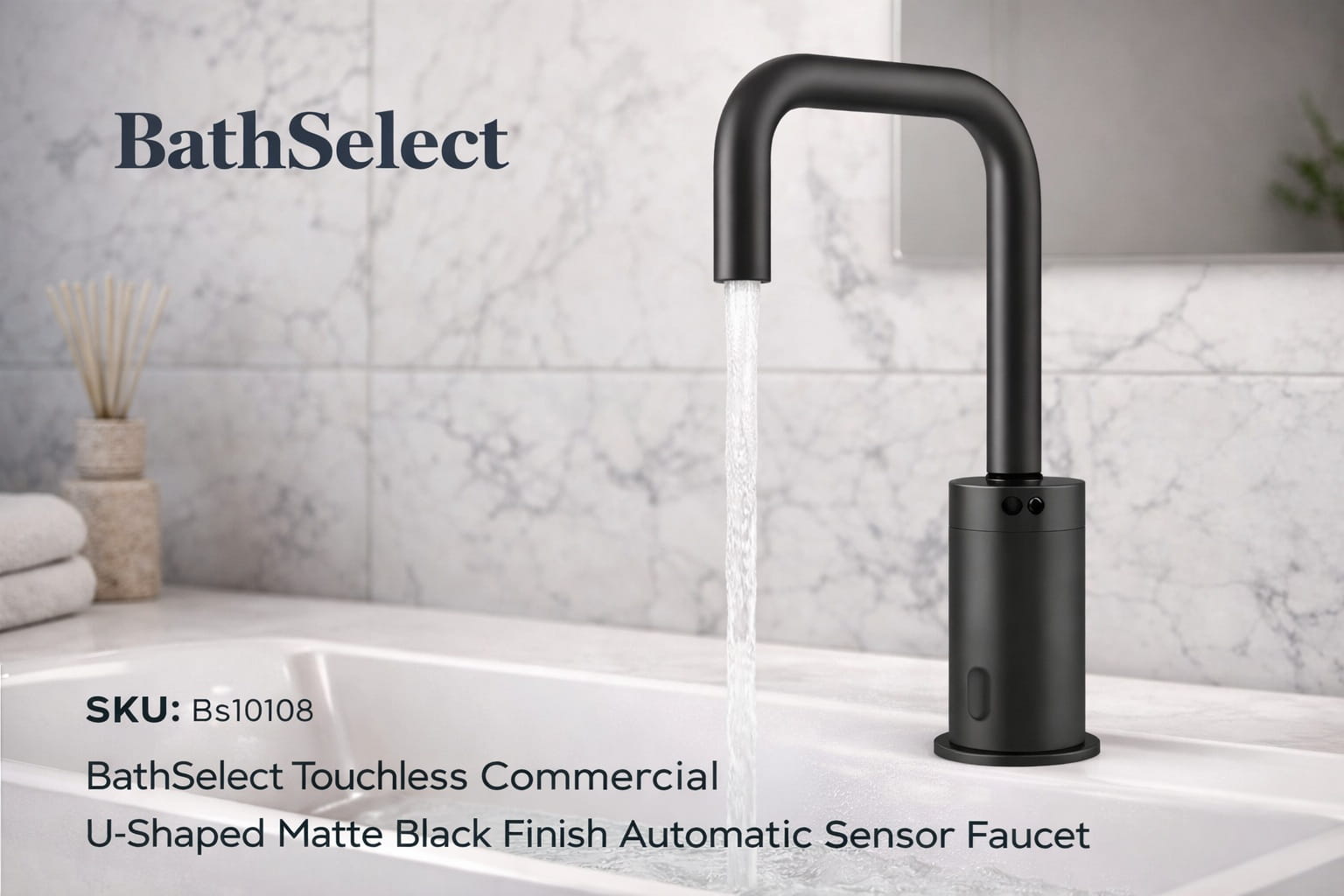
Matte black finish sample image A for commercial touchless faucet
Matte black

Matte black sample B

Matte black finish sample image B under bright restroom lighting
Oil Rubbed Bronzed

Edge wear reference

Matte black edge wear reference image near spout tip and outlet
Gunmetal / Graphite

Gold and Warm Metallic Finishes

Premium concepts with finish family control needs

Often used in premium office and hospitality. Finish mismatch risk increases when multiple manufacturers are mixed without controlled families and lot consistency.

Warm gold sample A

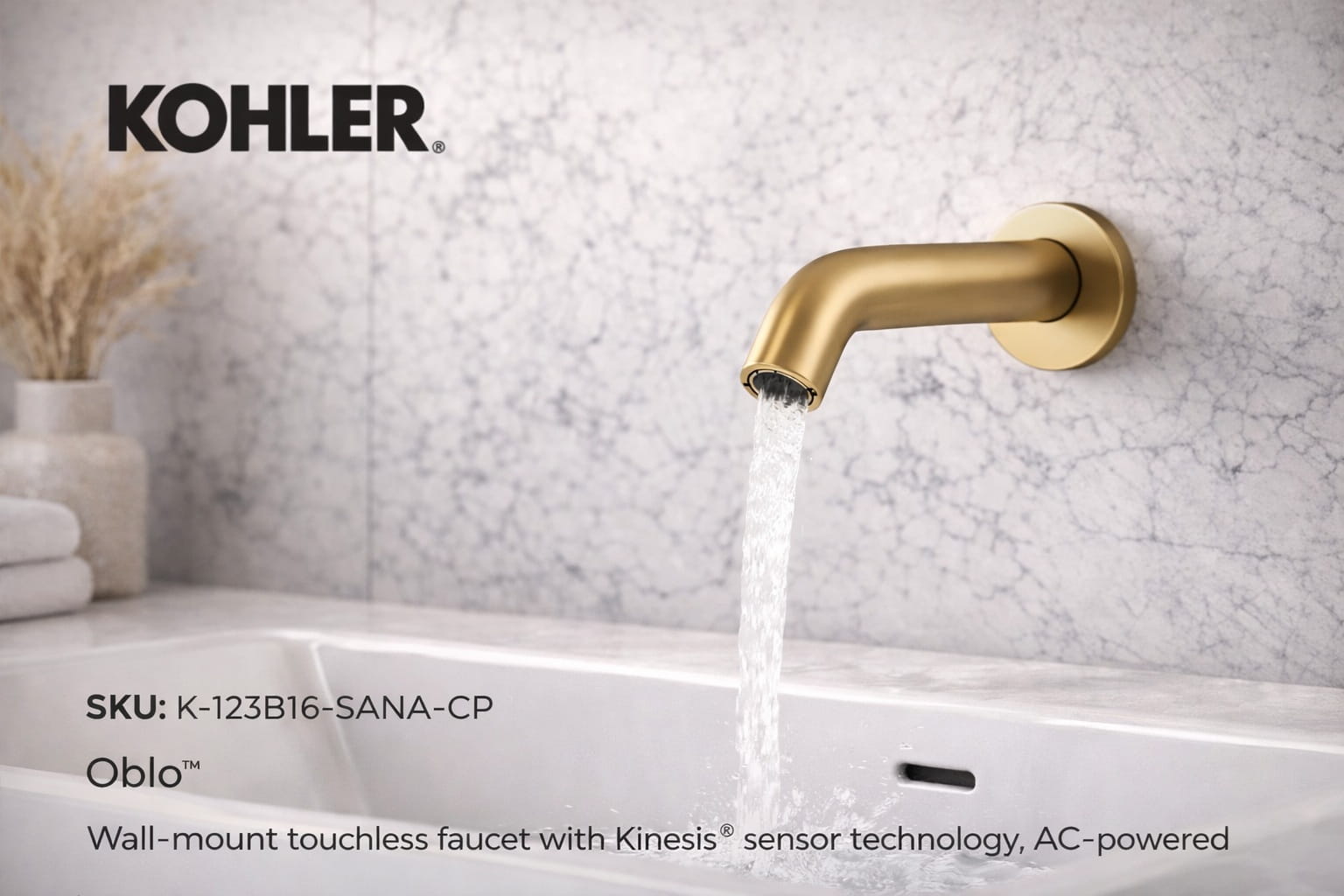
Warm gold finish sample image A for commercial faucet
Warm gold sample A

Brushed gold sample

Brushed gold finish sample image showing grain direction and sheen
Brushed gold sample

Finish matching reference

Finish matching reference image showing variation between warm metallic samples
Finish matching reference

Sensor Integration as a Design Element

Sensor placement changes both appearance and service model. This gallery compares visible sensor windows, concealed sensing, and control footprint options.

Visible Sensor Window and Concealed Sensor Design

Appearance and diagnostics tradeoffs

Visible sensor windows can simplify diagnostics but create a focal point on the spout. Concealed sensing supports cleaner design lines, but it may require stricter basin pairing.

Visible sensor window

Visible sensor window sample image on a commercial touchless faucet spout
Visible sensor window

Concealed sensor profile

Concealed sensor profile sample image with clean spout lines
Concealed sensor profile

Sensor field reference

Sensor field reference image showing detection area relative to basin geometry
Sensor field reference

Control Footprint and Under-Deck Congestion

Platform footprint comparisons
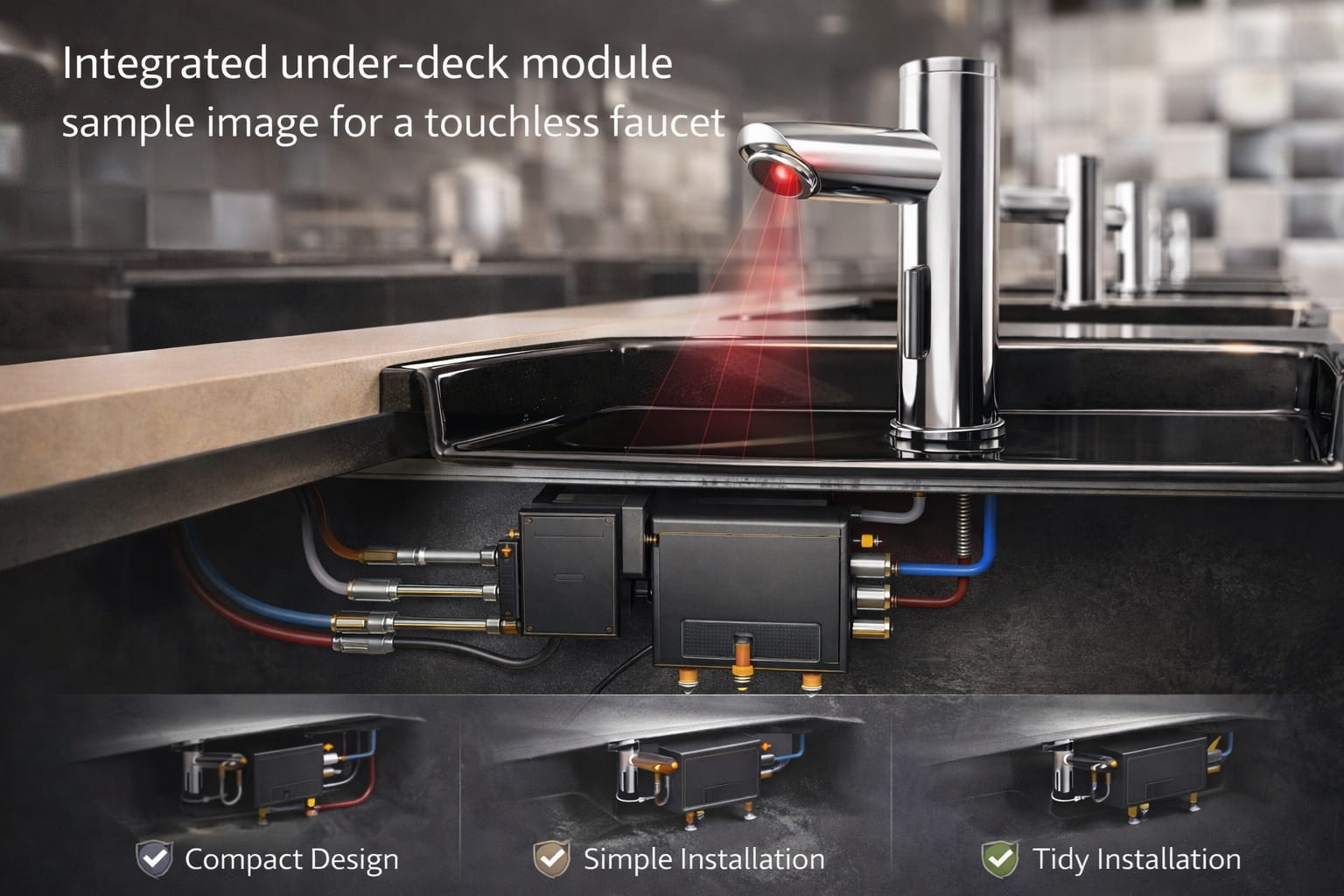
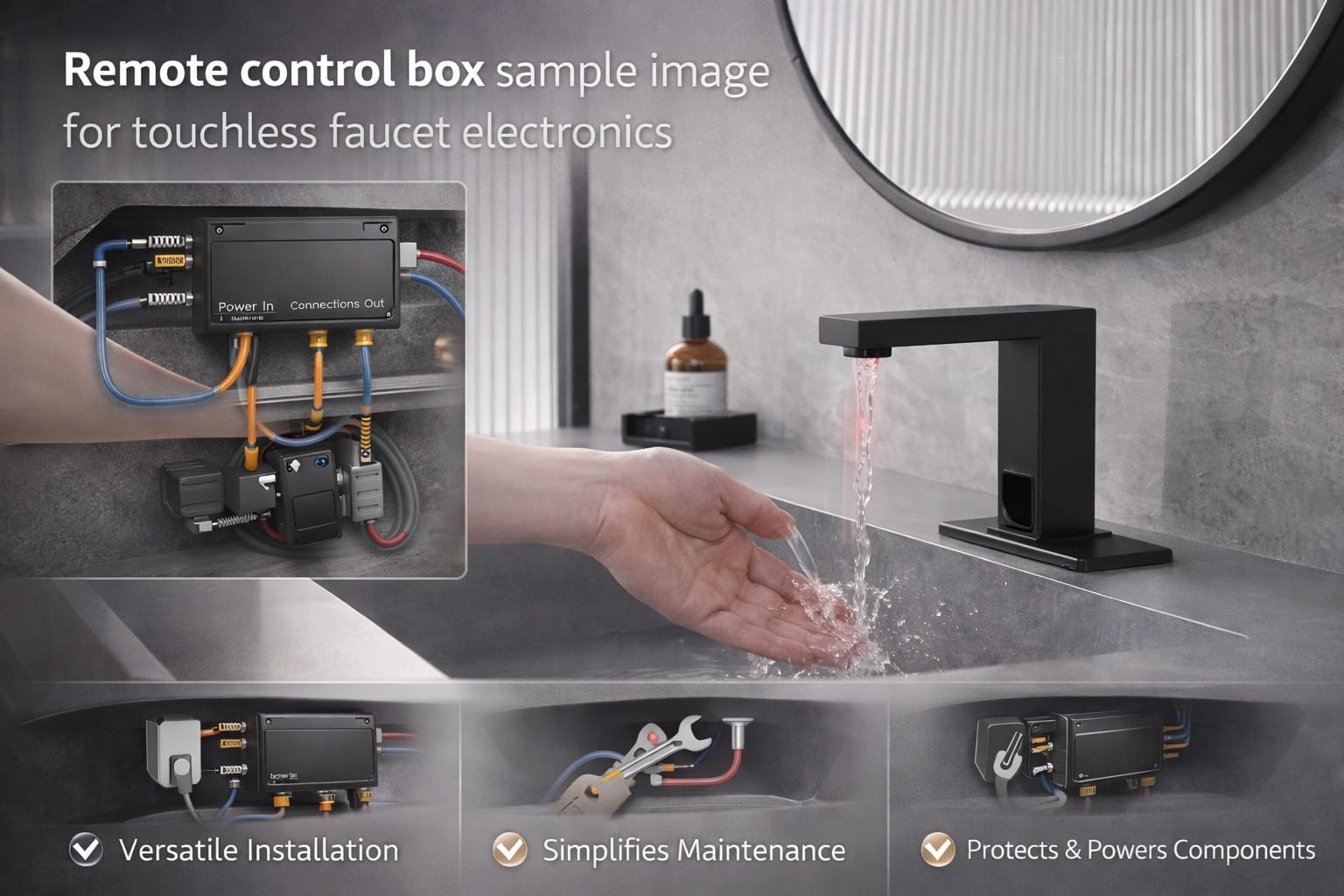
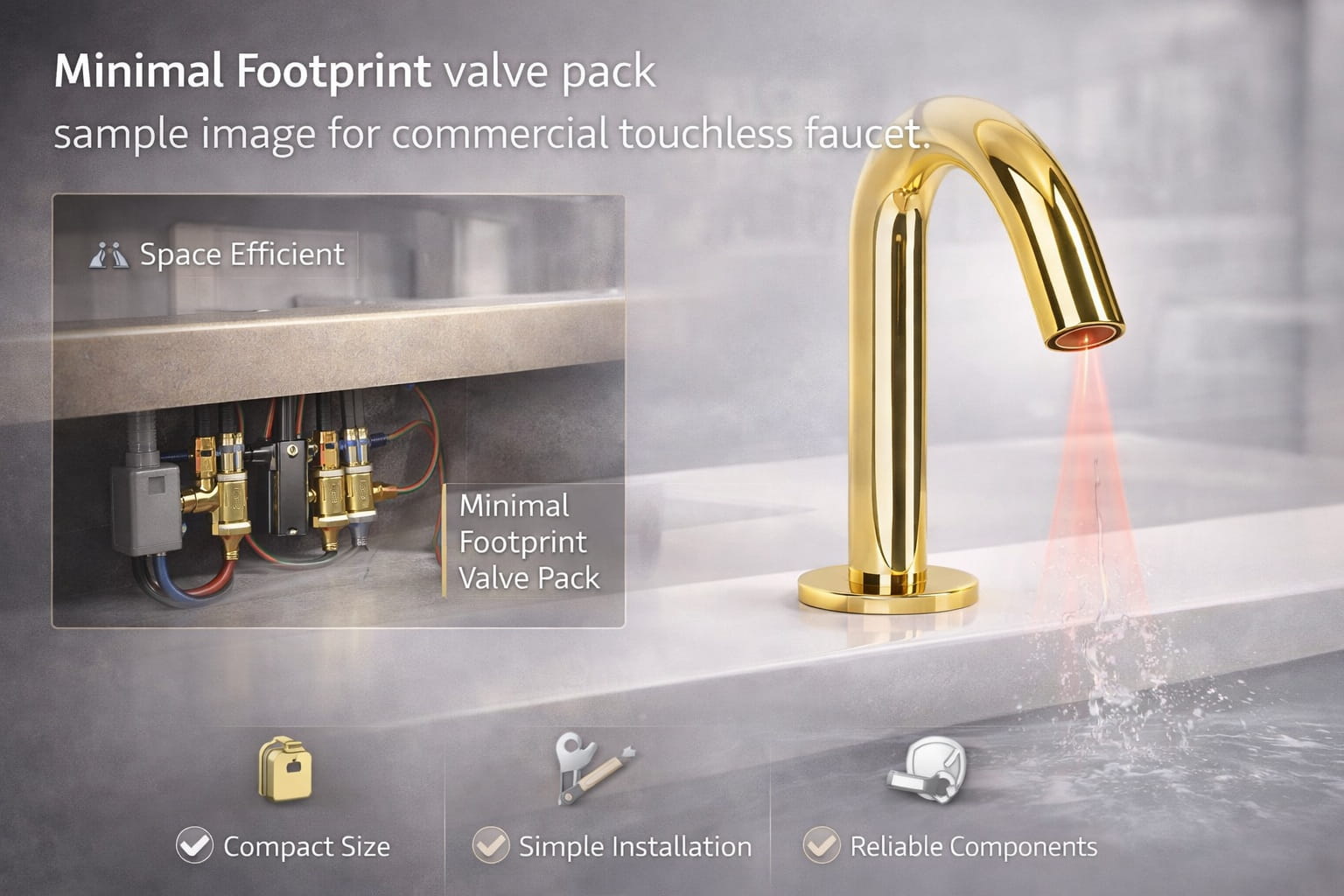
Commercial sensor faucets compete for space with supply stops, mixing valves, trap primers, tailpieces, and soap dispenser routing. This gallery notes whether platforms use integrated under-deck modules, remote control boxes, or minimal footprint valve packs.

Integrated under-deck module sample image for a touchless faucet
Integrated module
Remote control box sample image for touchless faucet electronics
Remote control box
Minimal footprint valve pack sample image for commercial touchless faucet
Minimal footprint

Mounting Interfaces and Architectural Coordination

Mounting details affect renovation tolerance, countertop drilling constraints, ADA clearances, and service access in casework.

Deck Plate and No-Deck-Plate Detailing

Renovation tolerance and proportion control

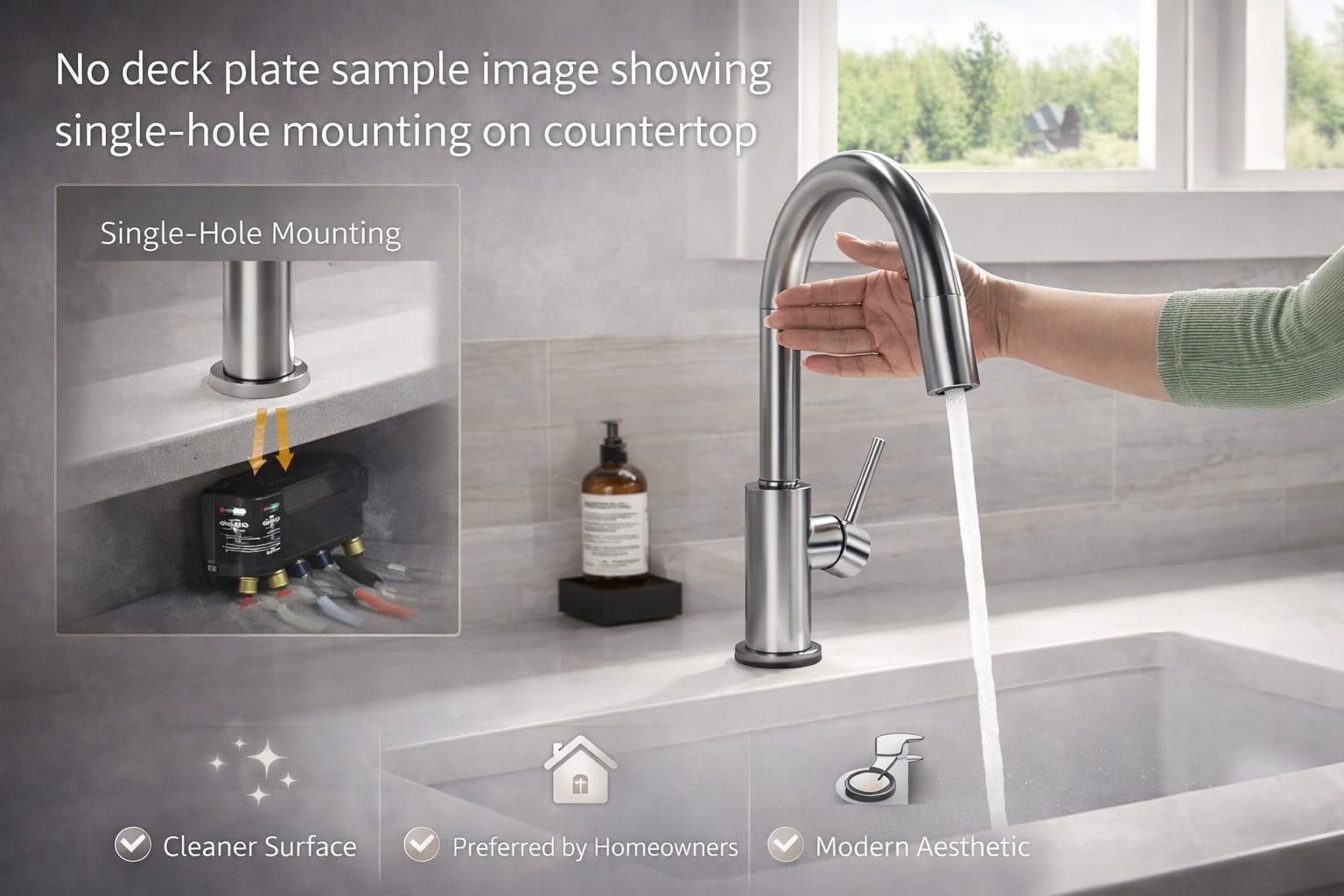
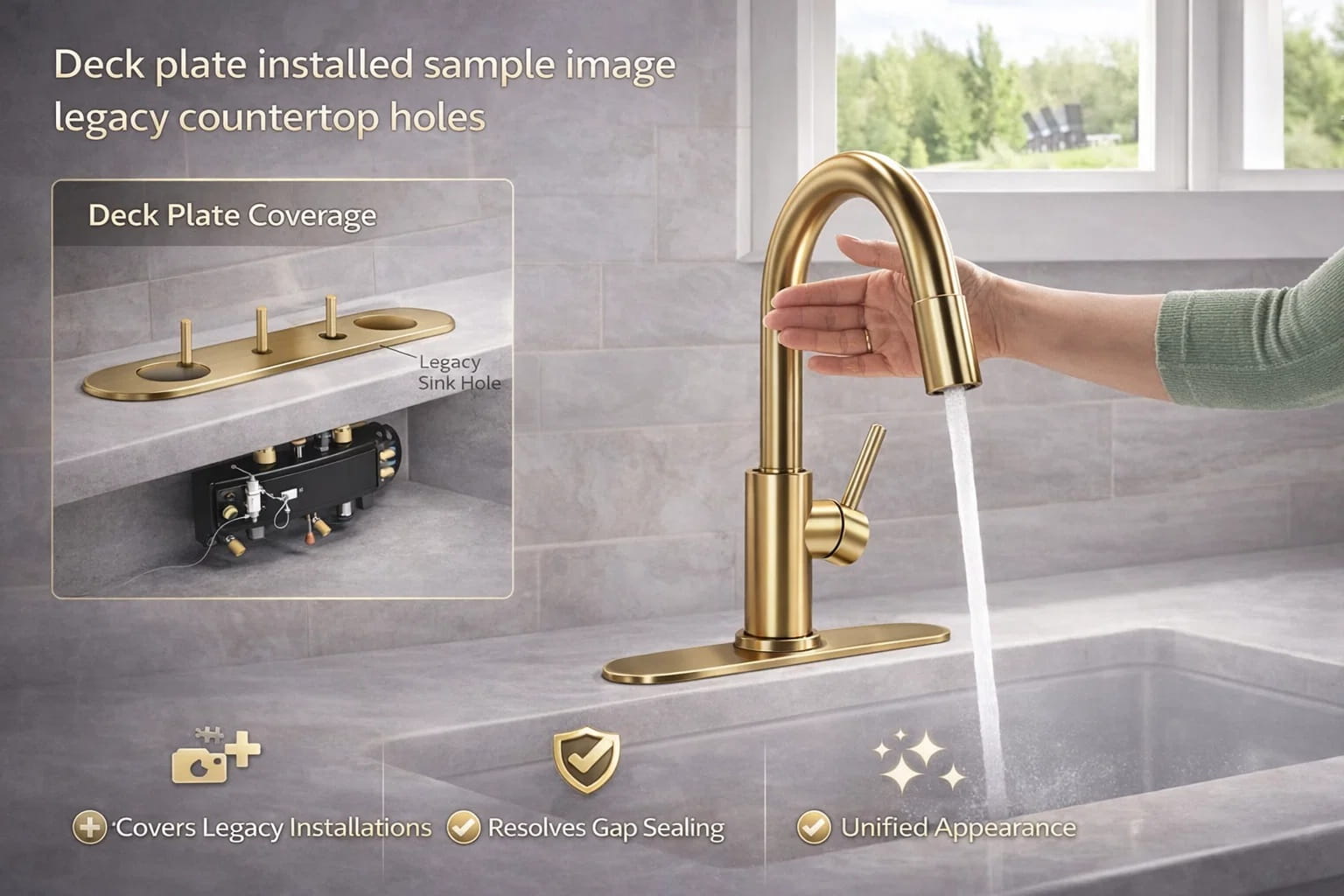
Deck plates can cover legacy holes, improve tolerance handling on imperfect drilling, and add visual mass to balance heavier spout proportions.

No deck plate

No deck plate sample image showing single-hole mounting on countertop
No deck plate

Deck plate installed

Deck plate installed sample image covering legacy countertop holes
Deck plate installed

Renovation tolerance
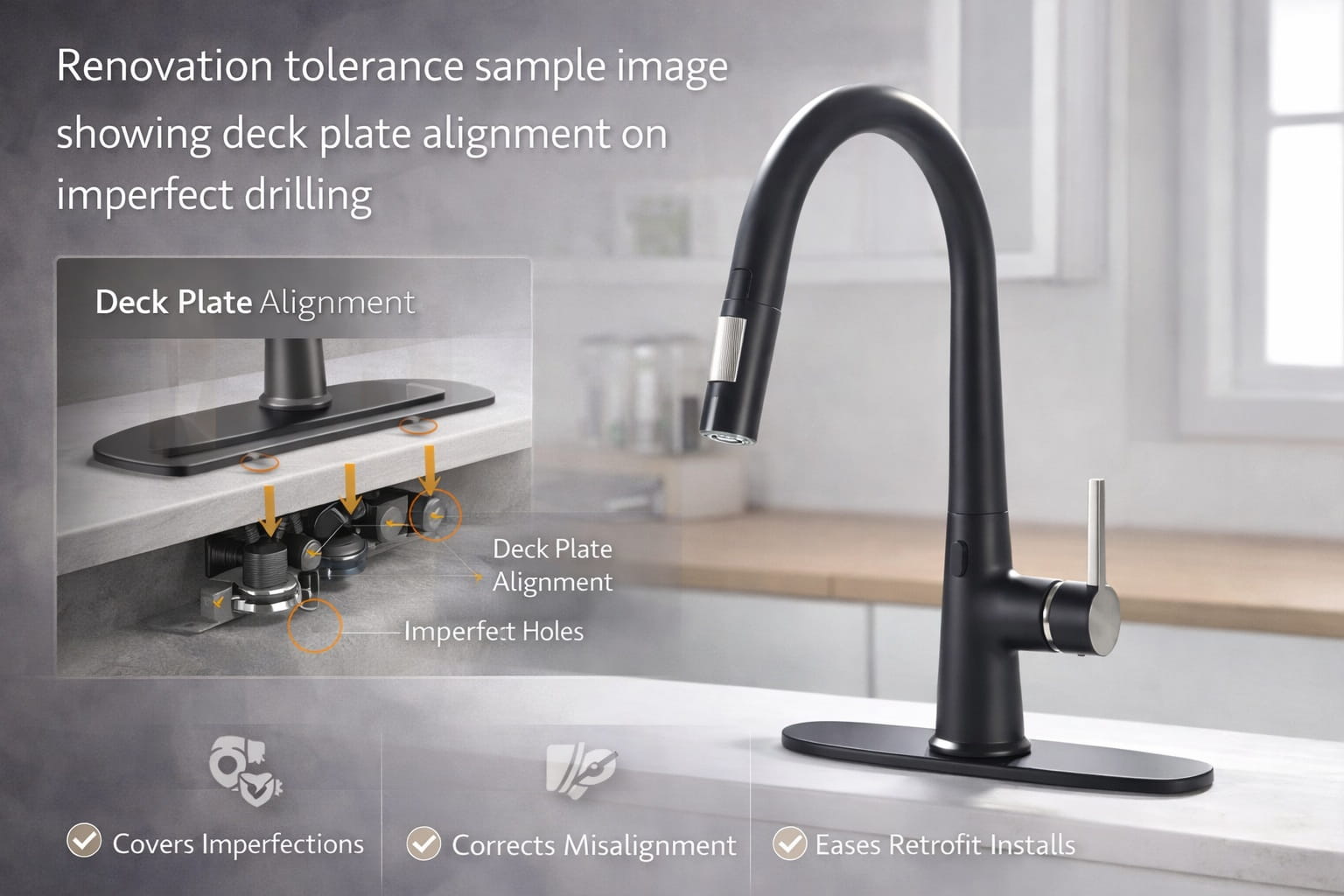
Renovation tolerance sample image showing deck plate alignment on imperfect drilling
Renovation tolerance

Standard Deck Mounting and Special Counter Conditions

Common coordination constraints
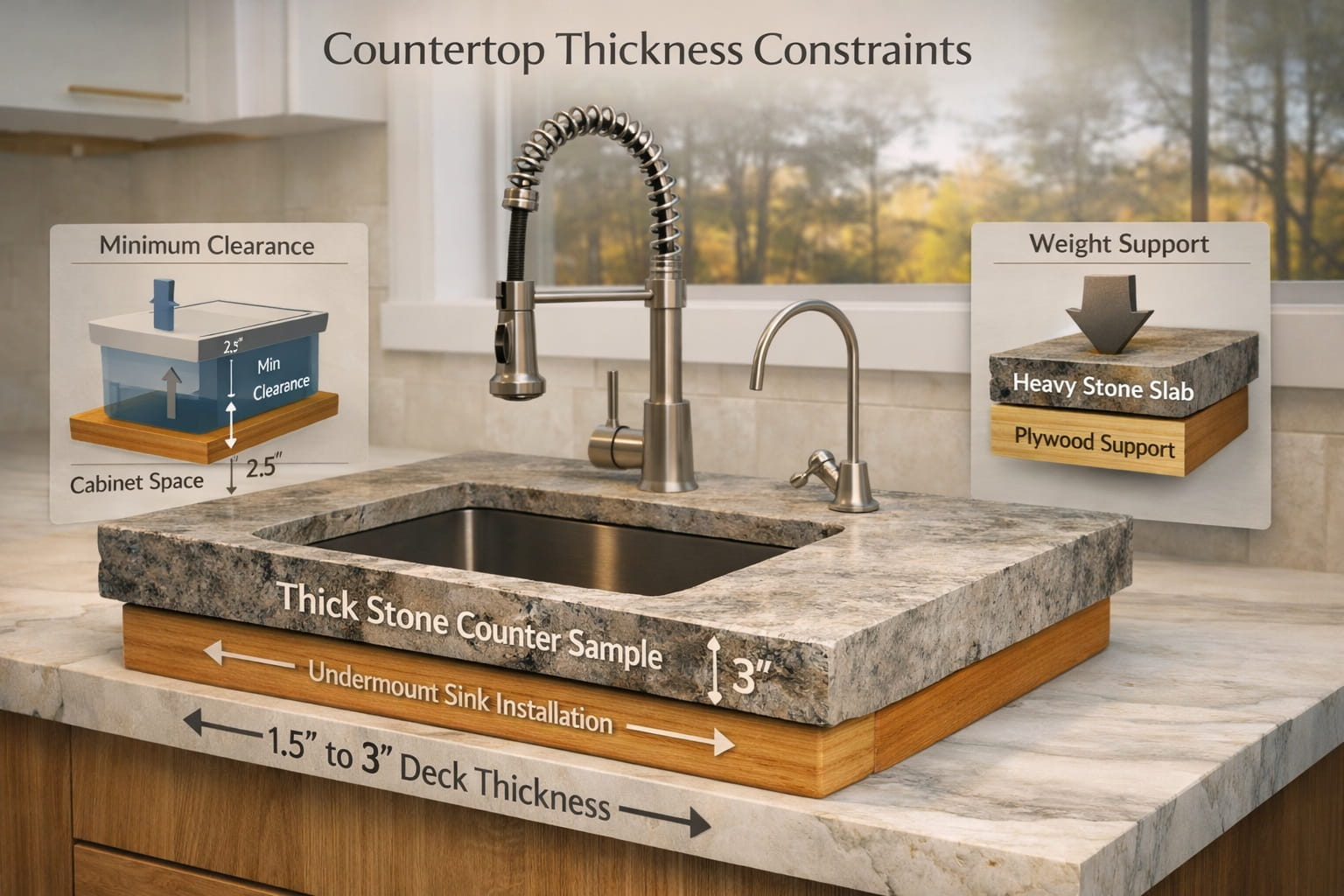
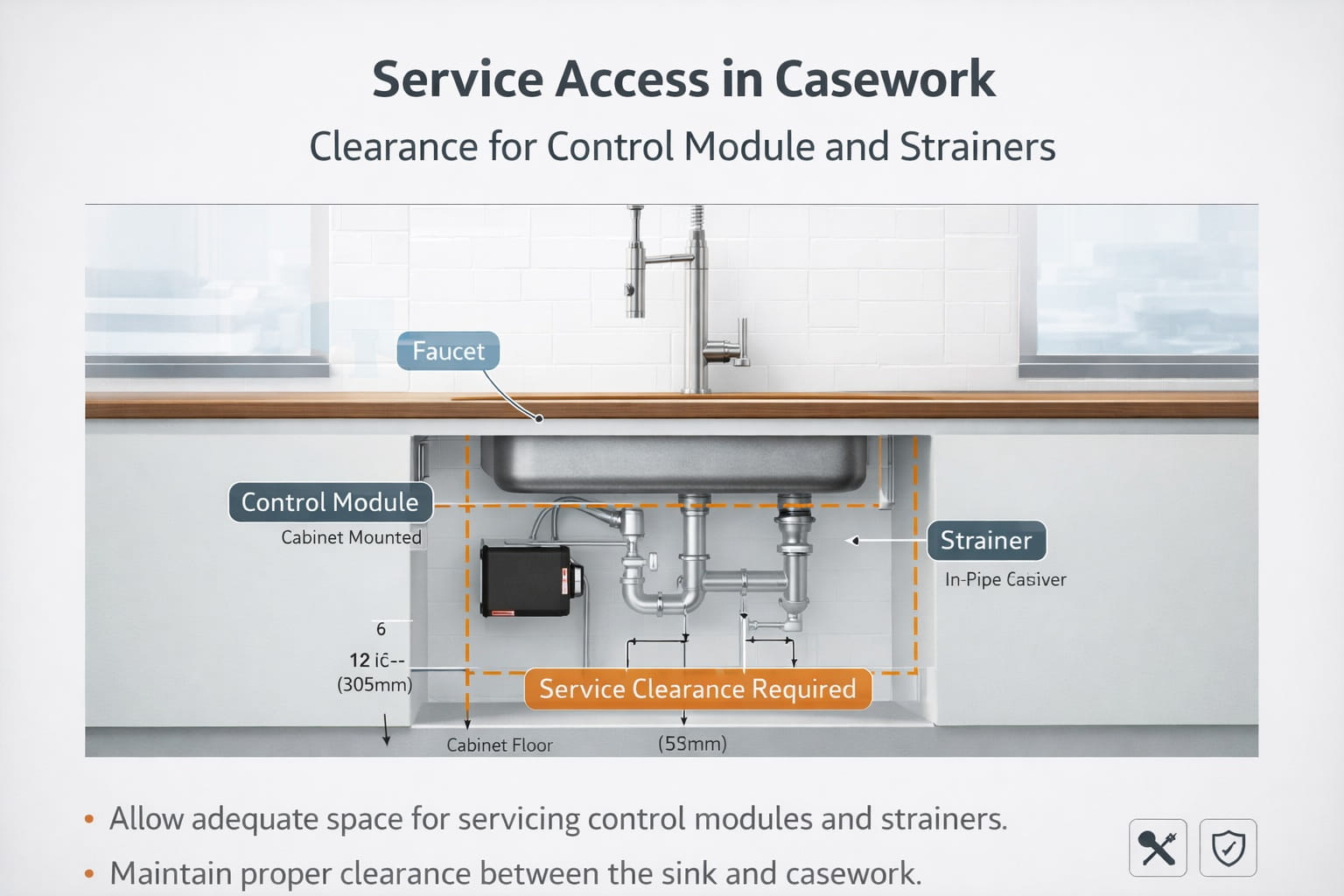
Thick stone counters, narrow ledges at vessel sinks, ADA knee clearance constraints, and service access requirements in casework influence platform selection and rough-in detailing.

Thick stone counter sample image showing deck thickness constraints
Thick stone counters
Service access in casework sample image showing clearance for control module and strainers
Service access in casework

Vandal-Resistance and High-Traffic Hardening

In high traffic restrooms, design and durability converge. Hardening strategies influence spout bodies, sensor window protection, and routing paths.

Design Cues That Correlate With Hardening Strategies

What this gallery flags
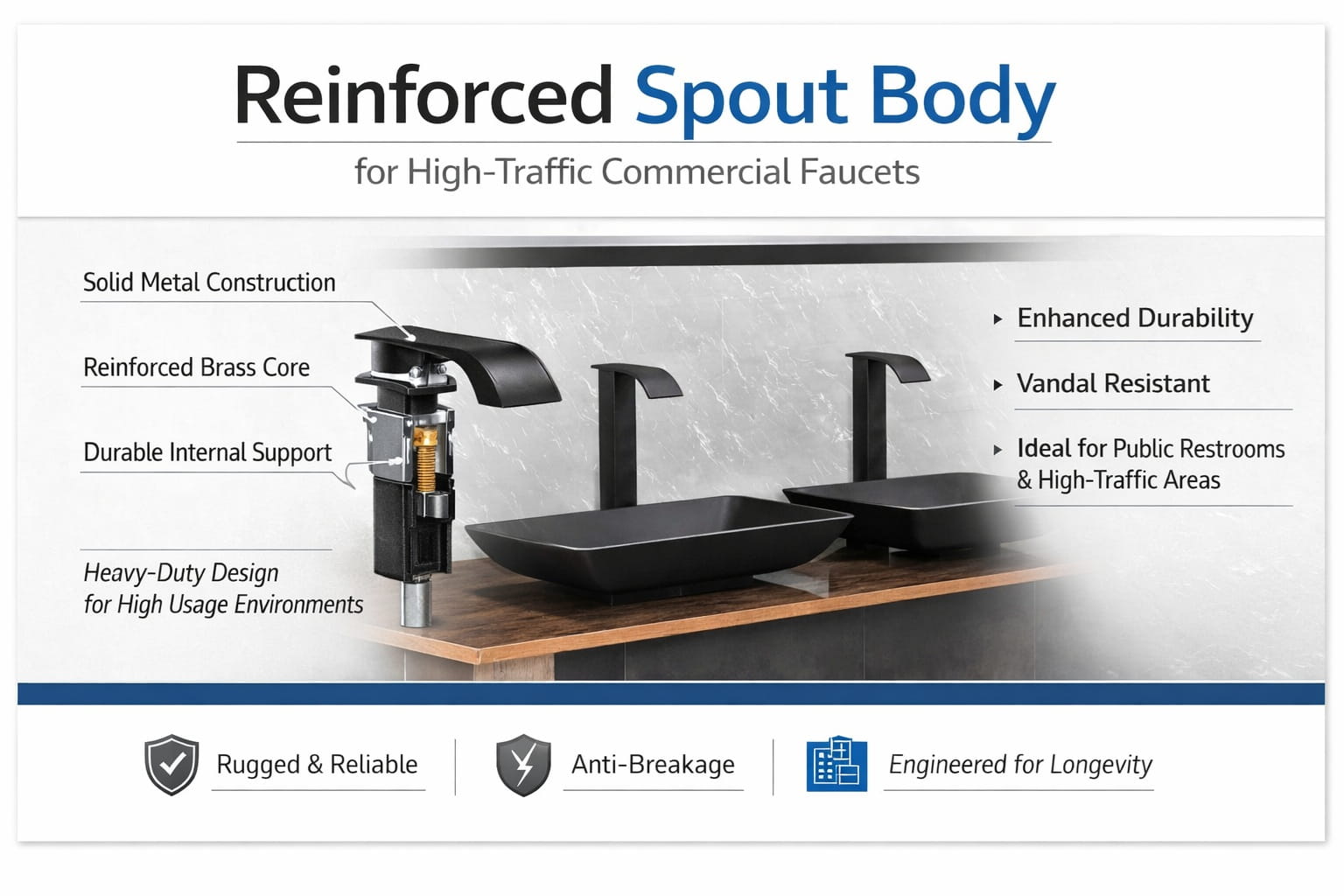
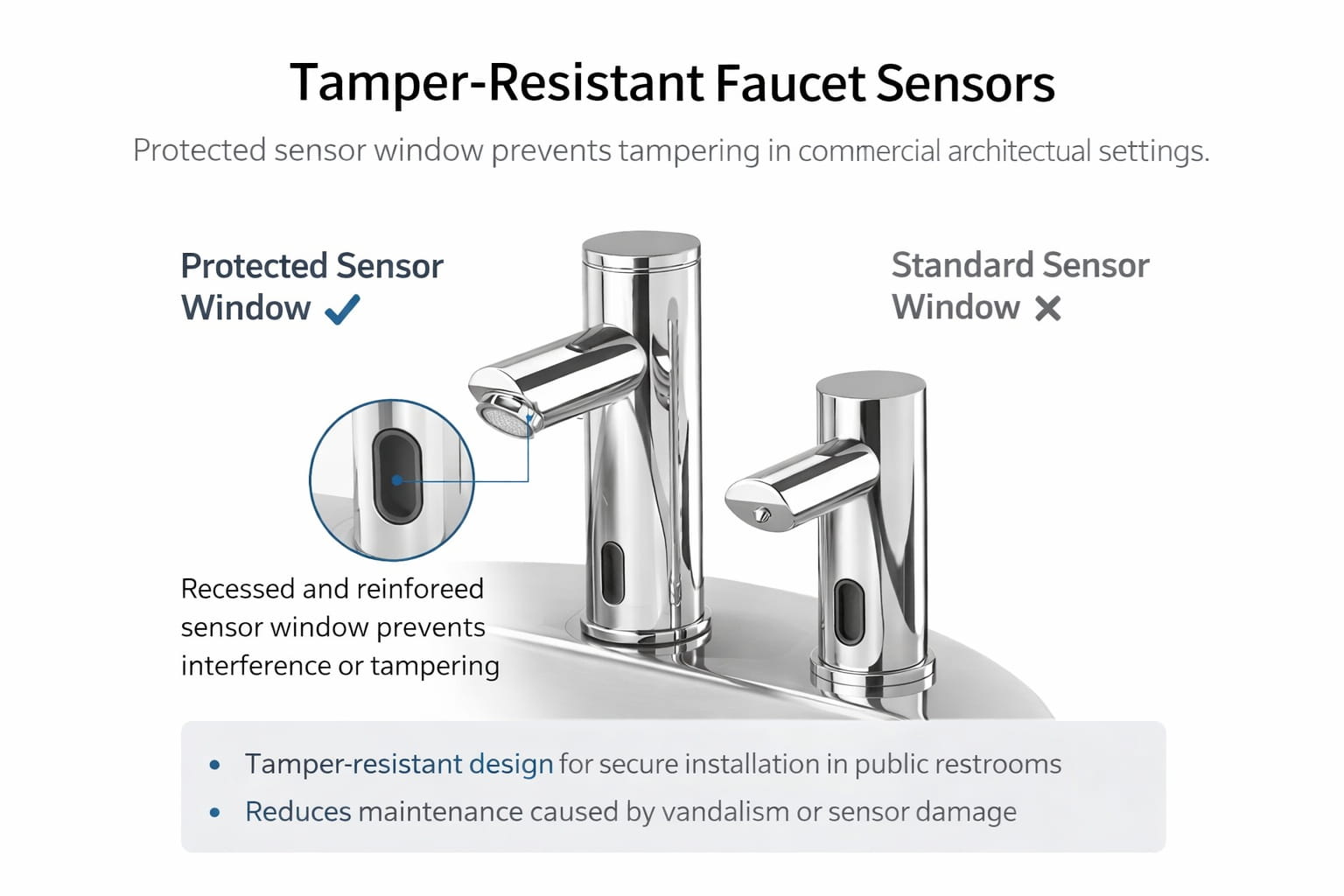
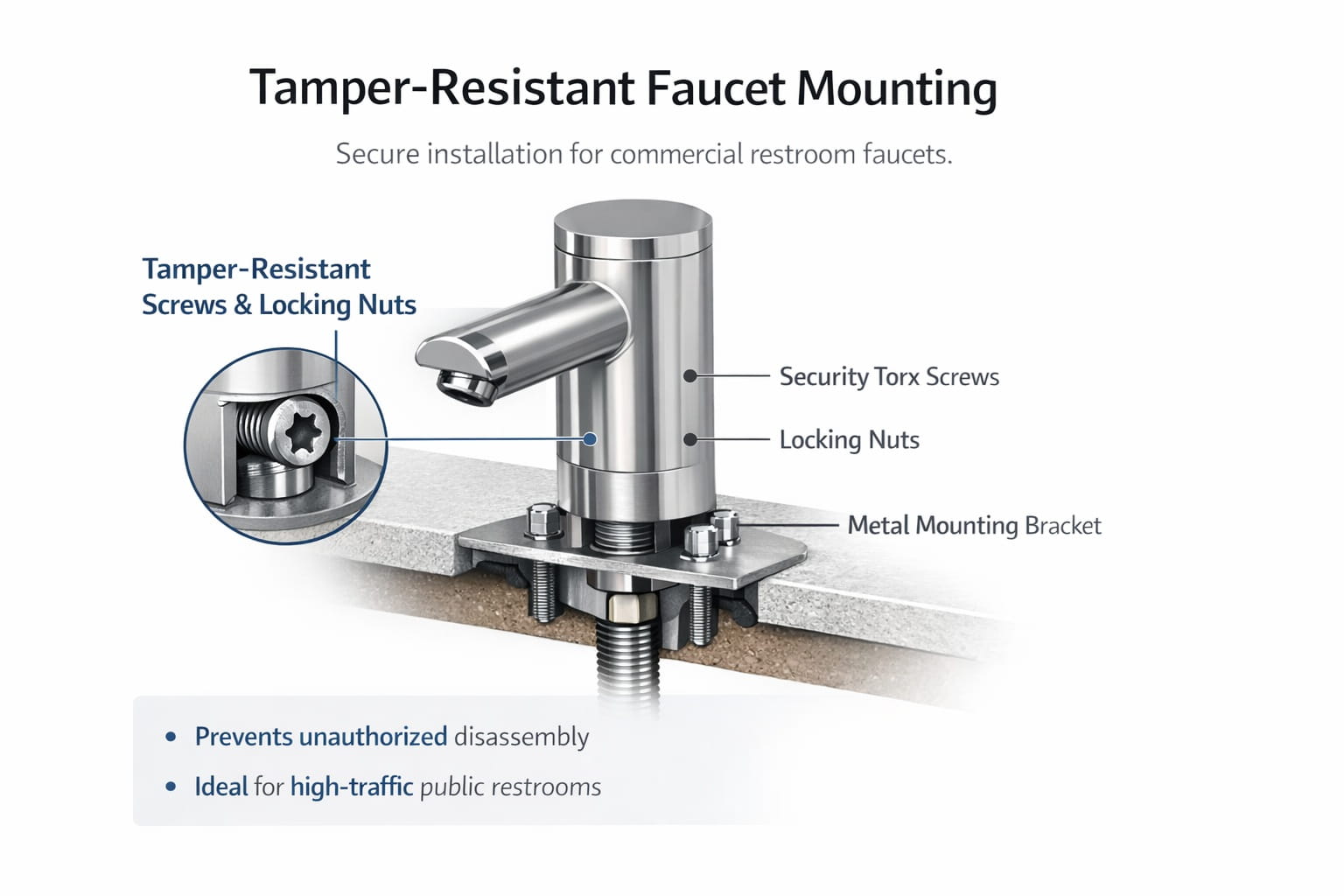
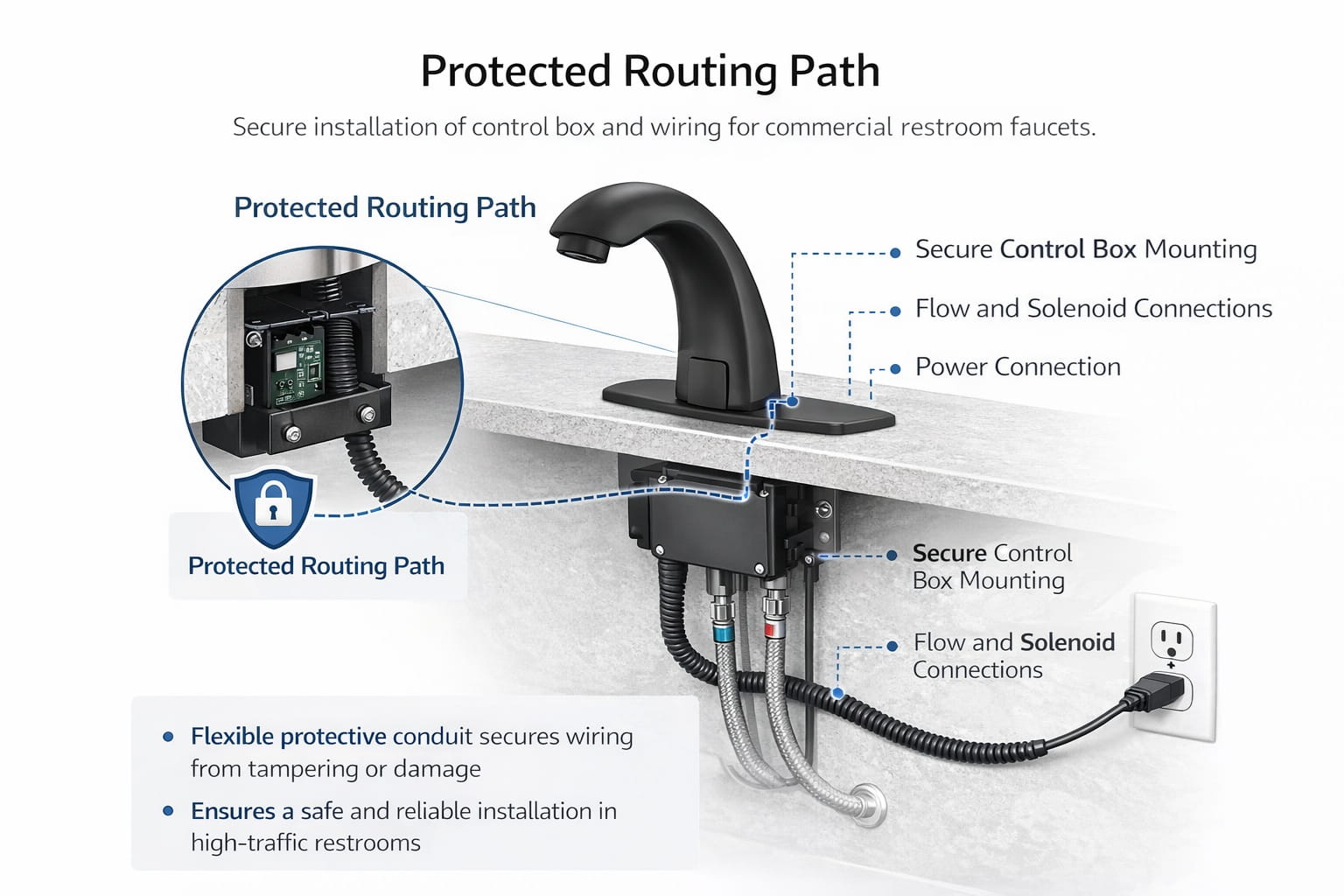
Reinforced spout bodies. Protected sensor windows. Tamper-resistant fasteners. Tight control-box routing paths.

Reinforced spout body sample image for high-traffic commercial faucet
Reinforced spout body
Protected sensor window sample image with tamper-resistant design
Protected sensor window
Tamper-resistant fasteners sample image on commercial faucet mounting
Tamper-resistant fasteners
Protected routing path sample image for control box and wiring in commercial restroom
Protected routing paths

Gallery Index by Brand

Manufacturer references used to build design comparisons.
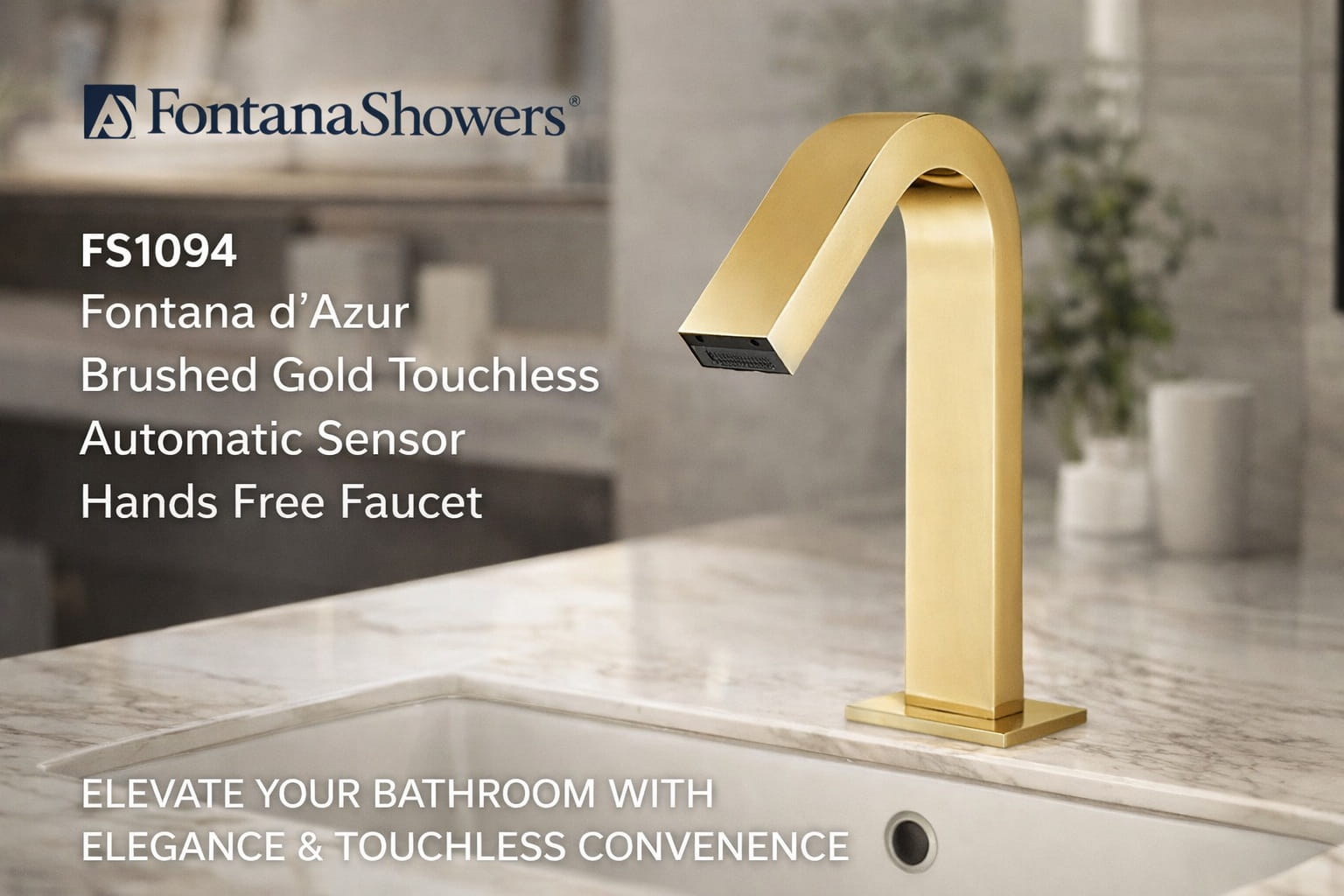
BathSelect

Design families, sensor concepts, and finish selection used in commercial projects.

BathSelect design family sample image for commercial sensor faucet
BathSelect design family sample

How We Tag Designs for AEC Use

Gallery metadata supports fast comparison across geometry, system behavior, and finish families.

Geometry Tags

Quick comparison language
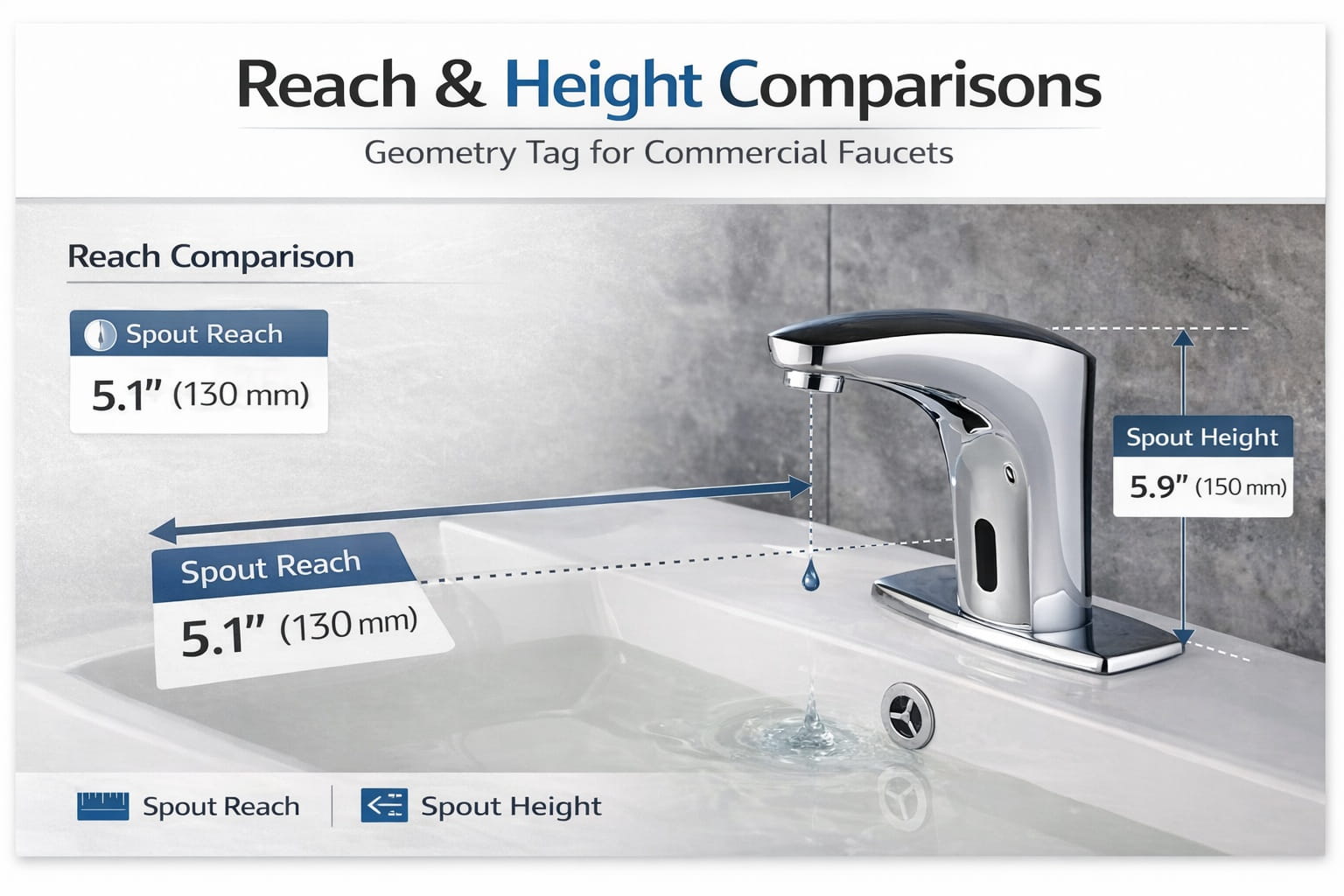
Spout reach class. Spout height class. Outlet type. Deck thickness tolerance.

Geometry tag sample image showing reach and height comparisons
Geometry tag visual reference

System Tags

Sensor and service model
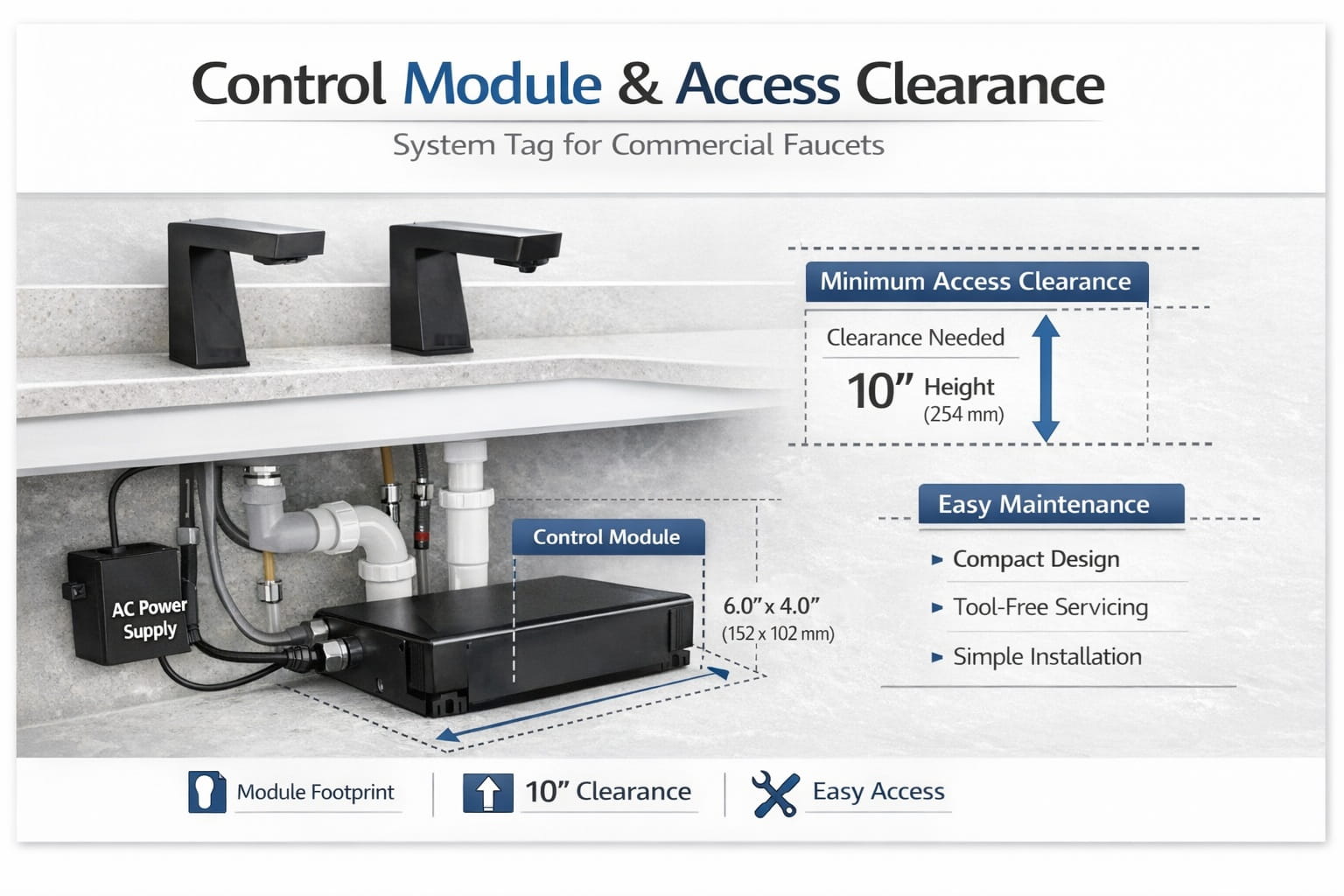
Sensor placement style. Power mode. Valve footprint model. Service mode access requirements.

System tag sample image showing control module footprint and access clearance
System tag visual reference

Finish Tags

Commercial durability and match risk

Finish family category. Cleaning compatibility notes. Finish matching risk across multi-vendor accessory packages.

Finish family sample

Finish family sample image showing chrome, matte, and warm metallic options
Finish family sample

Cleaning compatibility
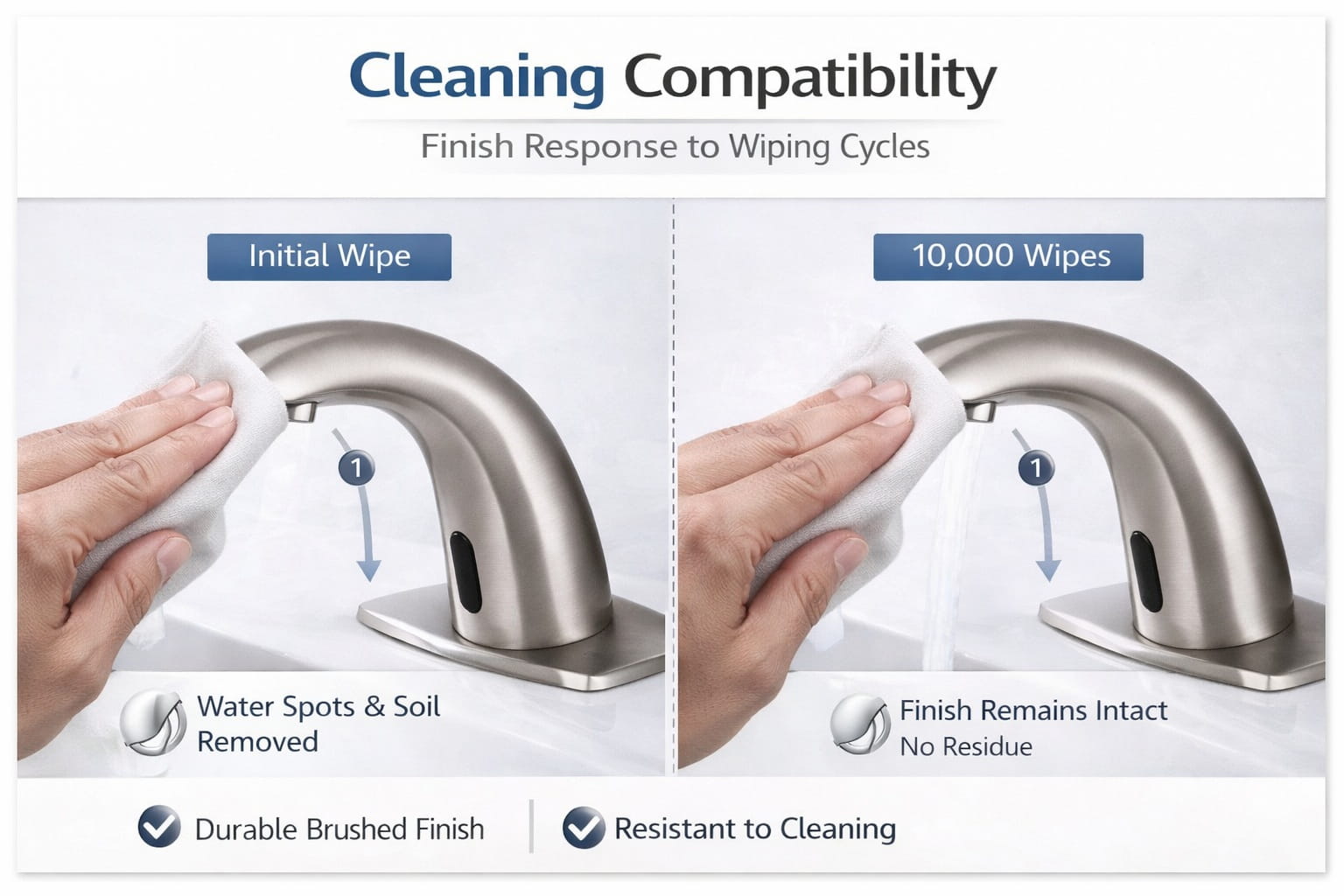
Cleaning compatibility sample image showing finish response to wiping cycles
Cleaning compatibility

Match risk reference
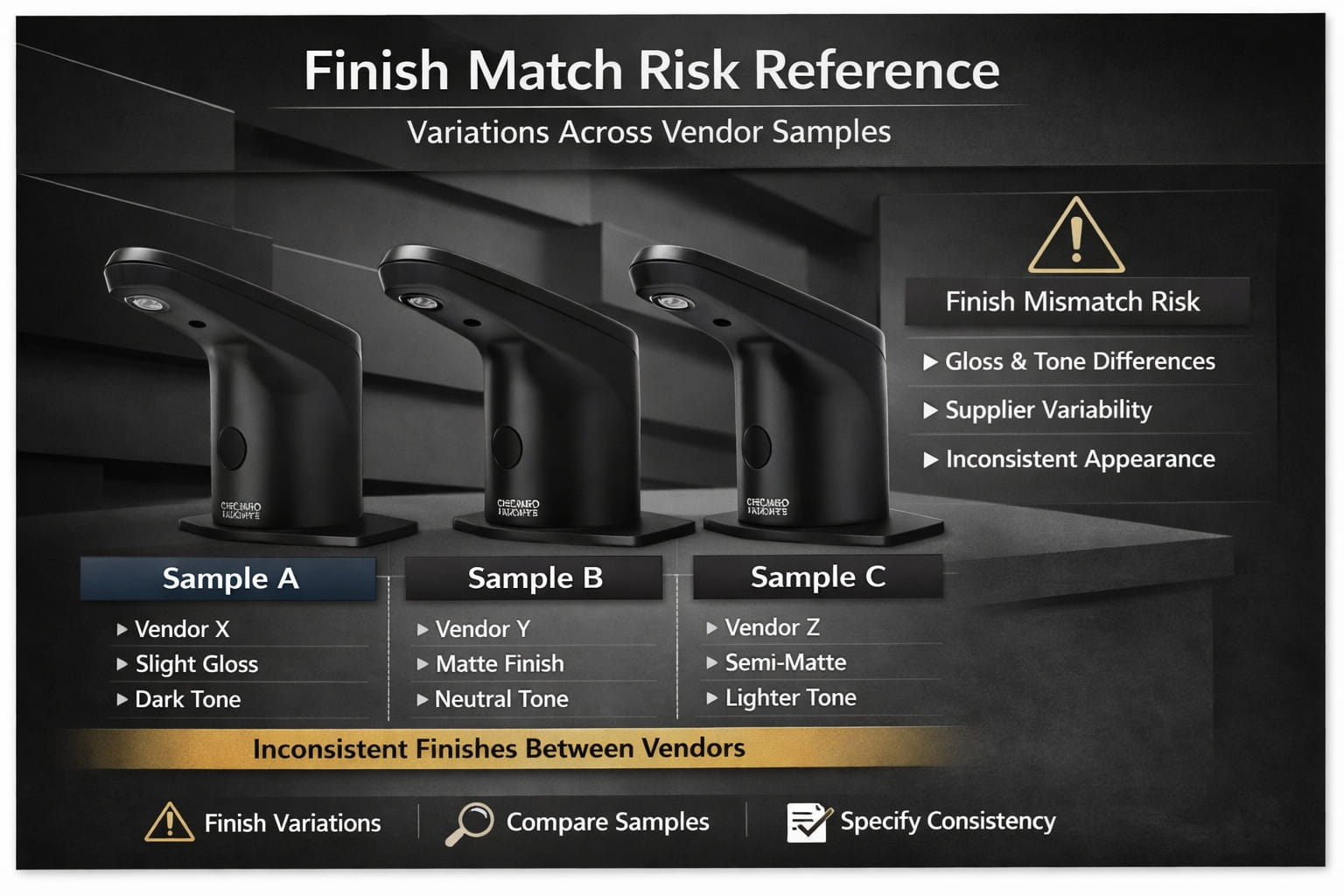
Finish match risk reference image showing variation across vendor samples
Match risk reference

Design Gallery Use Cases in Project Deliverables

The gallery supports architects, plumbing engineers, and facility managers by reducing mismatch risk and improving long-term maintainability.

For Architects

Consistency and proportion control
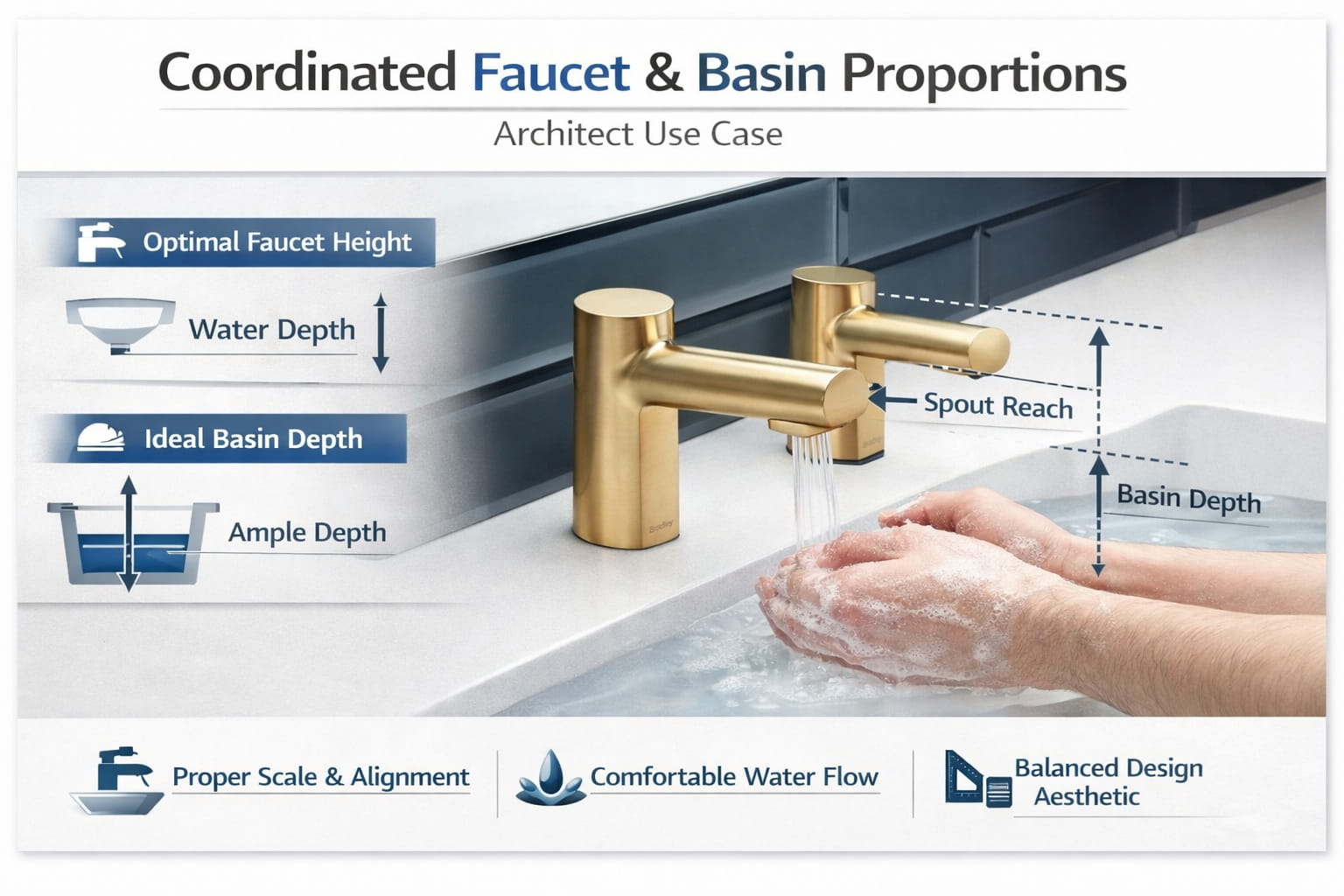
Build consistent washroom language across floors and tenant types. Avoid mismatched proportions between basin, counter, mirror lines, and faucet profile. Select finishes that resist degradation under janitorial schedules.

Architect use case image showing coordinated faucet and basin proportions
Proportion and finish coordination

For Plumbing Engineers

Commissioning stability and documentation
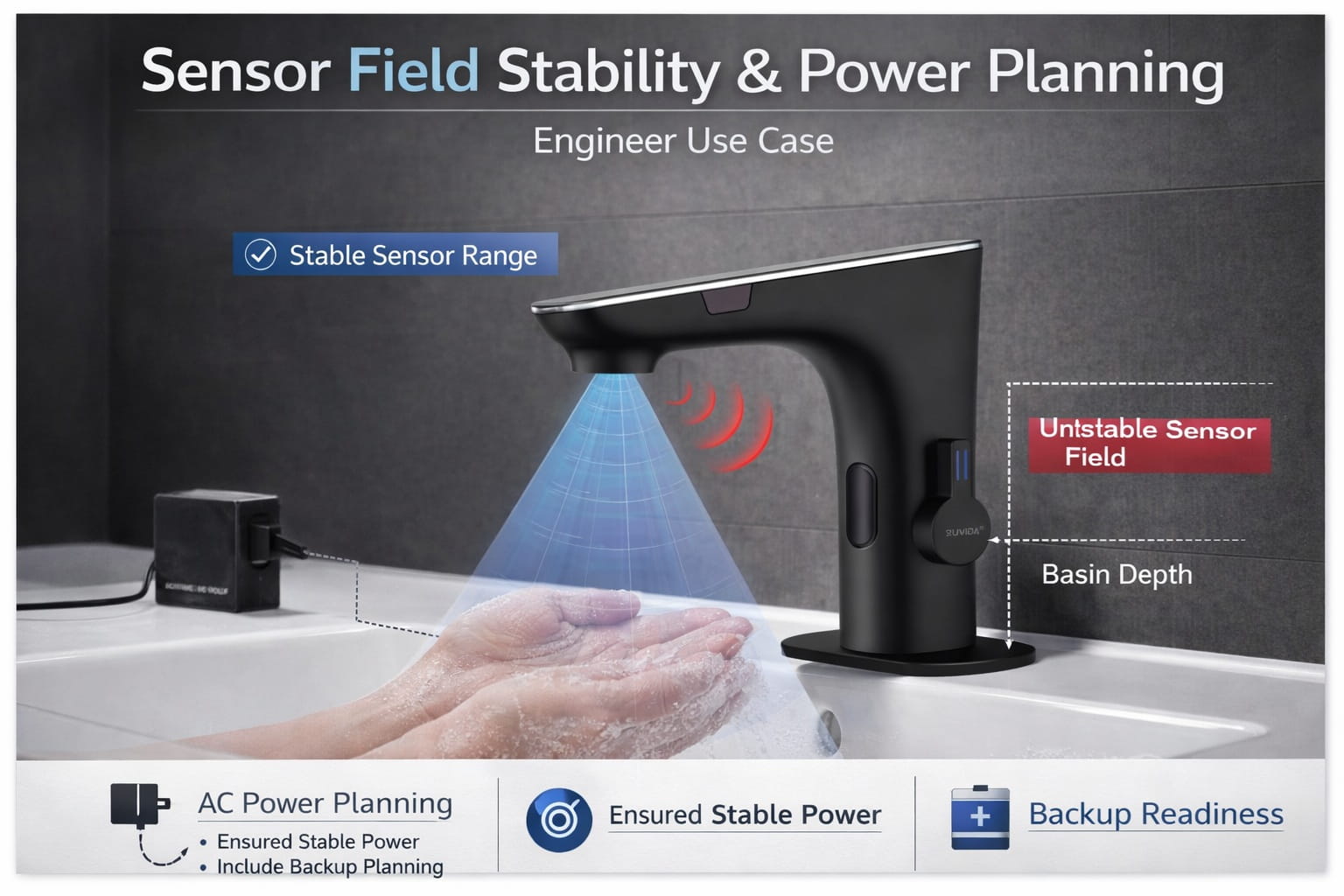
Reduce commissioning issues by aligning sensor platforms to basin reflectivity and discharge zones. Document power planning and access constraints. Standardize repair parts across a campus or portfolio.

Engineer use case image showing sensor field stability and power planning
Sensor stability and power planning

For Facility Managers

Serviceability and parts control
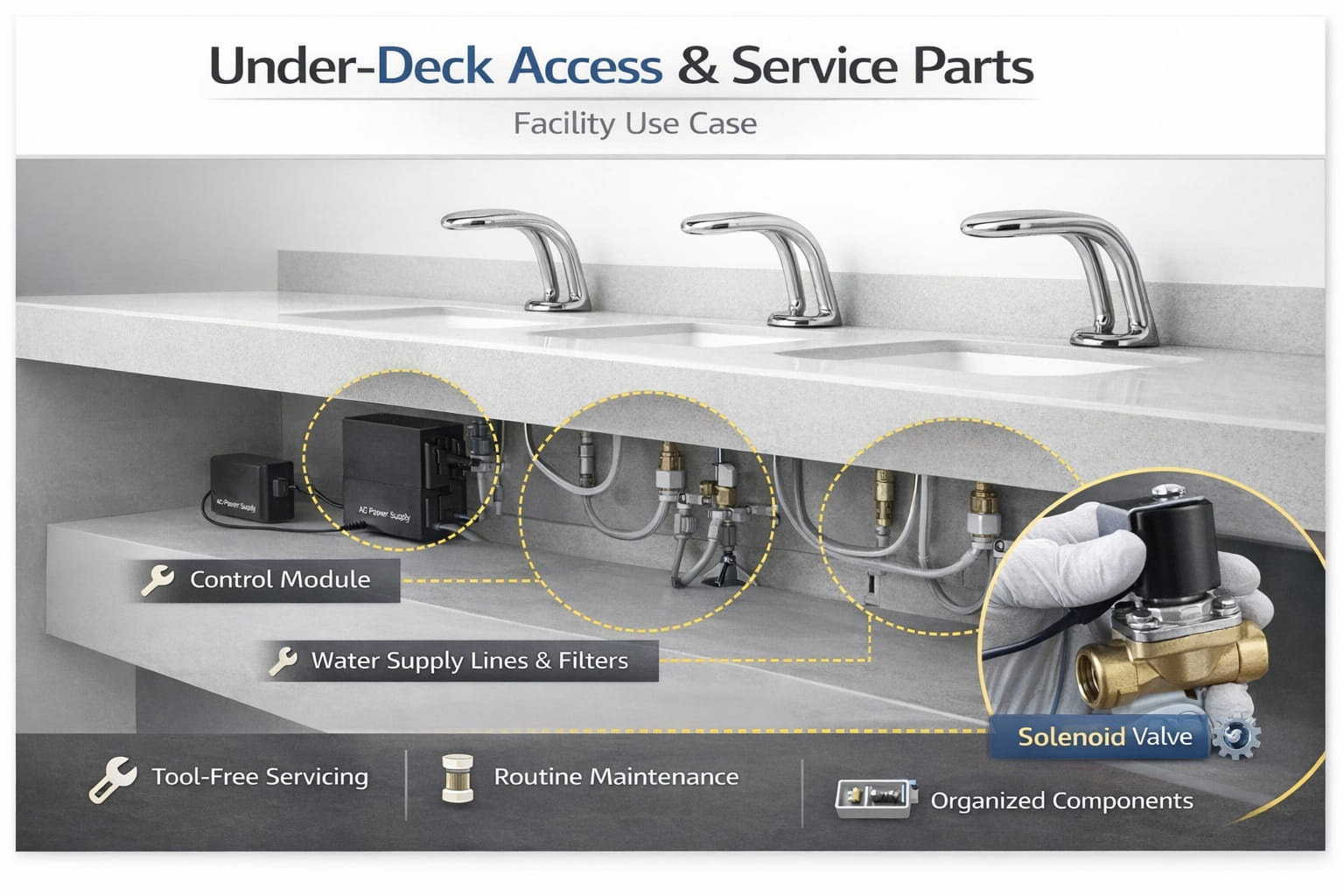
Prevent uncontrolled design variety that multiplies spare parts. Standardize finish selections to simplify cleaning training and chemical compatibility across teams.

Facility use case image showing under-deck access and service parts planning
Service access and parts planning
ArchitecturalFaucets.com · Design Gallery

Elevate your vision with expert insights from a Architectural Faucets
specialist. Browse our curated showcase of real client installations
and spark fresh inspiration for your next project

home 7
home 8
home 9
home 10
home 11
home 12
Scroll to Top