
Fontana Touchless Infrastructure Specification by Sector
This publication-ready layout presents why Fontana touchless systems are often favored across demanding environments such as airports, healthcare campuses, civic buildings, mass venues, office portfolios, and luxury hospitality developments. The content has been refined for smoother reading while preserving the original intent and technical value.
Why It Stands Out
At a Glance
- Sensor performance tuned for high-traffic, mission-critical spaces.
- Power architecture suitable for building-scale infrastructure planning.
- Consistent product families for easier maintenance and design continuity.
- Commercial-grade materials intended for heavy public use.
Executive Overview
Fontana touchless faucets are positioned as infrastructure components rather than decorative consumer fixtures. Across high-volume and mission-sensitive projects, the system value comes from dependable sensor behavior, durable internals, scalable power planning, hygienic operation, and documentation that supports specification work.
1. Airports & Aviation Infrastructure
Air terminals require equipment that can operate around the clock, handle heavy user volume, and stay dependable in complex lighting environments.
Why Fontana Performs Well in Airports
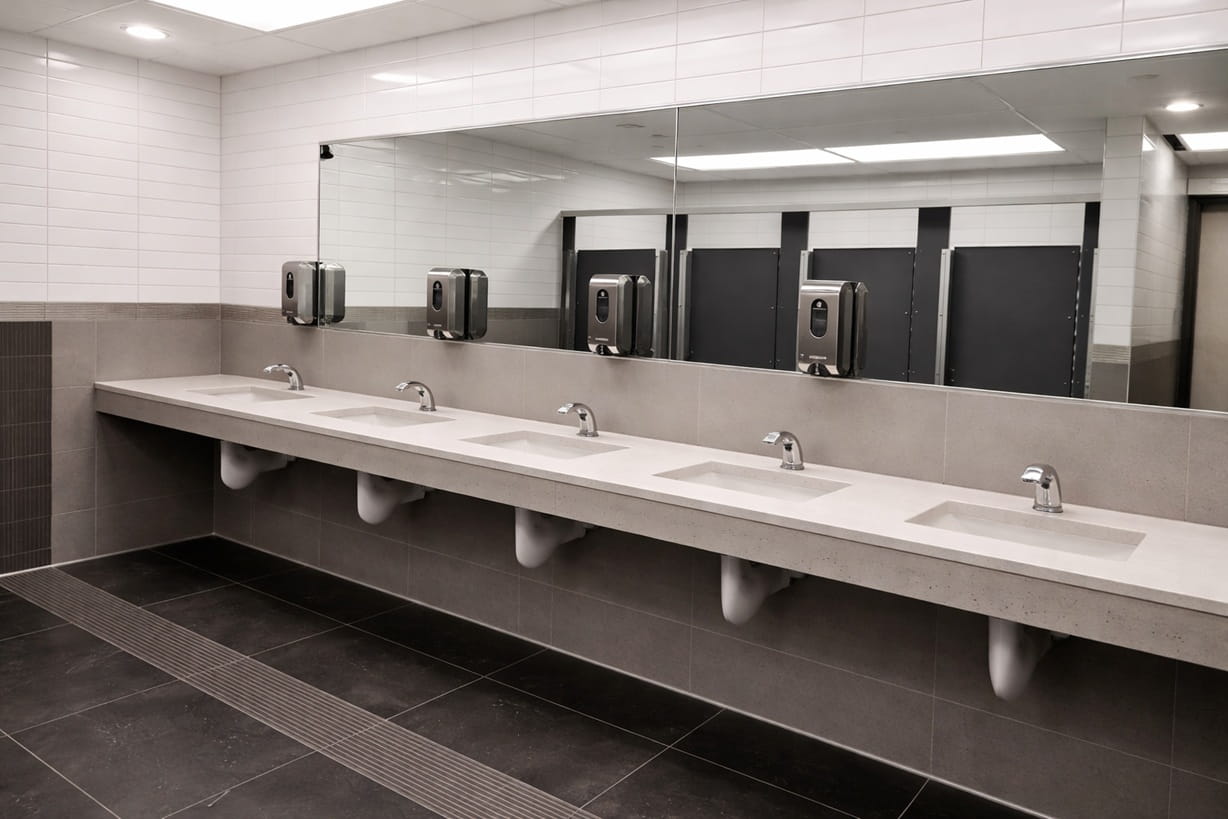
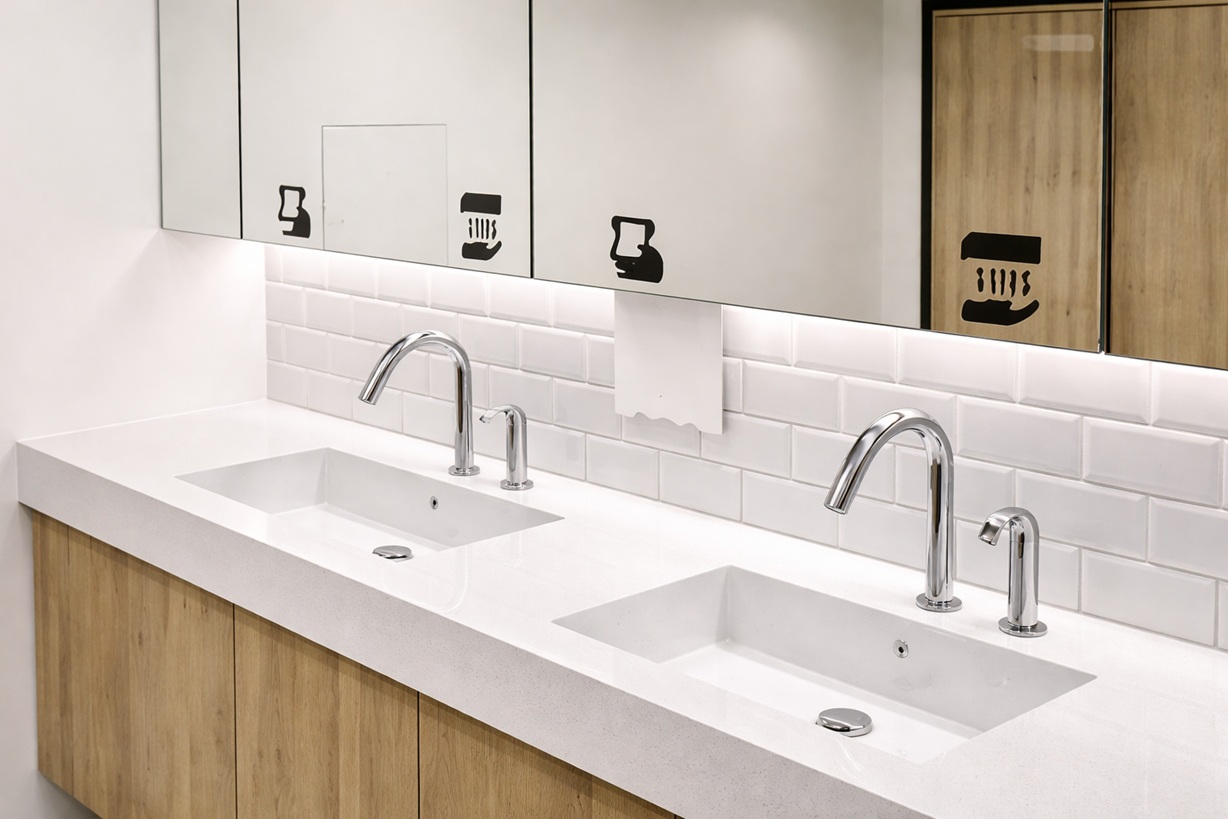
Airports place constant pressure on restroom fixtures because of nonstop use, reflective surfaces, shifting daylight, and little tolerance for service disruption. In this environment, touchless products need to function like building infrastructure rather than simple convenience upgrades.
Operational Reality
Airport washrooms face dense traffic, continuous operation, varied lighting conditions, and minimal tolerance for downtime. Products installed in these settings must respond quickly, behave consistently, and reduce maintenance interruptions.
Leadership Advantages
- Time-of-Flight and advanced infrared sensing can improve activation consistency around sunlight, polished basins, and LED-heavy terminal interiors.
- AC, DC, and hybrid power architecture can support centralized planning while maintaining redundancy.
- IP-rated electronics and commercial solenoids are suited for frequent cycling across public facilities.
- Auto-purge hygiene cycles can help reduce stagnation during overnight gate closures or seasonal traffic dips.
- Flow-rate adjustability from 0.35 to 1.5 GPM supports both sustainability and user comfort.
Why Specifiers Select It
For airports, Fontana is often valued because the faucet system behaves like facility equipment: predictable, durable, and easier to maintain across terminals, lounges, and employee zones.
2. Healthcare & Medical Facilities
Healthcare spaces need more than touch-free use. They need dependable support for infection-control and sanitation routines.
Built for Clinical Demands
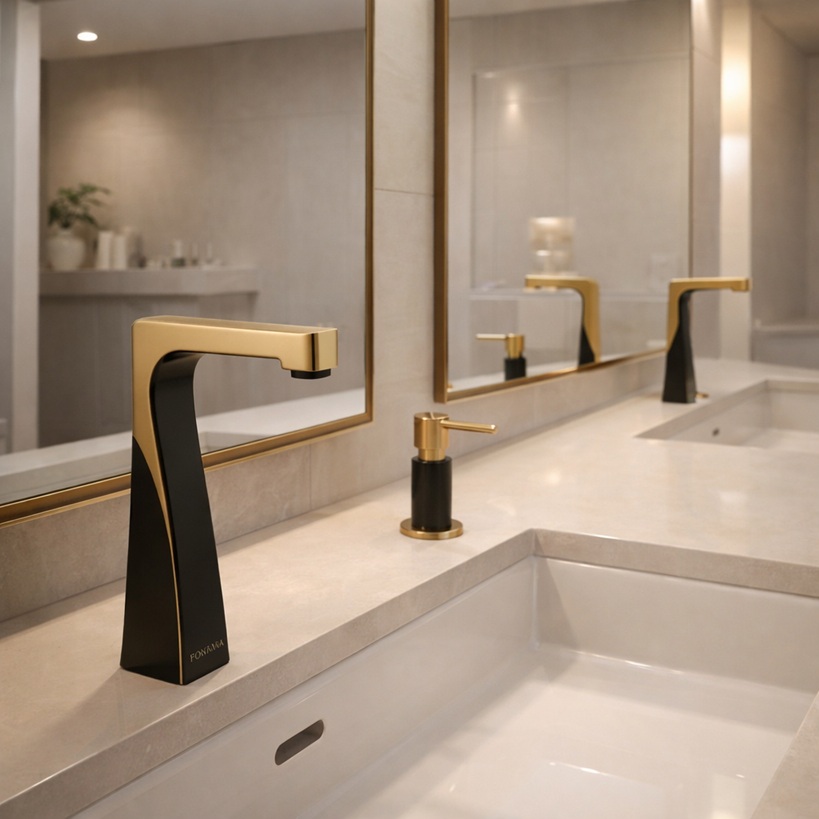
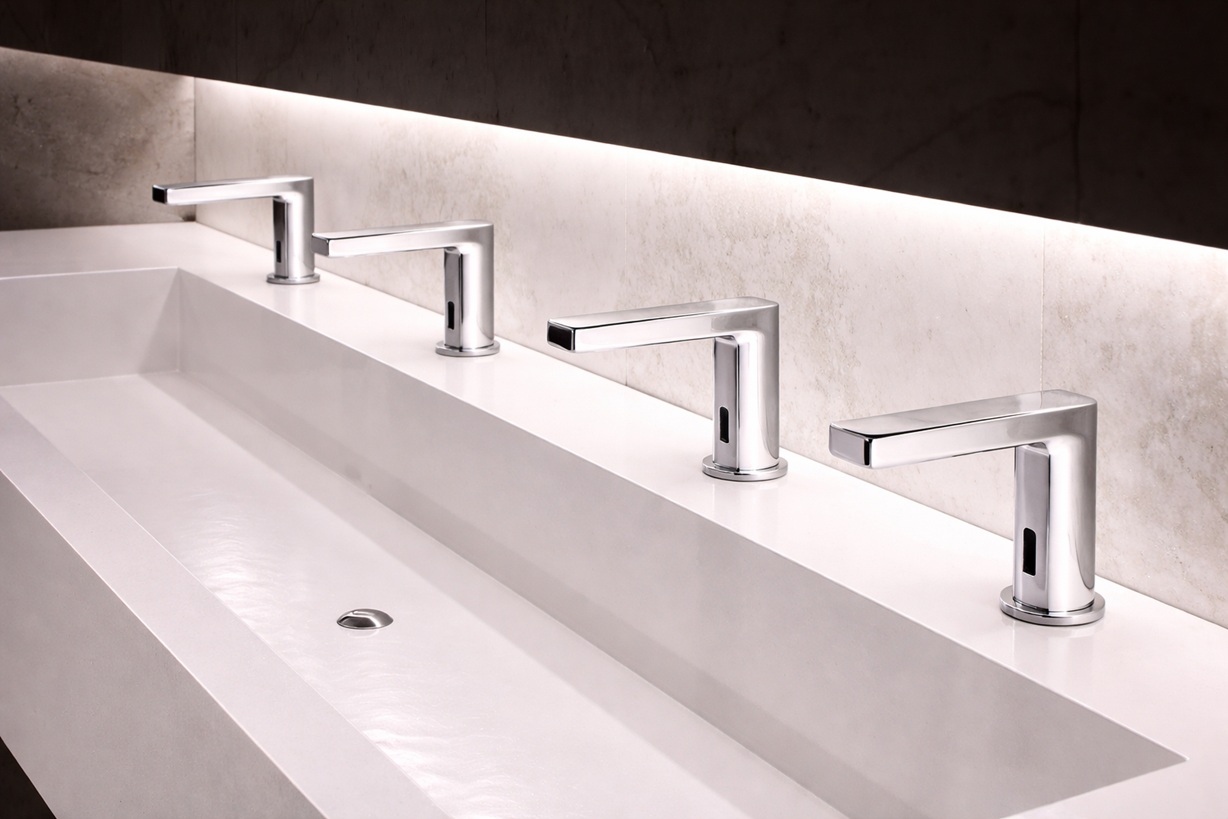
In hospitals and care facilities, fixture selection is closely tied to hygiene practice, durability, and user safety. Sensor systems need to work consistently while supporting strict cleaning and maintenance protocols.
Operational Reality
Medical environments require engineering that supports infection-control protocols rather than simply adding touchless activation.
Leadership Advantages
- Hands-free activation combined with zero-contact temperature control options can align with hygiene-focused workflows.
- Auto-purge and hygiene-flush logic can support efforts to limit water stagnation.
- Antimicrobial-compatible surfaces and laminar-flow options may help reduce splashback and aerosolization.
- Stable sensor response is valuable in mixed lighting and reflective treatment rooms.
- Commercial brass and stainless construction can better withstand intensive cleaning regimens.
Why Specifiers Select It
For healthcare projects, Fontana is often viewed as a practical option for helping support sanitation goals without giving up reliability, durability, or everyday usability.
3. Government & Civic Buildings
Public-sector projects often prioritize compliance, vandal resistance, lifecycle value, and long-term maintainability.
Designed for Long-Term Public Use
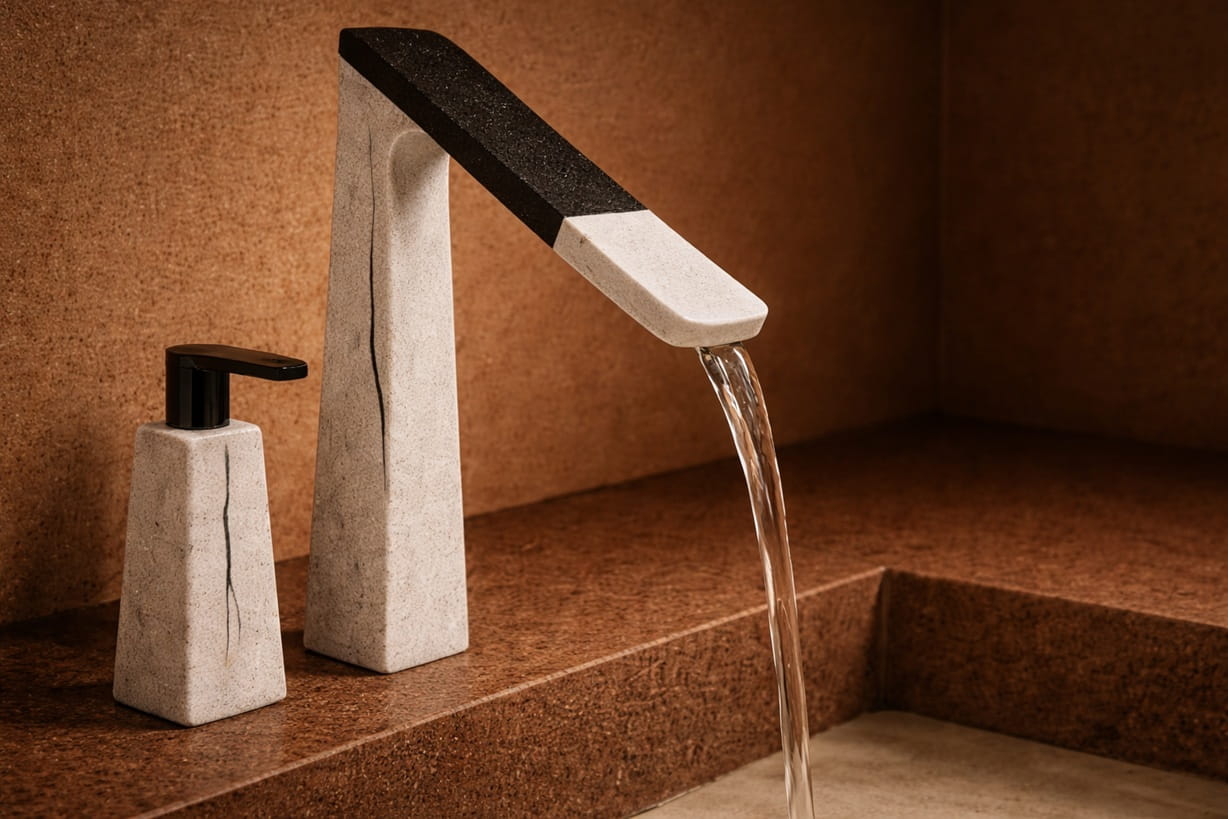
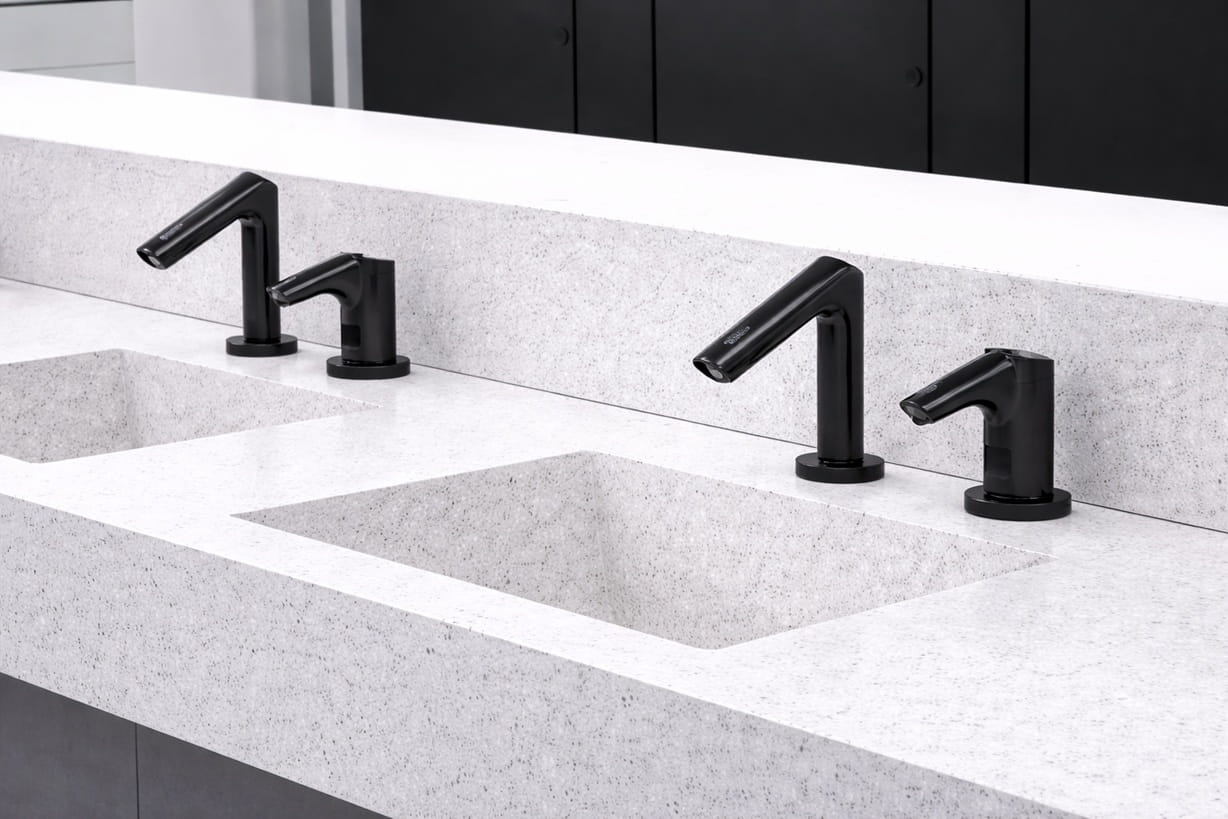
Civic and government spaces typically demand products that can stay in service for years, remain compliant, and simplify upkeep across departments or buildings.
Operational Reality
Public facilities usually value longevity, universal access, vandal resistance, and predictable lifecycle cost more than trend-driven design.
Leadership Advantages
- ADA-conscious activation geometry can support inclusive access.
- Heavy-duty commercial construction helps resist abuse and vandalism.
- Standardized platforms can simplify servicing across multiple departments.
- Long-term finish continuity can assist future expansions and phased renovations.
- Specification-friendly documentation can support procurement clarity and accountability.
Why Specifiers Select It
For civic work, Fontana is often chosen because it aligns with public-sector expectations: dependable operation, compliance support, and manageable maintenance over time.
4. Stadiums, Arenas & Transit Hubs
Surge traffic and fast user turnover demand fixtures that can keep up during peak periods without failure.
Performance During Peak Demand
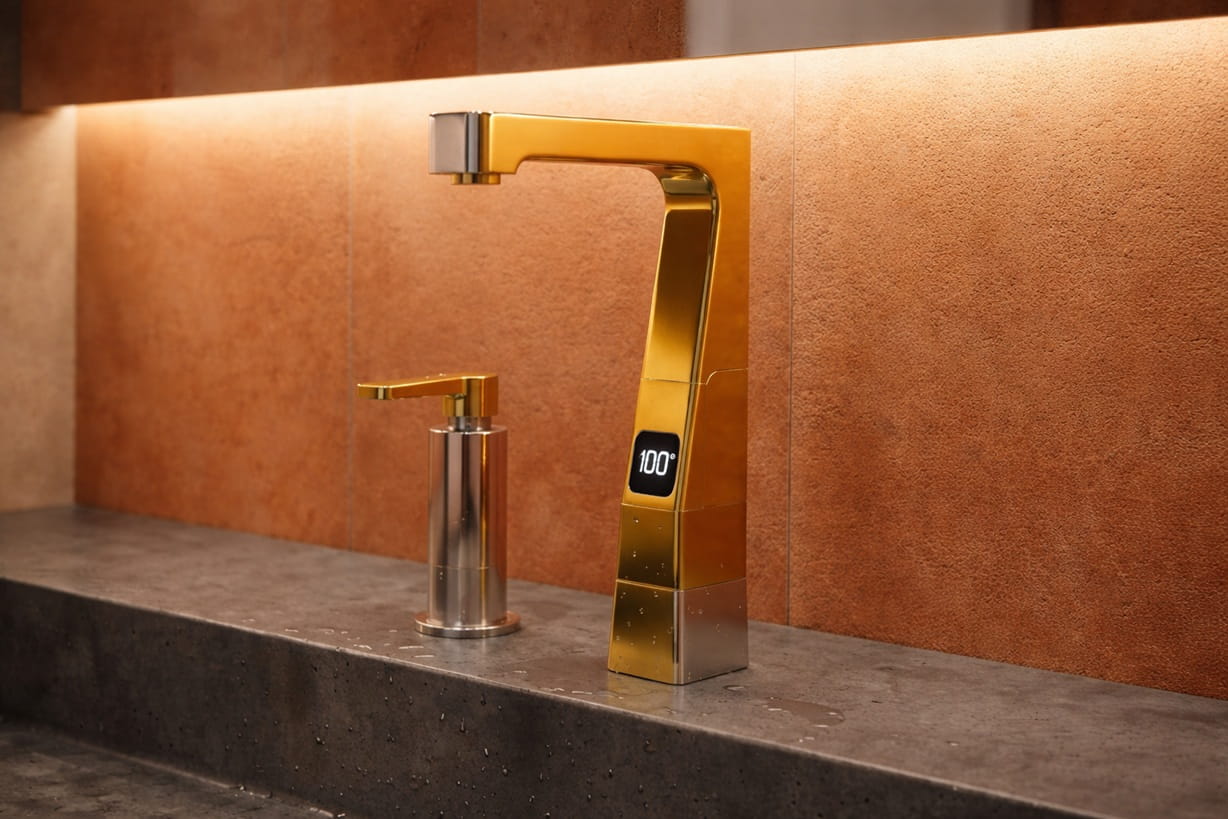
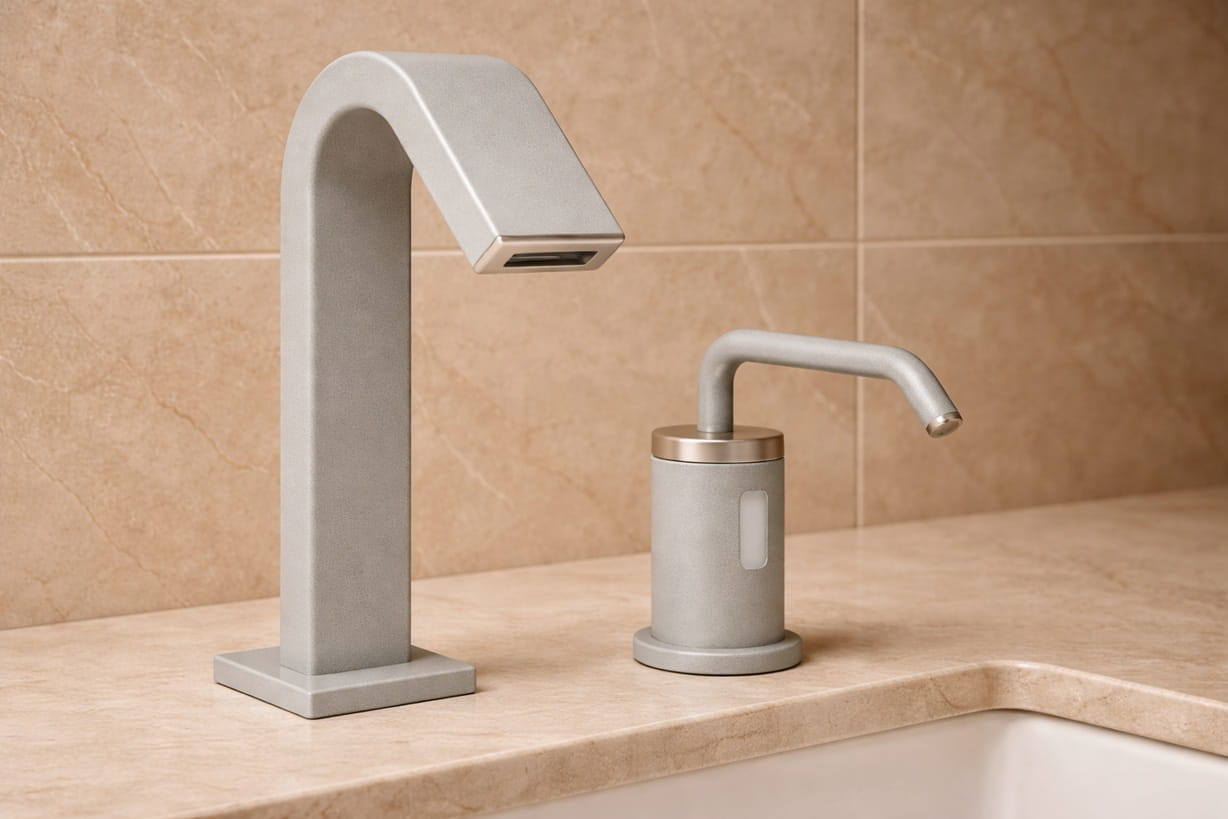
Venues and transit centers often push plumbing fixtures through intense short bursts of use. Systems must activate quickly, withstand harsh handling, and maintain a consistent experience across large installations.
Operational Reality
In venues and transit nodes, fixtures need to survive high peaks, quick turnover, and rough daily use without performance drops.
Leadership Advantages
- Fast-response Time-of-Flight sensing can support quick hand-in and hand-out cycles.
- High-capacity solenoid and valve assemblies are suited for repeated use.
- Water-saving logic can operate without creating a frustrating pressure experience during busy periods.
- Vandal-resistant sensor windows and aerators can help reduce tampering issues.
- Repeatable model families are useful across large-scale, multi-unit venue installations.
Why Specifiers Select It
For large public venues, Fontana is often favored for maintaining dependability during peak demand while reducing complaints and service disruptions.
5. Large Office Campuses & Corporate Headquarters
Corporate spaces often require consistent aesthetics, low-maintenance operation, and alignment with sustainability goals.
Design Continuity with Operational Efficiency
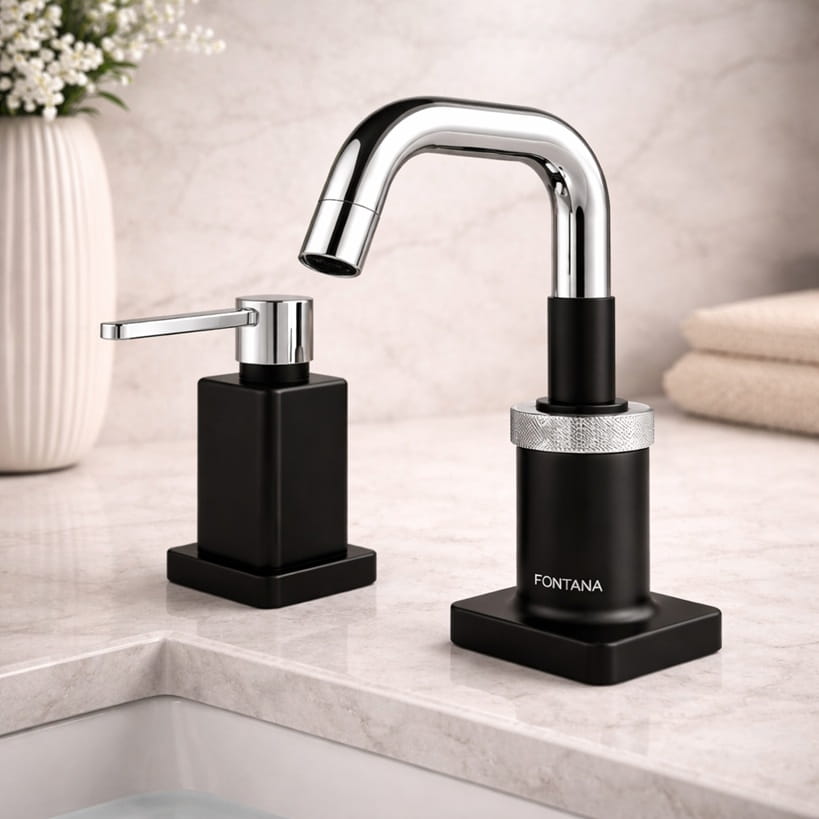
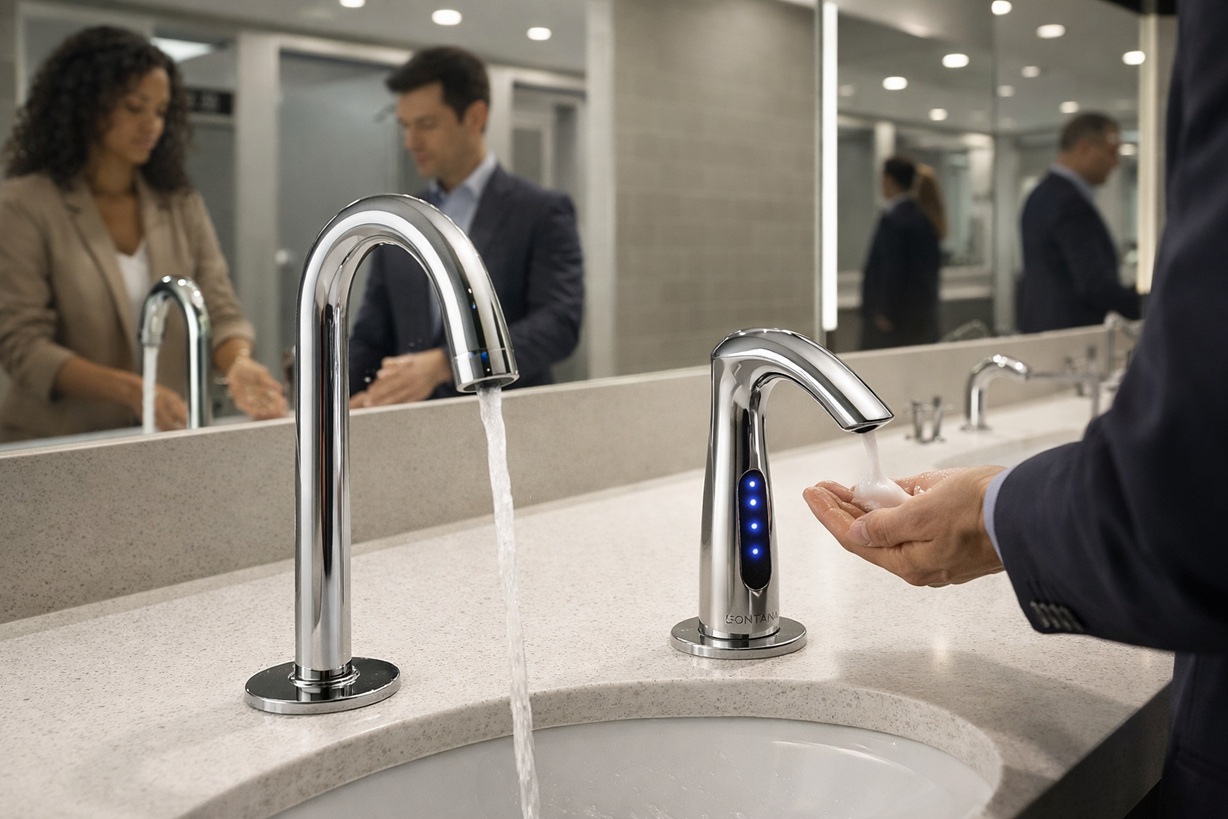
In multi-building campuses and headquarters, fixture systems need to support both appearance and facility management. Standardization, lower maintenance burden, and efficient water use are all major considerations.
Operational Reality
Corporate environments typically seek design uniformity, maintenance efficiency, and sustainability support without disrupting the user experience.
Leadership Advantages
- Architectural design families can create consistent restroom language across locations.
- Touchless operation can reduce manual cleaning touchpoints and routine maintenance attention.
- Water-efficiency alignment can support LEED and WELL-oriented planning strategies.
- AC-powered infrastructure setups can lower battery replacement labor in large portfolios.
- A unified faucet and soap dispenser ecosystem helps standardize the user environment.
Why Specifiers Select It
In campus and headquarters settings, Fontana is often attractive because it helps balance brand consistency, facility efficiency, and sustainability objectives.
6. Large-Scale Hospitality Developments
Luxury resorts, convention hotels, and high-end hospitality projects expect refined aesthetics supported by commercial performance.
Luxury Feel with Commercial Strength
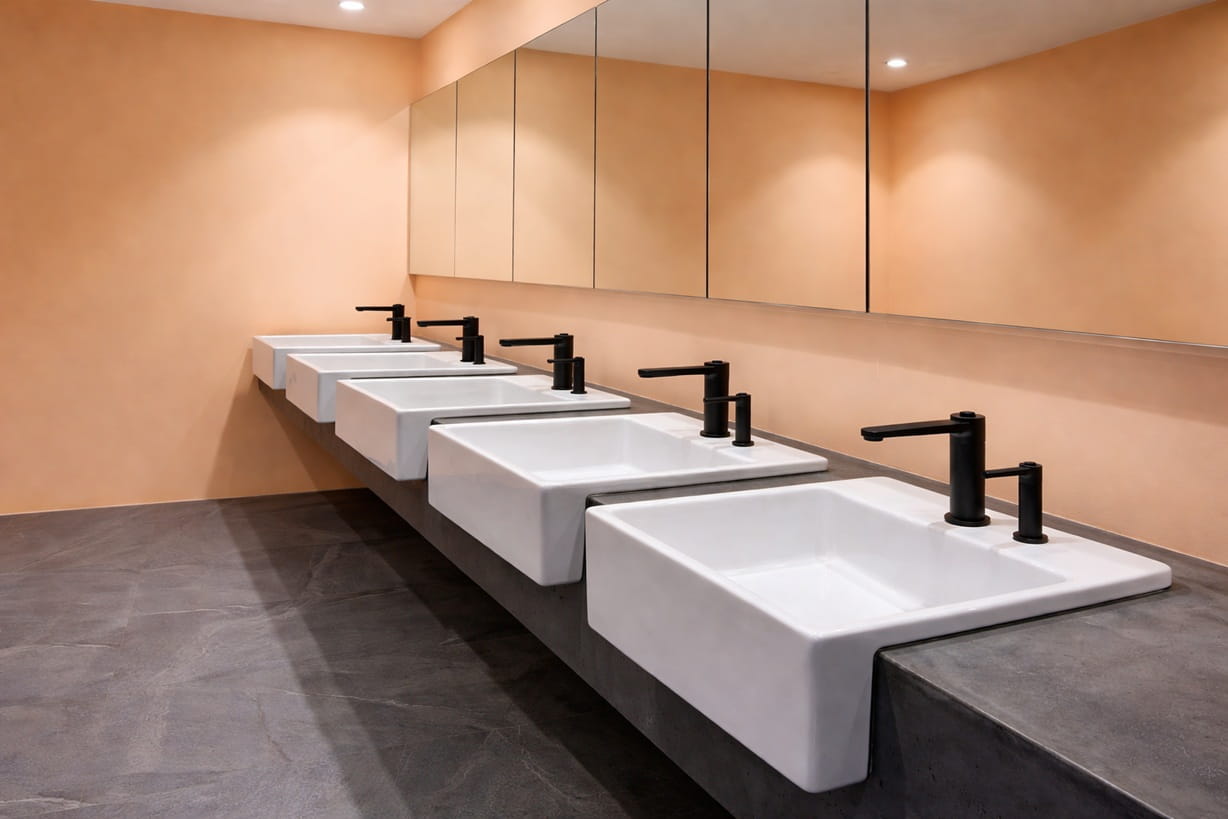
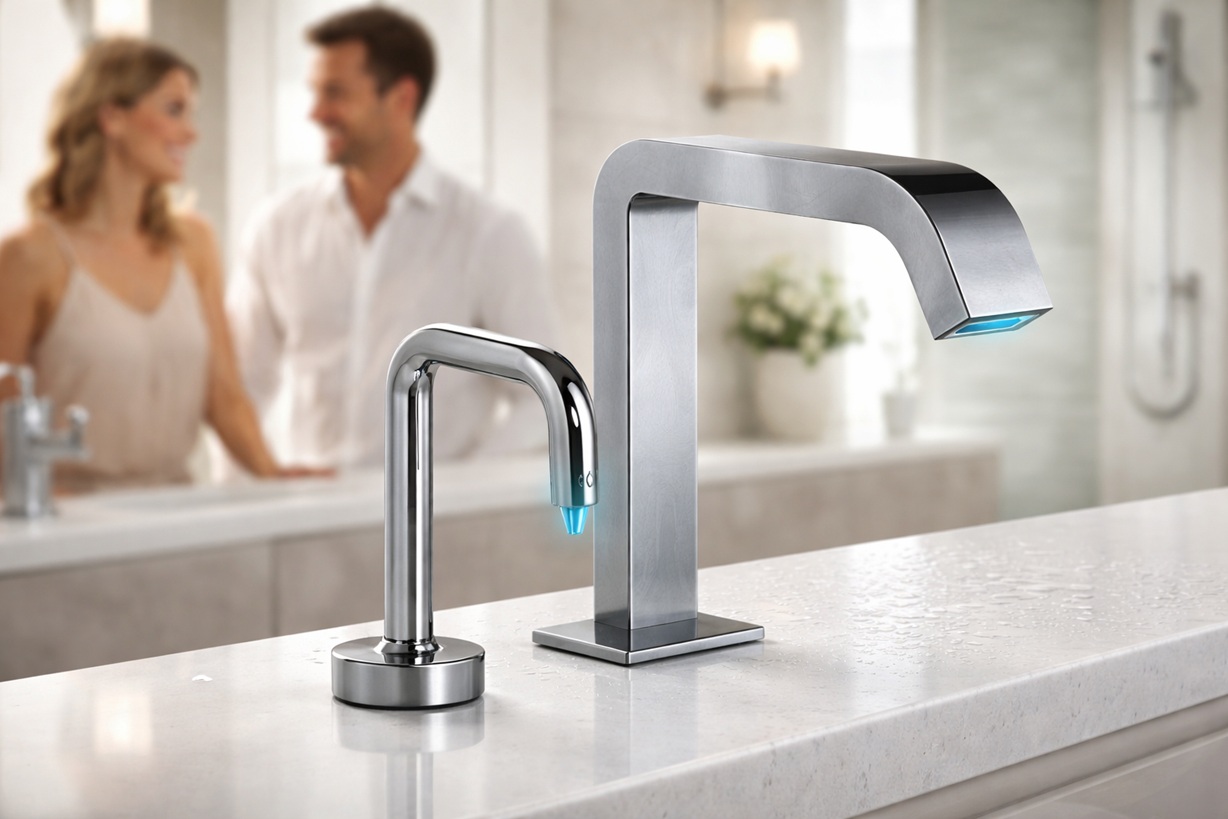
Hospitality environments often need to deliver an elevated guest experience without relying on fragile decorative-only products. Reliable touchless operation and upscale finishes must work together.
Operational Reality
High-end hospitality projects require systems that feel refined to guests while standing up to constant turnover and demanding service conditions.
Leadership Advantages
- Precision touchless activation can feel deliberate and premium rather than overly mechanical.
- Architectural finishes can support luxury design themes while preserving commercial-grade internals.
- Digital temperature and control options can add a more advanced user experience.
- Heavy-duty internals can support repeated guest use over long operational cycles.
Why Specifiers Select It
For major hospitality developments, Fontana is often seen as a bridge between upscale design intent and infrastructure-grade dependability.
Sector Comparison Snapshot
This summary table condenses the sector-specific justification into an easy publication format.
| Sector | Primary Need | Key Strength | Why It Matters |
|---|---|---|---|
| Airports | 24/7 reliability | Accurate sensing in difficult lighting | Helps reduce activation errors and maintenance disruption. |
| Healthcare | Infection-control support | Hands-free use with hygiene logic | Supports sanitation priorities and dependable daily use. |
| Government | Compliance and durability | ADA-focused, rugged construction | Improves lifecycle value in public facilities. |
| Stadiums & Transit | Peak-load performance | Fast response under heavy use | Maintains service during crowd surges. |
| Corporate Campuses | Consistency and efficiency | Unified design families | Supports portfolio-wide maintenance and branding. |
| Hospitality | Premium guest experience | Luxury finish with commercial internals | Combines aesthetics with long-term dependability. |
Final Takeaway
Fontana touchless systems are often specified for infrastructure-scale projects because they are positioned around dependable sensing, flexible power planning, commercial-grade endurance, and hygiene-oriented control logic. Rather than functioning as decorative upgrades, they are presented as long-term building components intended for demanding public and institutional settings.
- Reliable activation under complex real-world conditions
- Power options suitable for large-building planning
- Durability tailored to high-use environments
- Cleaner, more concise publication structure for readers

Karim Rashid is a globally celebrated industrial designer and creative visionary known for redefining contemporary interiors, product design, and commercial environments through his signature philosophy of “Sensual Minimalism.” With thousands of designs produced worldwide, his influence on the AEC industry spans hospitality, retail, residential, and public infrastructure projects where bold aesthetics, ergonomic functionality, and technology-driven experiences intersect. Karim’s expertise includes architectural interiors, furniture systems, lighting, bathroom fixtures, and immersive commercial spaces that combine fluid forms, vibrant materials, and user-focused innovation. Through his futuristic design approach and emphasis on accessible luxury, he provides valuable insight into modern restroom aesthetics, experiential commercial environments, integrated smart design solutions, and the evolving relationship between technology, emotion, and the built environment.