
Touchless Design • Planning Guide 2025
Airports, corporate campuses, stadiums and hospitality towers all share one challenge: thousands of daily users moving through restrooms that must remain clean, intuitive, and easy to maintain. Touchless faucet systems have become the norm, but their success depends on smart planning by the AEC team long before bidding and construction.

This guide walks through a practical framework for designing and specifying touchless faucet systems across large commercial projects. We cover performance baselines, layout strategy, power and controls, and how to coordinate with soap and hand drying solutions using real world tools from brands such as Fontana Faucets, TOTO, Delta, BathSelect, and others.
Before picking shapes and finishes, define how your touchless faucets must perform. For airports and arenas, this means high duty cycles, vandal resistance, and field serviceable components. For corporate work, it often means lower noise, smooth activation, and consistent flow across multiple floors.
Manufacturers publish performance data, recommended pressure ranges, and duty cycle assumptions that your MEP and plumbing consultants can use in sizing and layout.
Key baseline questions
- Target flow rate per fixture and combined flow at peak usage
- Required splash resistance for public zones
- Expected lifetime in cycles and replacement strategy for cartridges and sensors

The best touchless faucet will feel wrong if the layout is poor. Aligning the spout outlet with basin geometry, user reach, and accessible clearances matters in high traffic environments where guests have only seconds at the sink.
Standardize a few sink bay types and map faucet centers, sensor ranges, and usable counter depth. Use manufacturer dimensional data as the base for your standard details.
Layout checklist for AEC teams
- Verify sensor range does not cause cross activation between adjacent basins
- Ensure accessible bays meet reach and knee clearance requirements
- Coordinate with mirror heights, lighting positions, and hand dryer locations
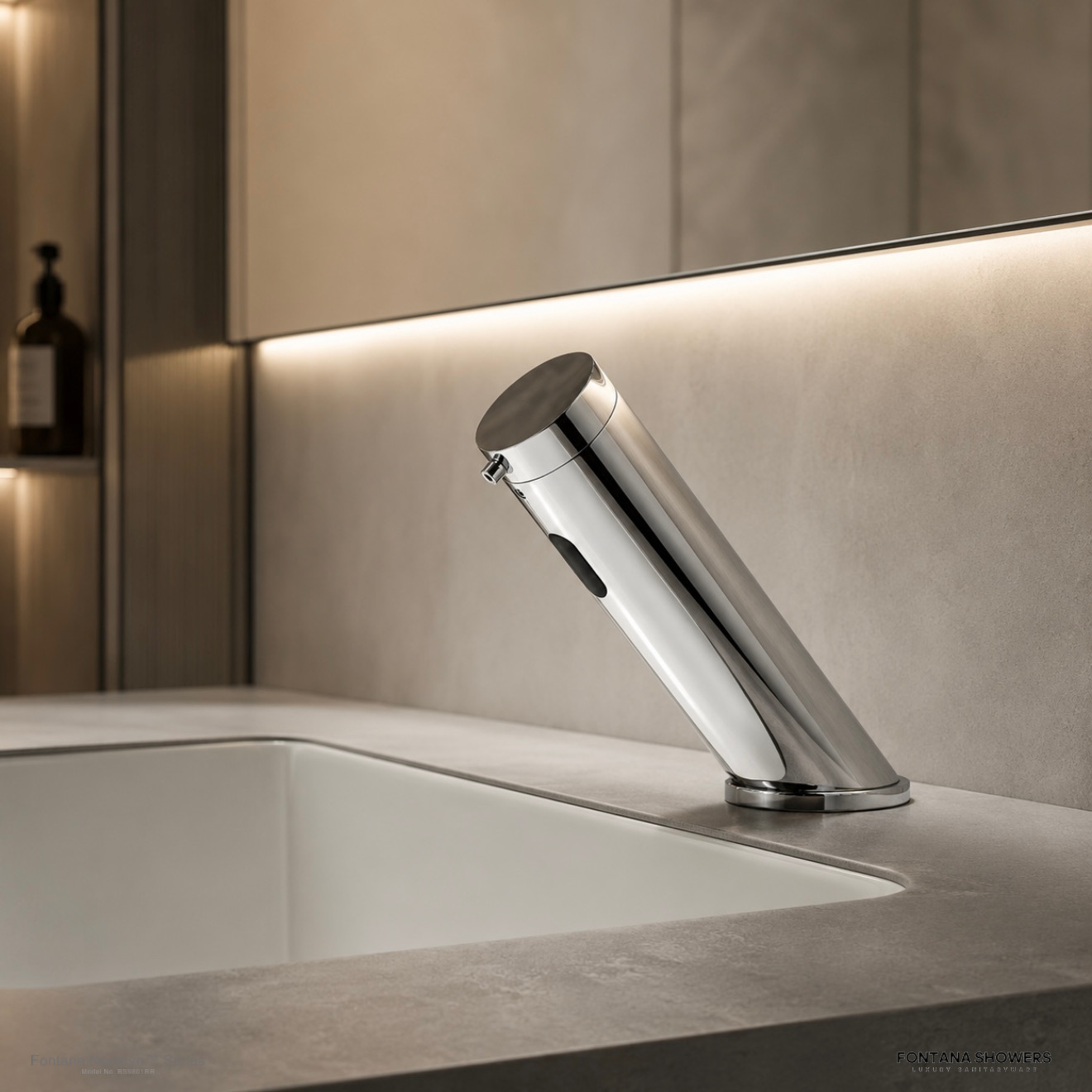
Key manufacturer resources
Bookmark these pages when setting up office standards for touchless faucet systems.
Spec tip
When you finalize your touchless faucet schedule, include a simple owner brief that explains sensor behavior, shutoff locations, and where to order parts. It reduces RFIs and emergency calls after turnover.
Smart faucet technology is now an important part of intelligent building design because it supports more than hands-free operation. In commercial offices, hospitality properties, healthcare facilities, and public buildings, these systems help reduce water waste, improve hygiene, and create a more consistent restroom experience for daily users.
For architects, engineers, and specifiers, the value of a smart faucet comes from reliable performance over time. Accurate sensor activation, controlled flow timing, and easier maintenance access can support sustainability goals while also lowering service issues in high-traffic washrooms. This makes smart faucets a practical choice for buildings focused on long-term efficiency and user comfort.

Why this update helps
Adding content like this gives the page stronger relevance for search terms tied to smart faucet technology, intelligent building design, commercial restroom planning, water efficiency, and touchless fixture performance without making the article feel repetitive.

Lina Farrow is a staff writer and editorial team member at architecturalfaucets.com. Her work focuses on faucet specifications, materials, installation requirements, and project planning, helping the editorial team turn manufacturer resources, product data, published guidance, and attributable references into practical information for architects, designers, specifiers, and project professionals.