
In contemporary architecture, bathrooms and wash zones have evolved into performance-driven, technology-infused environments. Sensor faucets—also called touchless or automatic faucets—now play a critical role in this transformation. Their integration into architectural plans demands foresight, coordination, and a balance of aesthetics and technical precision.
This article outlines a practical, step-by-step design approach for architects and specifiers incorporating sensor faucets into architectural documentation, ensuring hygiene and sustainability, which also integrates seamlessly into the design.

Why Sensor Faucets Matter in Architectural Design
Sensor faucets blend design innovation with environmental concern. They enhance hygiene with reduced surface contact, economize water with precision in flow, and highlight the sleek minimalism of modern spaces.
As GDI Engineering Design commented:
Water flow can be regulated with sensors to reduce waste through sensing human presence when it comes to sensor-based faucets and toilets.
In a broader sense, the touchless fixtures have become a part of contactless architecture, making use of sensors and automation to foster health and efficiency:
When installed thoughtfully, sensor faucets enhance both functional and architectural building experiences, reinforcing the architect’s commitment to user well-being and sustainable design.

Concept & Programming Phase
Defining Use Context
Before specifying models, architects need to identify the functional context:
- Public restrooms in high-traffic environments
- Boutique hospitality or office restrooms
- Healthcare or institutional purposes
- Residential wellness or spa zones
Each setting specifies power type, finish durability, flow rate, and vandal-resistance level.
Performance and Compliance
Typical design targets include:
- Automatic shutoff after 10 seconds of inactivity
- The flow rate shall not exceed 0.5 gallons per minute at 60 psi for public use.
- Sensor activation range between 2–6 inches
- Battery life or power source verification
As TS Brass explains:
“Touchless motion-sensor faucets promote hygiene by eliminating the need for physical contact and contribute to water conservation.”
Building System Integration
Early coordination with plumbing and electrical engineers ensures that:
- Proper power supply routing (battery or hard-wiring)
- Water pressure compatibility
- Accessibility for Maintenance and Calibration
- Space for the solenoid and control box behind or below the counter
Additionally, at this early stage, architects can also verify sustainability objectives such as WaterSense or WELL certification and align faucet specifications accordingly.

Design & Coordination Phase
Mounting and Rough-In Coordination
Sensor faucets can be deck-mounted, wall-mounted, or mounted in custom millwork. Architects should:
- Indicate precise hole spacing and backset dimensions
- Allow clearance for sensor fields (avoid obstruction by backsplash or mirror)
- Provide access panels for power packs and valves
From lessons learned across multiple installations:
“The issues associated with sensor faucets in most retrofits relate less to the faucet itself, but rather with incompatible or outdated plumbing infrastructure.”
Power and Control Systems
Identify early whether faucets are battery-powered, low-voltage, or mains connected. Architectural documentation should show conduit routes, junction boxes, or cable pathways for concealed wiring.
Integration in BIM Models
Use manufacturer BIM or Revit families for accurate coordination. As one manufacturer notes:
“BIM, coupled with sensor faucets, enables greater accuracy and collaboration across disciplines.”
It helps in aligning architectural, MEP, millwork, and electrical disciplines, reducing on-site conflict.

Installation & Commissioning
Installation Instructions
- Must be installed by trained plumbers who know sensor systems.
- Check supply pressure (typically 20–80 psi)
- Protect sensor lenses from construction dust or paint overspray
- Include solenoid valve and battery pack access provisions
Commissioning Process
- Test activation range and shutoff delay
- Measure flow rate (must not exceed code limit)
- Perform splash tests for basin compatibility
- Verify automatic shut-off upon sensor obstruction
Commissioning in the field ensures faucets meet both code compliance and user satisfaction.
Maintenance Access
Design removable panels for control boxes, batteries, and sensors. As identified during field research:
Regular cleaning and calibration are the keys to reliability and longevity in sensor-based faucets.

Long-Term Maintenance and Lifecycle Design
Modern sensor faucets are engineered for 10–15 years of service life with minimal intervention. However, architectural plans must accommodate maintenance needs:
- Specify cleaning procedures and sensor lens materials (optical vs. infrared).
- Document replacement part availability – solenoid valves, sensors, and batteries.
- Provide maintenance clearance: usually 4–6 inches behind the vanity.
- Ensure durable finishes; matte or PVD coatings are preferred for frequent cleaning cycles.
From an operational point of view, the design should also include data analytics for water-use monitoring and maintenance alerts. Touchless technology is not just a trend; it’s part of the future in hygienic architecture.

Specifier Checklist for Sensor Faucet Integration
- Identify the project type and traffic level.
- Select flow rate in accordance with local plumbing codes (0.5 gpm public / 1.5 gpm private).
- Choose power type: battery, transformer, or hybrid.
- Indicate mounting method and rough-in dimensions on plans.
- Verify electrical access and service clearance.
- Specify finish durability: PVD or electroplated.
- Compatible with sink geometry splash prevention.
- Include BIM model in coordination set.
- Document commissioning steps and maintenance intervals.
- Provide spare parts and warranty notes in specification.

Design Coordination for Smart and Sensor Faucets
Integrating smart or sensor faucets into architectural plans requires careful coordination between design intent and building systems. Unlike conventional fixtures, touchless faucets rely on sensors, control modules, and power connections that must be accommodated within cabinetry, walls, or service spaces. Early coordination between architects, plumbing engineers, and electrical teams helps prevent conflicts during construction.
During the planning stage, designers should verify the mounting location, sensor activation zone, and accessibility for maintenance. Adequate clearance must be provided for the solenoid valve, battery pack, or transformer depending on the power configuration. In commercial and institutional settings, consistent placement across multiple restrooms also simplifies maintenance and replacement over time.
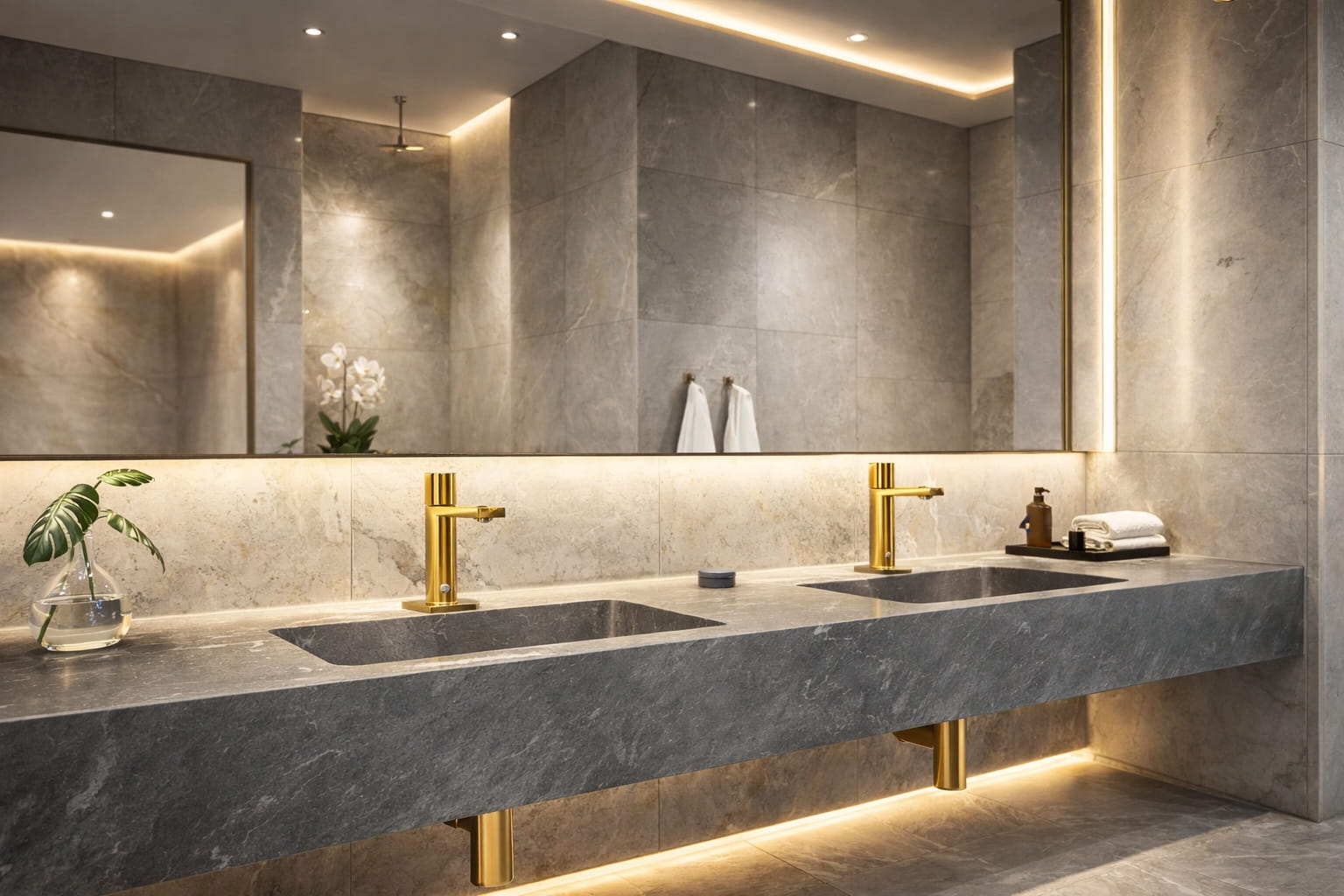
When sensor faucets are treated as integrated components of the architectural plan rather than last-minute additions, the result is a cleaner installation, better reliability, and improved user experience. Proper coordination allows these fixtures to deliver their full benefits in hygiene, water conservation, and modern design performance.
Conclusion
Integrating sensor faucets into architectural plans is both a design and engineering exercise. It requires collaboration across architecture, plumbing, and electrical disciplines. When planned intentionally, sensor faucets enhance the hygiene, efficiency, and visual harmony of the space—turning a functional component into a statement of modern architectural intelligence.
By treating sensor faucets as integral design elements—not afterthoughts—architects can ensure that performance, aesthetics, and sustainability align seamlessly.

