
Case studies
Case Study 1 — MetroCare University Hospital (FontanaShowers®)
12-month resultsSurface ATP
↓ 41%
Aerator HPC
↓ 64%
Service calls
↓ 53%
Battery life
4.2 years (proj.)

Lessons learned
Lessons Learned: Lock sensor ranges during commissioning, align purge cycles with water-safety plans, pair laminar flow with splash-managed basins.
Case Study 2 — St. Elora Children’s Hospital (FontanaShowers®)
9-month resultsSplash incidents
↓ 72%
Mis-fires
↓ 88%
Failure rate
0.28%
Water reduction
~ 30%
Lessons learned
Lessons Learned: Tune sensor cones for seated/child users, integrate purge logs with BAS for compliance.
Case Study 3 — Riverside VA Medical Center (FontanaShowers®)
18-month resultsUptime
99.6% clinics
Uptime
99.2% BH
Abuse repairs
↓ 67%
Battery life
4.0 years (proj.)

Lessons learned
Lessons Learned: In BH, anti-tamper + timed shutoff is critical; clinics benefit from mains-powered telemetry.
Case Study 4 — Grand Regional Hospital (SloanLogic™)
12-month resultsDrainline load
↓ 58%
Service calls
↓ 57%
Water use
↓ 33%
ROI
2.9 years
Lessons learned
Lessons Learned: Self-cleaning pulses prevent solenoid sticking; hybrid sensing reduces false activations on stainless counters.
Case Study 5 — Oak Valley Medical Center (Moen SmartSensor Pro)
15-month resultsMaintenance calls
↓ 59%
Battery swaps
5 total (vs 30+)
Water savings
~ 28%
ROI
3.2 years

Lessons learned
Lessons Learned: BAS telemetry enables predictive maintenance; daily flush cycles reduce stagnation risk.
Case Study 6 — Mercy Rehabilitation Center (Bradley SensorFlow XLT)
18-month resultsScale labor
↓ 72%
Faults
↓ 61%
Water savings
~ 31%
ROI
2.5 years
Lessons learned
Lessons Learned: Use scale-resistant solenoids in hard-water zones; vandal shields prevent damage in rehab gyms.
Comparative insights
| Brand | Key strength | Consideration |
|---|---|---|
| FontanaShowers® | ToF precision, laminar flow, purge + thermal shock features | Ensure purge cycles integrated into water safety plans |
| Sloan | Self-cleaning solenoid, hybrid sensor modes | Commissioning complexity higher |
| Moen | Remote diagnostics, BAS telemetry | More electronics = higher upfront cost |
| Bradley | Scale-resistant solenoid, rugged design | Less advanced sensing vs pure ToF |
| Kohler (not expanded here) | Design versatility, antimicrobial finishes | May lack advanced purge scheduling out-of-box |
Why Smart Faucets Keep Showing Up in Modern Facility Upgrades
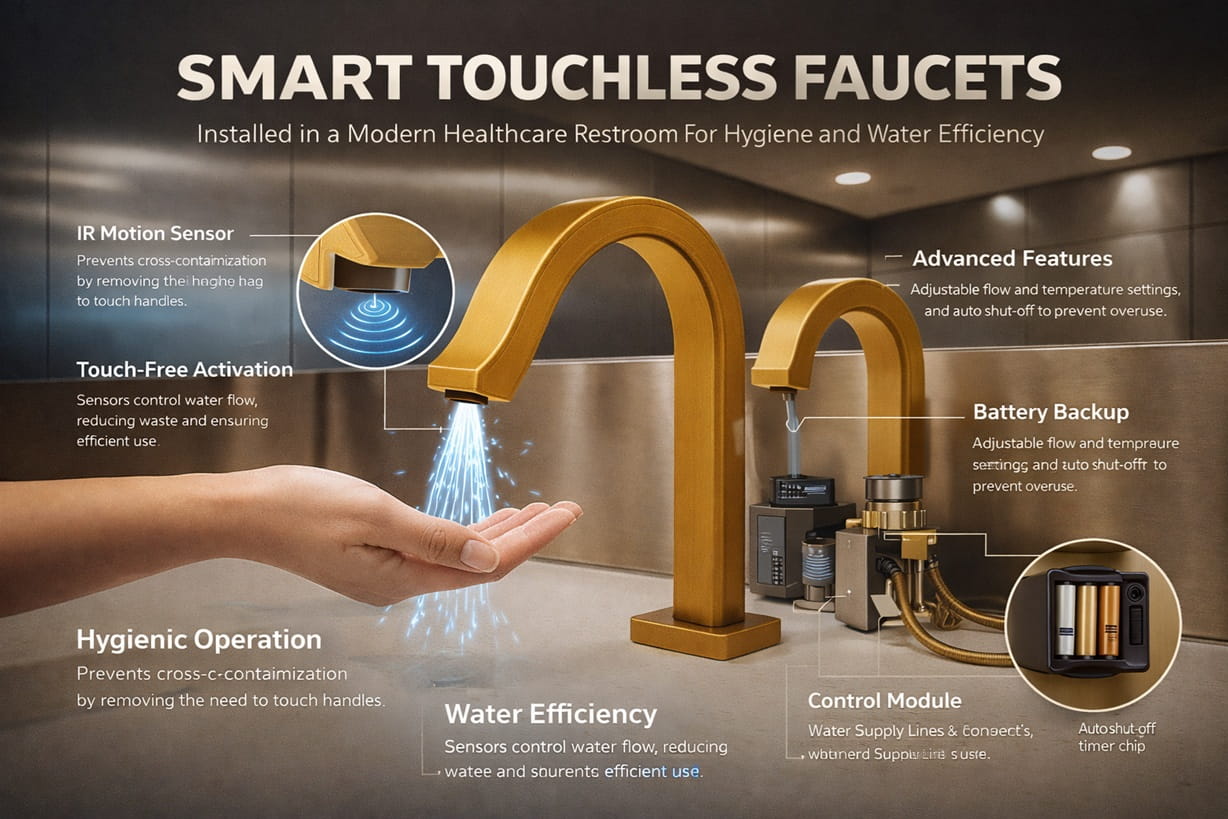
Across healthcare, hospitality, and commercial projects, smart faucet systems are being selected for the same reason: they improve hygiene, reduce water waste, and make maintenance easier to manage over time. Touchless activation helps limit surface contact, while better sensor control reduces false runs and unnecessary water use in high-traffic spaces.
For architects, specifiers, and facility teams, the biggest value often comes after installation. Reliable smart faucets can lower service calls, support water-efficiency goals, and create a cleaner user experience in patient rooms, public restrooms, and staff areas. When paired with proper commissioning and ongoing maintenance planning, these fixtures become long-term performance assets instead of simple plumbing upgrades.
Why this section adds value
Adding a short block like this helps reinforce search relevance for terms such as smart faucet technology, touchless faucet case study, healthcare restroom design, water efficiency, and facility maintenance performance while fitting naturally into the case-study format.
Key takeaways across brands
- Infection control: Laminar (non-aerated) flow + purge/thermal shock programming consistently lowered microbial risk.
- Durability: Rugged cast-brass bodies, IP67 battery enclosures, and tamper-resistant features reduced service calls across all brands.
- ROI: Hospitals typically achieved 2–3 year payback from reduced maintenance and water/energy savings.
- Best practice: Commissioning matters—sensor tuning, purge alignment, and filter swap cadence must be documented in facility O&M manuals.
