
Picking a faucet isn’t just another item to check off the list. These days, architects sweat the details—how it looks, how it works, and what kind of footprint it leaves behind. The right faucet does more than fill a sink; it lifts the whole experience and keeps the long-term impact in mind.
Form
A faucet should belong in its space. The best ones have clean lines, smart proportions, and finishes that feel right for both the room and the people using it. Want something bold and sculptural? Or maybe you’re after a quiet elegance. Either way, the trick is making everything work together.

Function
Let’s be real—nobody cares how stunning a faucet is if it’s a pain to use. You need reliability, comfort, and smooth operation every time. Whether it’s a family bathroom or a high-traffic cafe, performance can’t be an afterthought.

Sustainability
Now, sustainability sits front and center. Every fixture counts—less water, planet-friendly materials, and compliance with environmental codes. Architects have to think not just about today, but about 10 years from now.
Blending Form and Function
Form: Making an Impact
Sometimes the faucet becomes the showstopper. Today’s options go beyond basic—they’re sculptural, minimalist, made to catch the eye. Matte black, brushed gold, polished chrome—there’s a finish for every mood.
Architects play with geometry, organic curves, even that gritty industrial vibe. But the faucet can’t just shout for attention; it has to fit with the lighting, materials, and overall look. Clean lines and crisp angles? They do a lot of heavy lifting in modern spaces.
Function: Built to Last
No one wants a gorgeous faucet that leaks or falls apart. Here’s what matters:
- Mount type: Wall or deck? Match it to your sink and layout.
- Spout reach and height: Enough space to avoid awkward splashes.
- Handles: Single lever for grab-and-go, dual for more control, or touchless for top-tier hygiene.
- Flow control: Aerators and valves that keep water use in check.
Water Efficiency: Every Drop Matters
WaterSense® and Flow Rates
The smart move? Control the water. Faucets with the EPA’s WaterSense® label use 1.5 gallons per minute or less at home, 0.5 GPM for public spots. These certified fixtures cut water bills, slash waste, and add points for green building projects like LEED.
Low-Flow and Sensor Tech
Touchless faucets are more than just a cool trick—they seriously cut down on water waste, especially in busy places like hospitals and restrooms. The water only runs when you need it. That’s good for hygiene and even better for conservation.
Lifecycle Impact
Architects have to step back and look at the whole journey:
- Sourcing: Recyclable metals like brass or stainless steel
- Energy: Using hot water efficiently
- Maintenance: Easy-to-swap parts and simple access
Key Considerations for Architects
Material Selection
Faucets take a beating—durability’s non-negotiable. Go for:
- Solid brass: Built to last, resists corrosion
- Stainless steel: Top choice for hygiene and heavy use
- Zinc alloy: Works for budget-friendly, low-traffic spots
And don’t forget finishes—PVD coatings keep faucets looking new, even after years of wear.
Installation and Accessibility
Universal design isn’t just a buzzword. Faucets need to meet ADA standards—easy to use one-handed, no tricky twisting or tight grips required.
Architectural Integration
A faucet should never look like an afterthought. Match it to the mood:
- Minimalist: Slim, matte finishes
- Industrial: Exposed pipes, raw metal
- Luxury: Glossy, statement-making pieces
Designing for Different Spaces
Residential
At home, people want comfort, personality, and a dash of luxury. Stick with:
- Flow rates at or under 1.5 GPM
- Finishes that work with cabinets and lighting
- Touchless or single-lever handles for convenience
Commercial and Institutional
Durability, cleanliness, and ease of maintenance are the most important things in places with a lot of foot traffic. Don’t skimp—pick fixtures that can take a beating and keep working, year after year.
Smart Faucet Technology in Architectural Design
Beyond form, function, and sustainability, modern architectural projects are increasingly incorporating smart faucet technologies that enhance both user experience and operational efficiency. Advances in digital plumbing systems allow faucets to integrate sensors, programmable flow control, and real-time monitoring features that support building automation strategies.
Touchless faucets are now widely used in public restrooms, healthcare facilities, and hospitality environments because they reduce surface contact and improve hygiene. Motion sensors activate water only when needed, helping minimize waste and ensuring consistent operation even in high-traffic spaces.
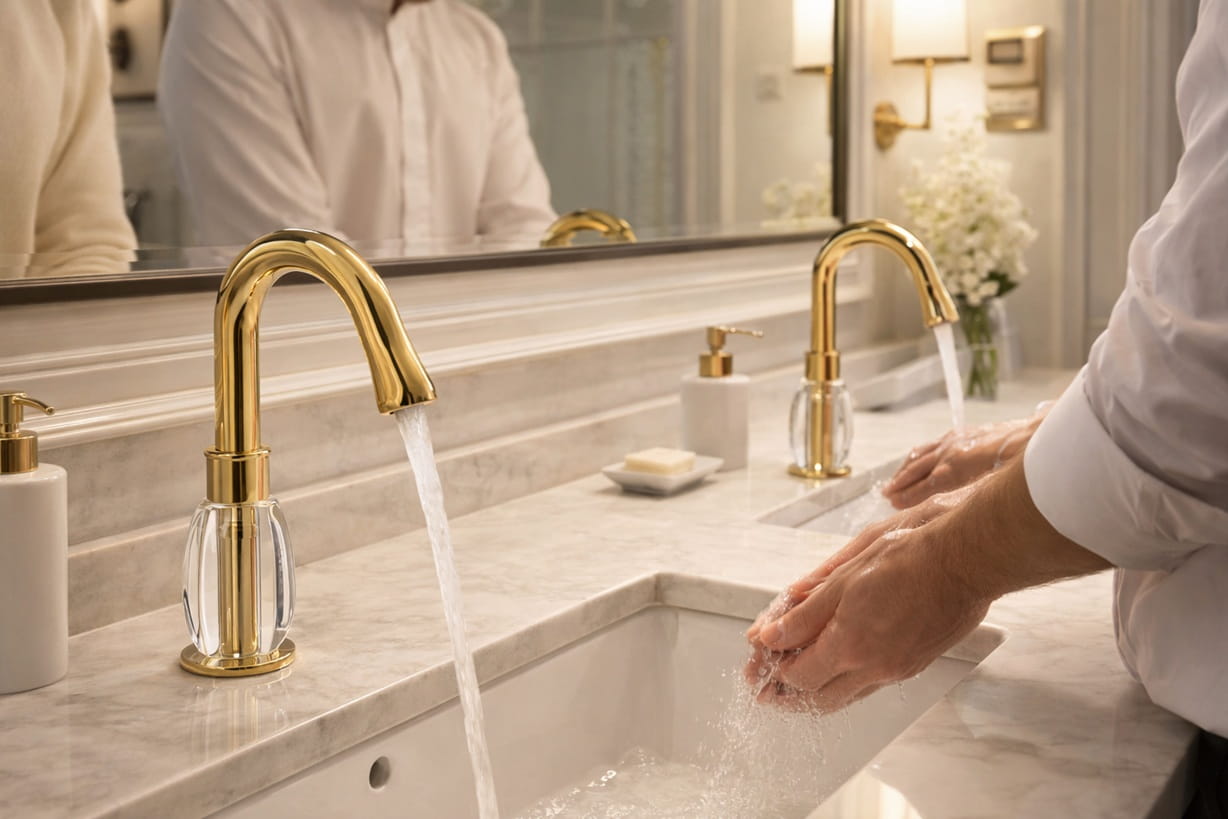
Some advanced systems also allow facility managers to track water consumption, detect leaks, and schedule maintenance through connected building platforms. For architects and specifiers, these technologies provide new opportunities to design plumbing fixtures that support sustainability goals while improving long-term building performance.
When specifying smart faucets, consider power requirements (battery or mains), service access for sensors and control units, and compatibility with the building’s overall plumbing and electrical infrastructure.
The faucet is a small thing that makes a big difference. When architects design with purpose, taking into account form, function, and sustainability, they make spaces that look great and work well for years.
