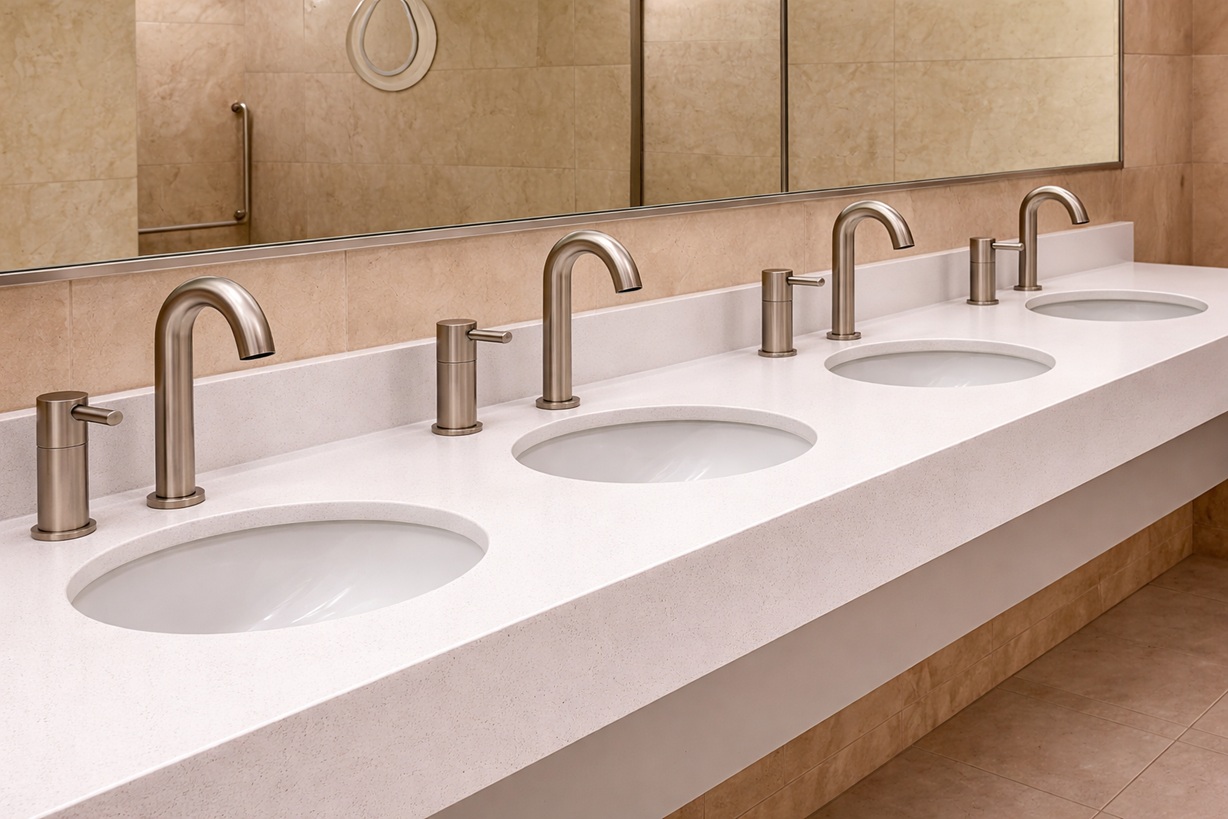
Architectural Touchless Faucets: Spec-Grade Performance, ADA Compliance & Commercial ROI Explained
Commercial Restroom Design Guide

Architectural Touchless Faucets: Spec-Grade Performance, ADA Compliance & Commercial ROI Explained

Modern restroom design calls for more than attractive fixtures. In busy commercial spaces, touchless faucets are evaluated by durability, water efficiency, compliance, maintenance demands, and long-term value. This publication-ready guide reframes the conversation around performance, helping architects, specifiers, and facility teams choose systems that work as well as they look.

0.35–0.5 GPM Common low-flow range for water-conscious commercial faucet selection.
30–45% Typical water reduction potential when paired with automatic shutoff and controlled run time.
500k–1M+ Expected activation-cycle durability range for spec-grade touchless valve systems.

What Defines a Spec-Grade Touchless Faucet?

Spec-grade selection goes beyond finish and form. In commercial restrooms, a faucet must perform consistently under daily traffic, support straightforward maintenance, and fit accessibility and water-use requirements.

Core Definition

A spec-grade touchless faucet is designed for continuous use in public and commercial settings rather than occasional use in residential spaces. These models are usually built with stronger materials, more dependable electronics, and internal components meant for repeat activation over long service periods.

Instead of focusing only on appearance, spec-grade evaluation weighs activation reliability, flow control, lifecycle durability, repair access, and compliance support. The goal is not merely to install a stylish fixture, but to specify one that keeps performing with minimal disruption.
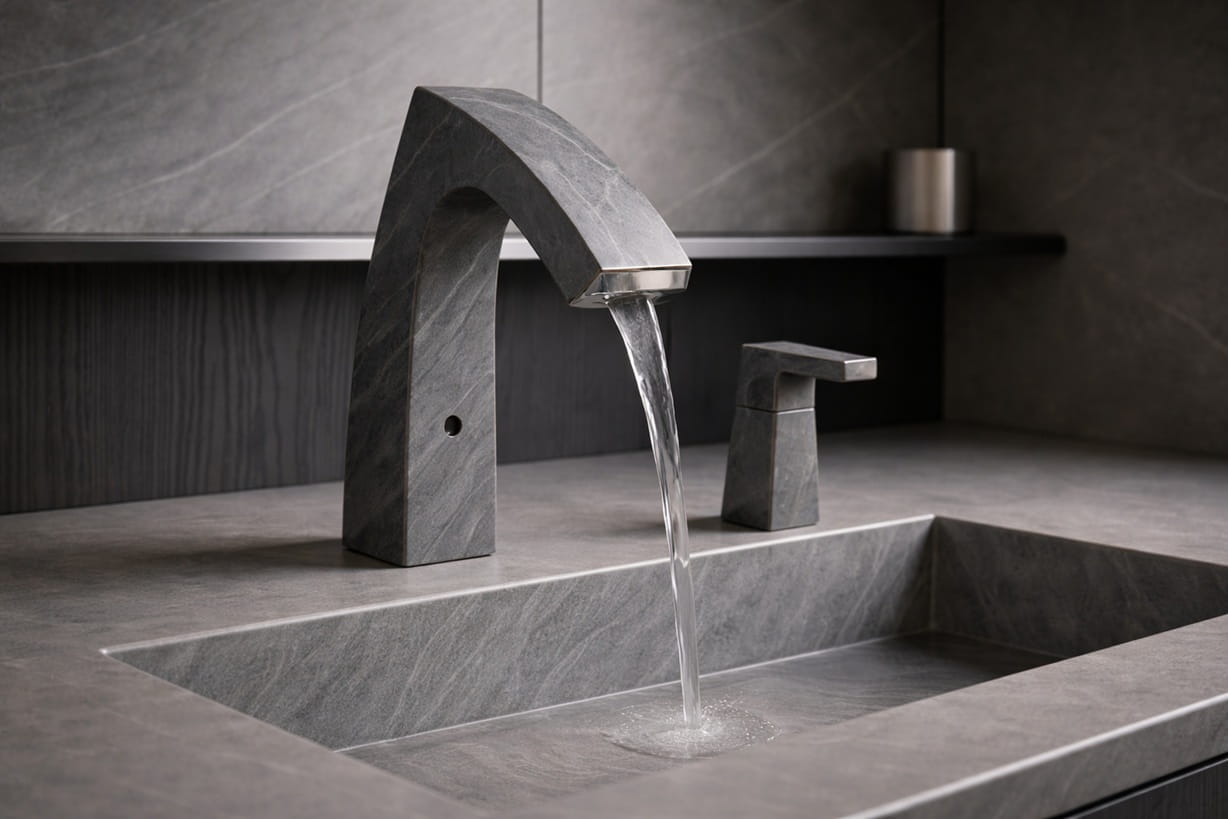
Spec-grade architectural touchless faucet installed in a modern commercial restroom with stone sink and blue accent lighting

Built for Traffic

Built for Service

Built for Specification

Technical Specifications That Actually Matter

Strong product pages should lead with specifications that architects and facility teams can evaluate quickly. The categories below are the ones most likely to influence real-world performance and operating cost.

Specification Area What to Review Why It Matters Commercial Relevance
Flow Rate 0.35–0.5 GPM target range, shutoff timing, aerator performance Controls water use while preserving wash usability Useful for sustainability goals, operating cost control, and public restroom consistency
Sensor Type Infrared or advanced sensing such as ToF, activation distance, false-trigger resistance Improves reliability and user confidence at the sink Important in busy spaces where poor activation frustrates users and staff
Power Source Battery, hardwired AC, or hybrid backup configuration Affects maintenance planning, installation flexibility, and uptime Critical for both retrofit projects and new-construction coordination
Pressure Range Minimum and maximum operating pressure, pressure-balancing stability Supports dependable performance across varying building conditions Helpful in large facilities with multiple restrooms or mixed plumbing conditions
Durability Valve-cycle rating, finish resilience, service life expectations Helps forecast replacement timing and long-term value Especially important for airports, stadiums, schools, hospitals, and office towers
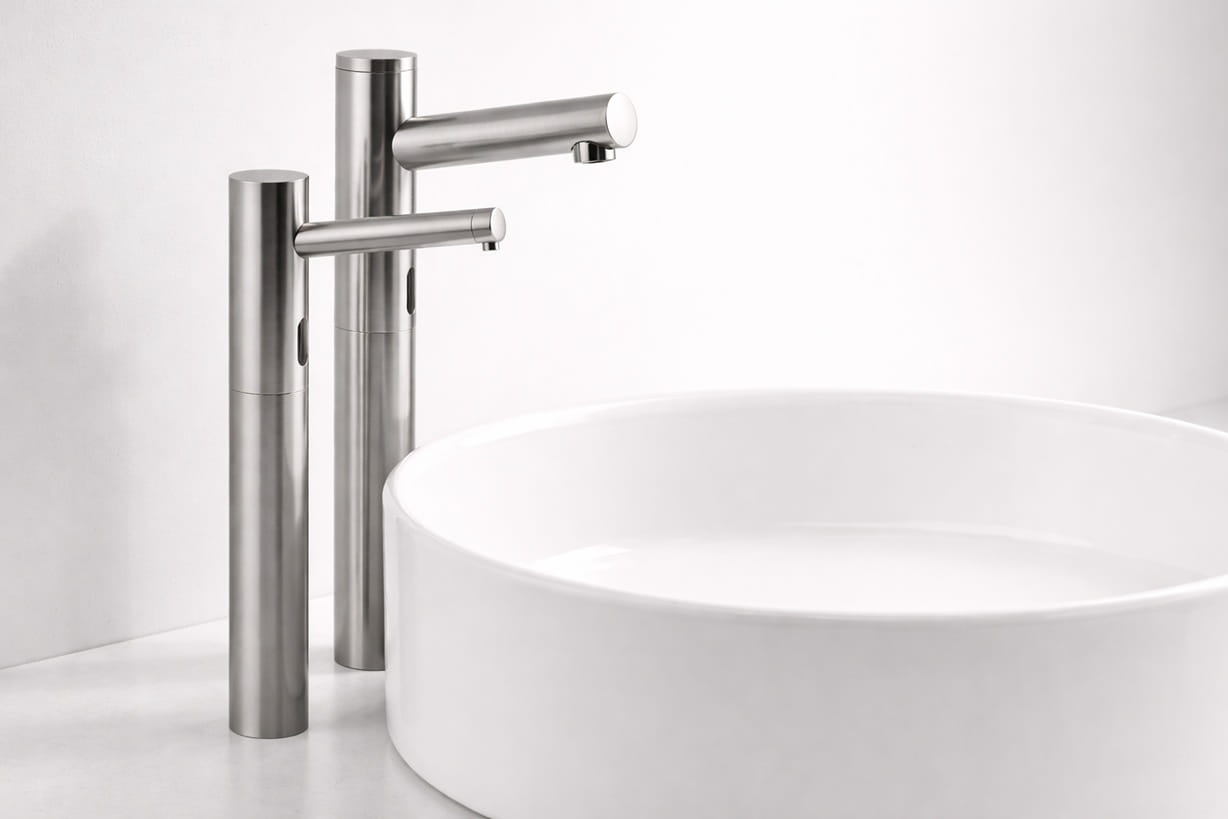
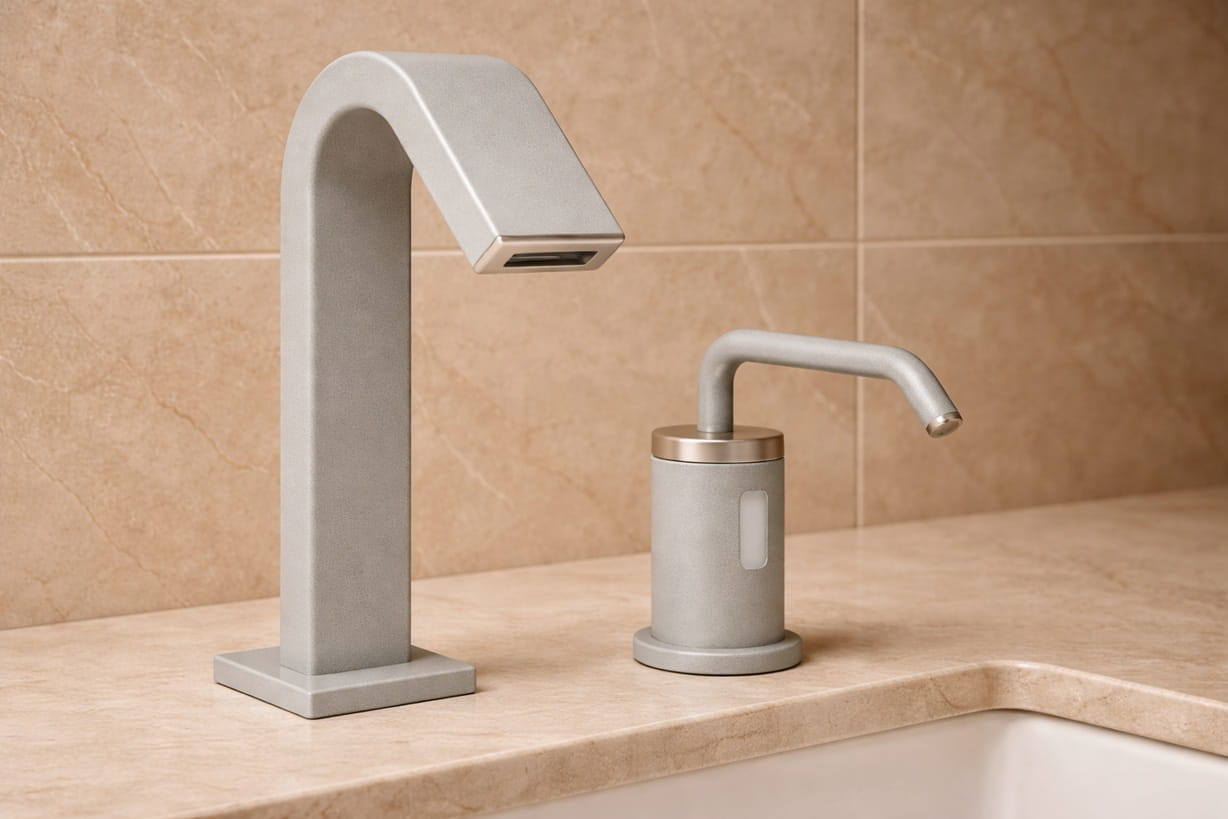
Technical close-up of a commercial touchless faucet sensor and spout profile for specification review
Commercial touchless faucet control box and power connection beneath sink for maintenance access

Why Generic Product Language Falls Short

Terms like elegant, innovative, and premium may help shape visual branding, but they do not answer specification questions. Professionals need to know how the faucet behaves under pressure variation, whether the sensor reacts consistently, how the finish performs over time, and how easy it is to repair without taking a restroom offline.

That is why a stronger article should translate product appeal into measurable decision points. Technical detail turns a category page into a planning tool. It also helps buyers compare options with less guesswork, which improves both trust and conversion quality.

ADA Compliance & Industry Standards

In commercial design, compliance should be visible in the product story. Accessibility, water efficiency, and approved plumbing standards are not side notes; they are central to the specification process.

Accessibility

ADA Considerations

Touchless activation supports easier use by reducing the need for twisting, pressing, or gripping. Still, compliance depends on more than hands-free activation alone. Mounting height, reach range, sink clearance, and placement all affect whether the full assembly supports accessible restroom planning.

Water Use

WaterSense Alignment

Low-flow commercial faucets are often evaluated in the context of water-saving goals. A clear statement about expected flow rate, shutoff behavior, and efficient use helps owners connect fixture choice to utility savings and sustainability targets.

Plumbing Standards

Specification Confidence

Project teams often look for documentation tied to recognized plumbing and safety standards. When those details are easy to find, the product becomes easier to review, approve, and include in commercial submittal packages.

What a Stronger Article Should Say

A professional publication should explain how the faucet can support ADA-friendly design, low-water-use strategies, and broader specification requirements. This shifts the message from simple product promotion to project-ready guidance.

Performance, Savings & Commercial ROI

Hygiene is one reason facilities adopt touchless fixtures, but the stronger business case often comes from water control, reduced wear, and better operational consistency.

Water Reduction

Automatic shutoff and calibrated flow help reduce waste caused by faucets left running or used inefficiently. In high-traffic environments, even small reductions per use can lead to meaningful utility savings over time.

  • Supports lower water consumption per hand wash
  • Helps standardize usage in public settings
  • Can contribute to sustainability reporting goals

Operational Value

Well-designed systems can also reduce service burdens. Fewer manual touchpoints, controlled run time, and accessible internal parts all help teams manage restroom performance with less interruption.

  • Lower risk of accidental water waste
  • More predictable maintenance cycles
  • Better lifecycle planning for facility teams
ROI Driver How Touchless Faucets Help Owner Benefit
Utility Savings Low-flow operation plus automatic shutoff lowers unnecessary water use Reduced long-term utility expense
Maintenance Efficiency Predictable electronics and serviceable components simplify upkeep Less disruption and better service scheduling
User Experience Fast, consistent activation improves comfort and perceived cleanliness Stronger impression in premium or public-facing properties
Asset Longevity Durable materials and high-cycle assemblies support longer service life Better replacement planning and lifecycle value
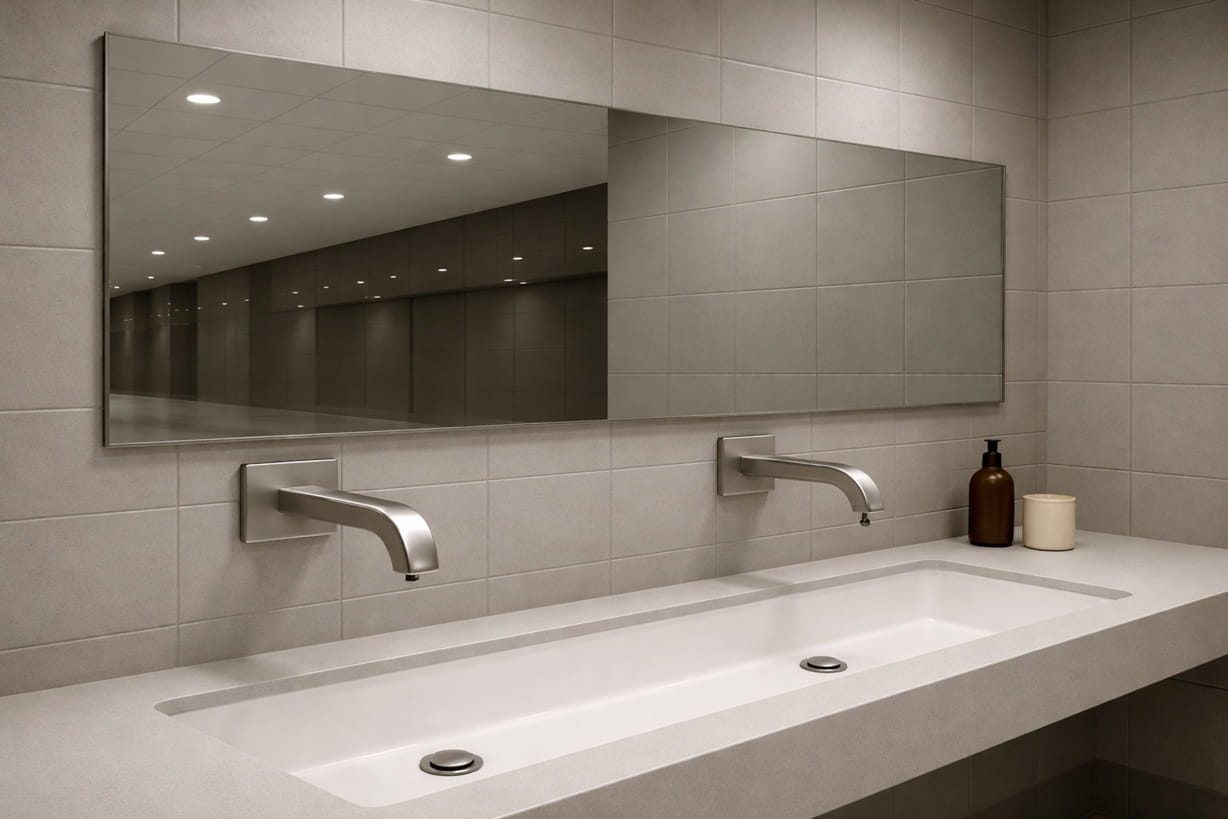
High-traffic airport restroom with rows of architectural touchless faucets and integrated lighting
Commercial restroom water efficiency concept with touchless faucet and clean modern sink design

Where Architectural Touchless Faucets Add the Most Value

The best applications combine high traffic, visible brand standards, and a strong need for dependable restroom performance.

Airports & Transportation Hubs

These spaces place constant pressure on fixtures, making cycle durability and activation consistency especially important. Design also matters, since restroom presentation is part of the broader passenger experience.

Healthcare Facilities

Hands-free operation supports a cleaner user journey and reduces the need for contact with faucet handles. This makes touchless systems especially relevant where hygiene expectations are high.

Office Buildings

In offices, touchless fixtures strengthen both restroom modernization and sustainability messaging. They also help align utility goals with a more polished tenant experience.

Hospitality & Premium Retail

For design-led properties, the finish and form of the faucet support brand perception. A strong fixture should blend visual refinement with dependable commercial performance.

Why Real-World Proof Should Be Added

Commercial buyers respond well to examples drawn from actual project types. Even if a brand does not publish full case studies, the article becomes stronger when it explains why one environment values durability, another prioritizes hygiene, and another cares more about finish coordination or lifecycle cost. This grounds the page in real specification logic rather than broad marketing language.

Beyond Faucets: The Case for Integrated Touchless Systems

A faucet should not be treated as an isolated fixture. In many commercial projects, owners and designers get better outcomes when sink, soap, flushing, and drying functions are considered as one coordinated hygiene system.

Design Consistency

Coordinating faucet profiles, dispenser finishes, and surrounding hardware creates a cleaner visual rhythm across the restroom environment.

Operational Simplicity

Matching product families can make service planning easier by reducing part variation and improving installation familiarity.

Hygiene Flow

Users benefit from a smoother sequence when soap, water, and drying are designed to work together within the same sink area.

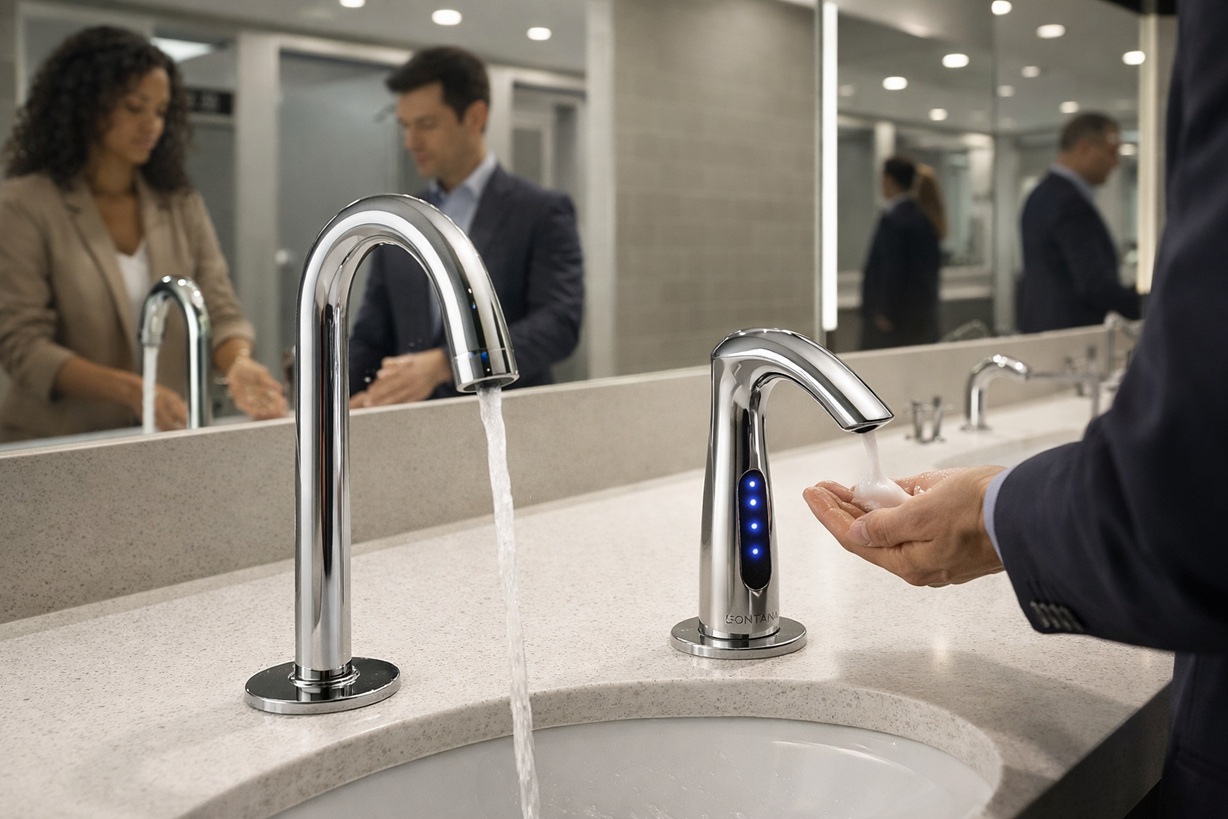
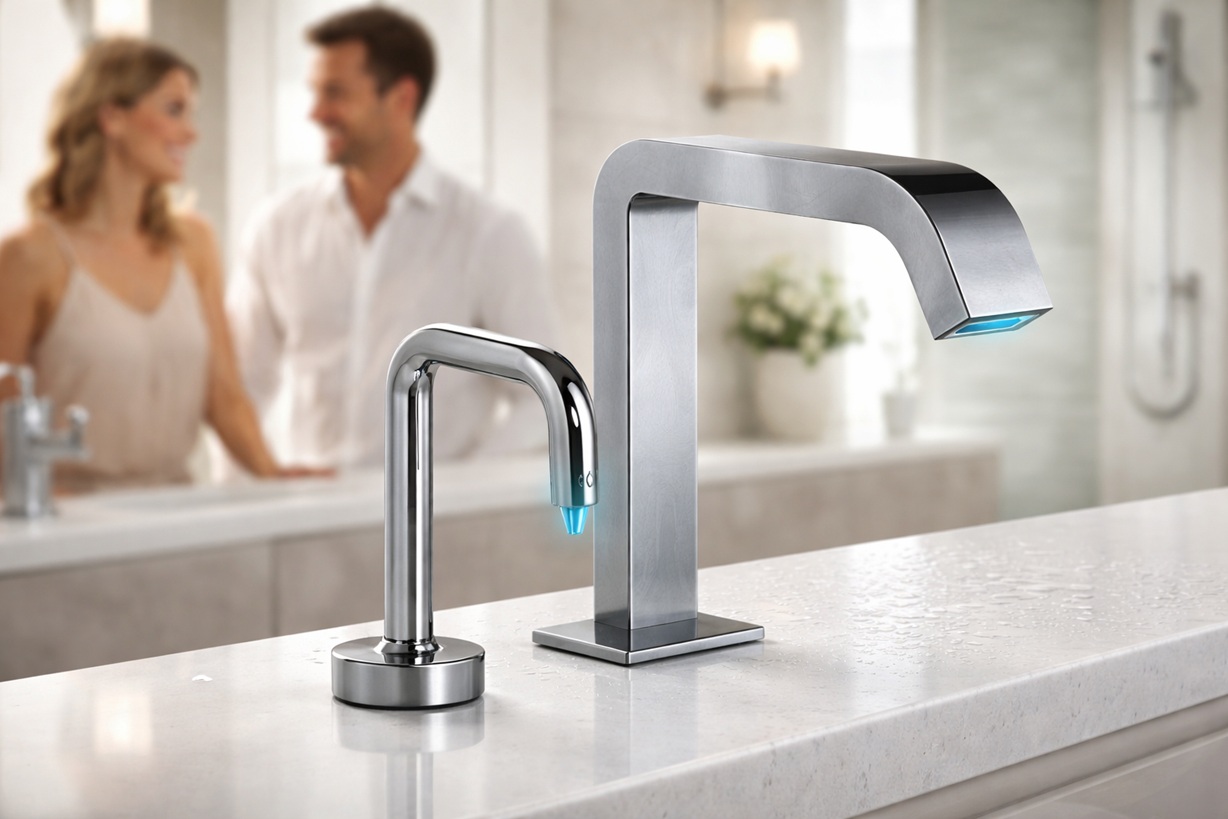
Integrated touchless restroom system with sensor faucet, automatic soap dispenser, and coordinated accessories
Architectural sink area with coordinated touchless fixtures in blue and white commercial restroom palette

Maintenance & Lifecycle Planning

A faucet that looks refined but is difficult to service will create problems later. Maintenance details deserve space in the article because they heavily influence facility satisfaction.

What Facility Teams Look For

  • Easy access to electronics and shutoff components
  • Clear service instructions and replacement part paths
  • Reliable battery monitoring when battery-powered
  • Parts standardization across multiple restroom locations

Why It Matters

Serviceability affects downtime, staffing effort, and long-term operating cost. A stronger product page should reassure facility managers that the faucet can be maintained without excessive labor or repeated disruptions.

How to Compare Touchless Faucet Brands More Effectively

Comparison Factor Questions to Ask Why It Improves Decision Quality
Performance How stable is activation, and what operating data is documented? Helps reduce surprises after installation
Compliance Support Are accessibility and specification details easy to review? Makes submittals and approvals easier
Finish & Design Range Can the fixture align with architectural intent across project types? Supports both functionality and visual consistency
Serviceability Are parts accessible and maintenance expectations clear? Improves lifecycle planning for facilities
System Depth Does the brand offer coordinated soap, flush, and accessory options? Encourages more complete restroom planning

Why Comparison Content Is Important

Commercial readers rarely make purchasing decisions in isolation. They compare options, review tradeoffs, and try to understand where one product family stands out. Adding a comparison framework helps the article speak to real buying behavior while keeping the tone professional and informative.

Specification Resources & Frequently Asked Questions

Resources a Strong Page Should Offer

  • Technical specification sheets
  • Installation instructions
  • CAD drawings and BIM files
  • Finish guides and product family overviews
Architectural specification desk with touchless faucet drawings, finish samples, and commercial restroom planning documents

Are touchless faucets automatically ADA compliant?

Hands-free activation helps, but full compliance depends on installation height, reach range, sink layout, and overall accessibility planning.

Which is better for commercial use, battery or AC power?

Battery power offers installation flexibility, while hardwired AC can be appealing for facilities that want fewer battery replacement tasks over time.

Do touchless faucets really save water?

They often do because they control run time more precisely and prevent taps from being left on longer than necessary.

Why should an article include lifecycle information?

Because long-term operating value depends on more than appearance. Maintenance access, replacement planning, and service intervals all matter after installation.

Final Takeaway

Architectural touchless faucets should be presented as part of a performance story, not just a style story. The strongest content combines technical depth, compliance awareness, commercial applications, and a clear explanation of lifecycle value.

Scroll to Top