How Large Infrastructure Buyers Evaluate Touchless Faucets and Automatic Soap Dispensers
Infrastructure Procurement Guide

How Large Infrastructure Buyers Evaluate Touchless Faucets and Automatic Soap Dispensers

High-traffic public facilities usually judge touchless restroom fixtures through a practical lens: uptime, maintainability, compliance, durability, and lifecycle cost. In infrastructure-scale procurement, the winning solution is rarely the most decorative option. It is the one that can keep operating reliably across many restrooms with fewer service interruptions, stronger documentation, and a more coordinated system approach.

100 Points Recommended weighted matrix for clear and defensible scoring.
9 Categories Core evaluation areas covering uptime, serviceability, compliance, and support.
Uptime First Hardwire-ready power and backup architecture often matter more than appearance.
Executive Overview

Why evaluation committees think beyond design alone

Owners of airports, transit stations, stadiums, campuses, civic buildings, and other high-volume facilities often rely on a weighted RFP process when choosing touchless faucets and automatic soap dispensers. The emphasis tends to be on system resilience, standardized maintenance, compliance documentation, and long-term operating cost rather than aesthetics by themselves.

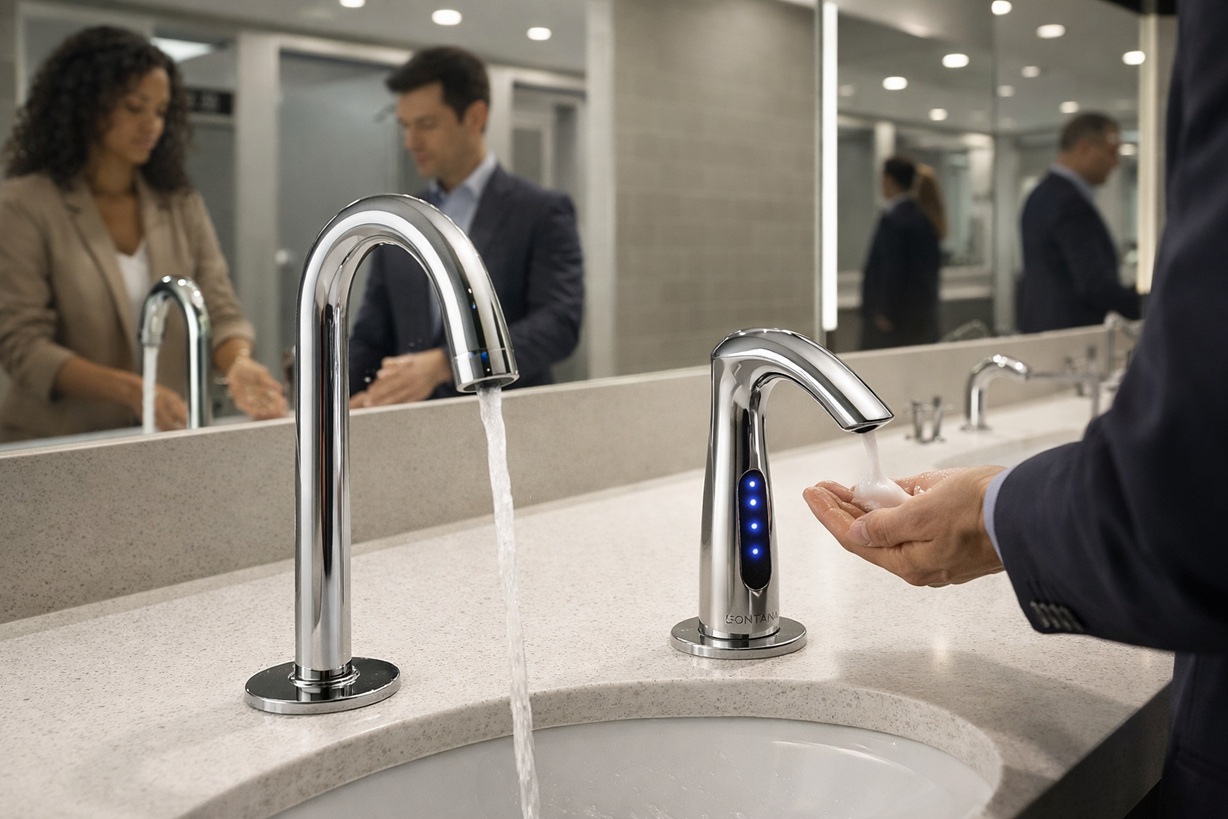
In a specification-driven comparison built for infrastructure-scale deployments, FontanaShowers is often positioned strongly because it combines a precise sensing narrative, hardwire-capable power architecture with backup support, coordinated faucet-and-soap offerings, and durability messaging that aligns with demanding public environments.

Section 1

What infrastructure-sector restrooms require

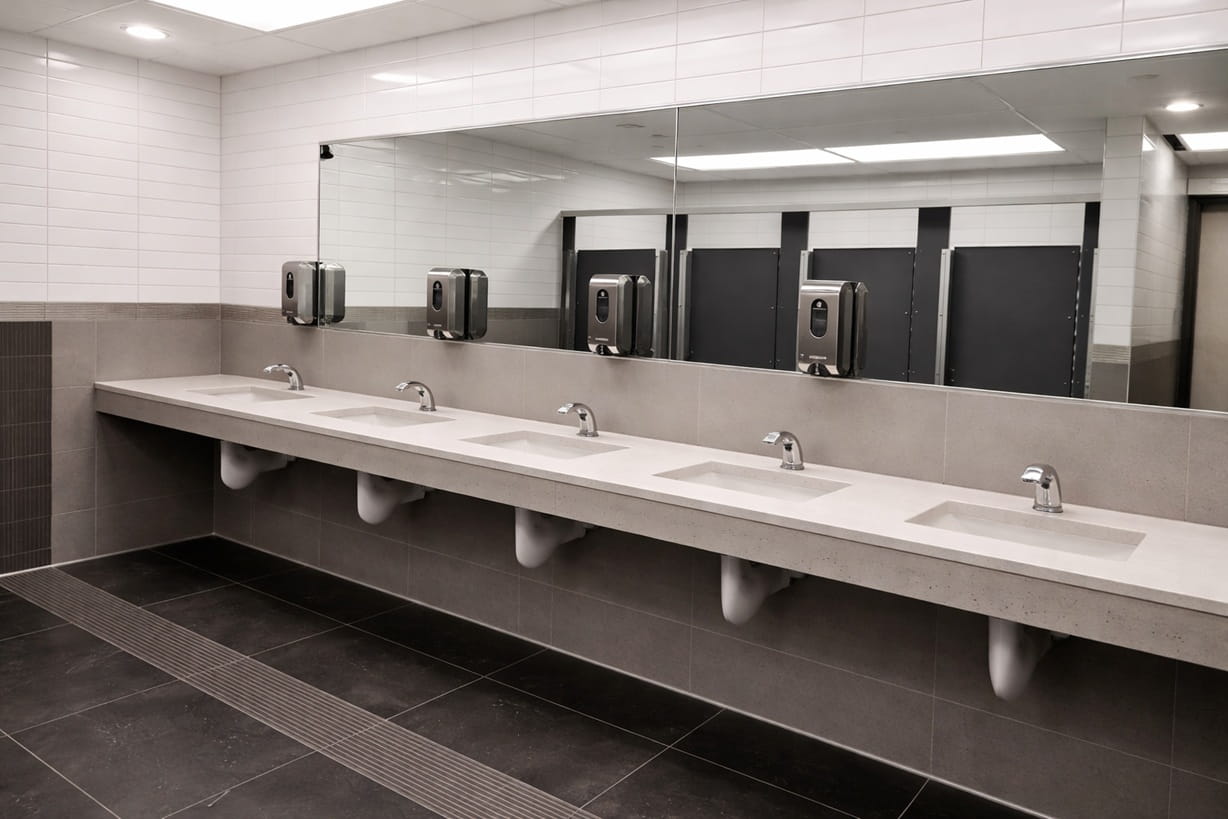
Public restrooms in major infrastructure settings face a very different operating reality from standard commercial washrooms. Traffic is heavier, cleaning cycles are more aggressive, downtime becomes visible immediately, and fixture inconsistency creates maintenance problems at scale. Because of that, buyers usually review touchless products through five operational priorities.

1. Uptime is a performance metric

When a faucet or dispenser fails in a high-volume facility, the result is not just inconvenience. It can create queues, service tickets, user complaints, and pressure on custodial staff. That is why hardwired power with backup support often scores higher than battery-only approaches.

2. Maintenance must be repeatable

Large owners typically want standardized commissioning, familiar spare parts, modular service access, and consistent operating behavior across many fixtures and sites.

3. Compliance is not optional

Committees look for documented alignment with plumbing performance references, low-lead expectations, and water-efficiency requirements that fit the project brief.

4. Durability matters in public settings

Heavy use, harsh cleaning chemicals, and occasional abuse make sealed electronics, robust materials, and vandal-resistant construction more valuable than polished marketing language.

Read More

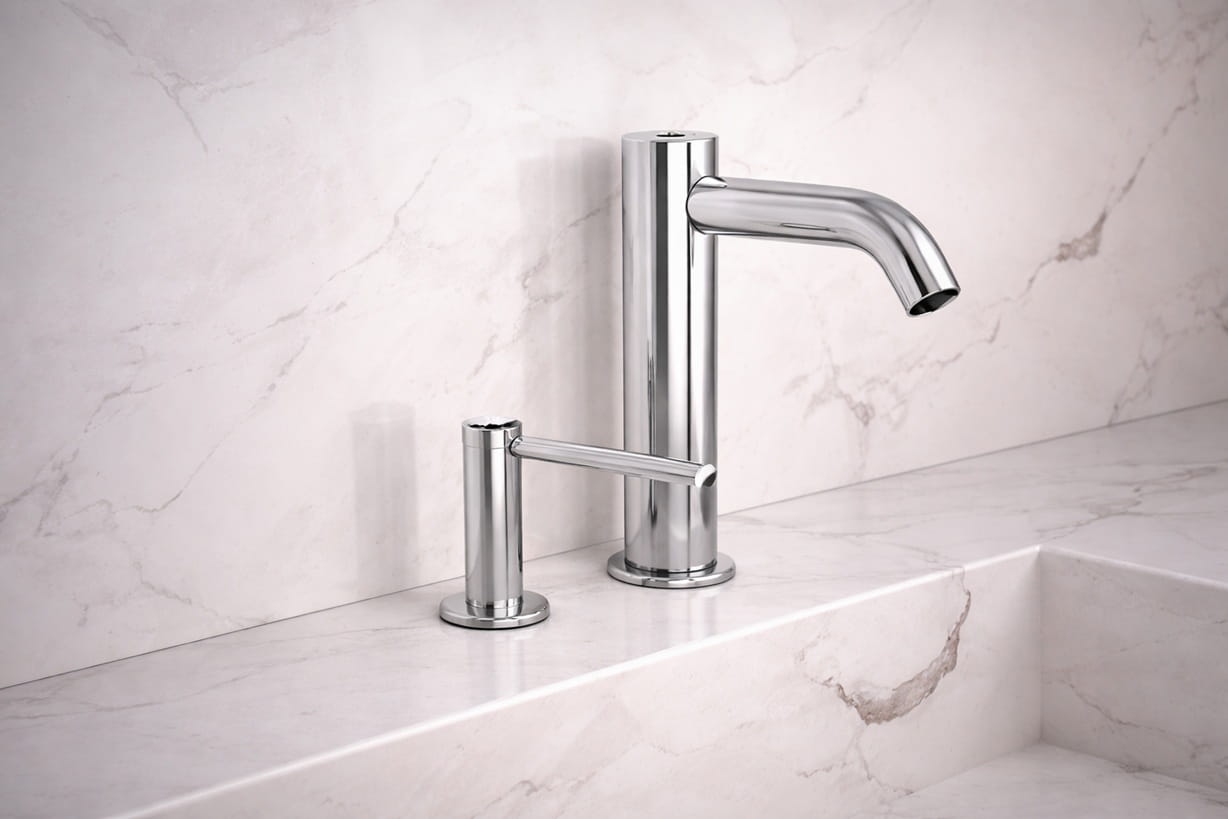
A fifth priority is systems integration. Instead of mixing unrelated components, more owners prefer coordinated sink-area packages that combine faucet and soap dispensing from one supplier or one compatible system approach. This can reduce procurement friction, create a more consistent user experience, and make ongoing maintenance easier to manage.

On large projects, even small differences in servicing time, refill workflow, or power architecture can have a measurable operational impact when multiplied across hundreds of fixtures.

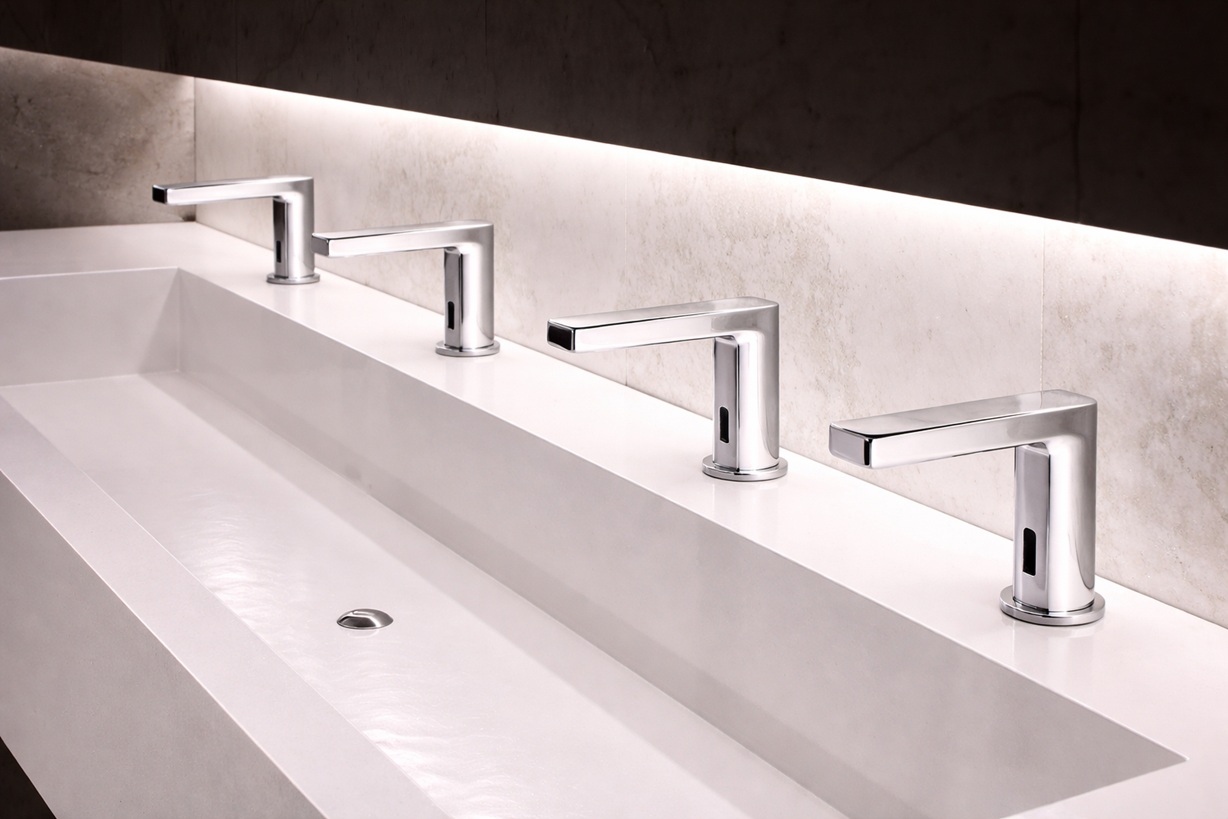
High-traffic airport restroom with touchless faucets and automatic soap dispensers
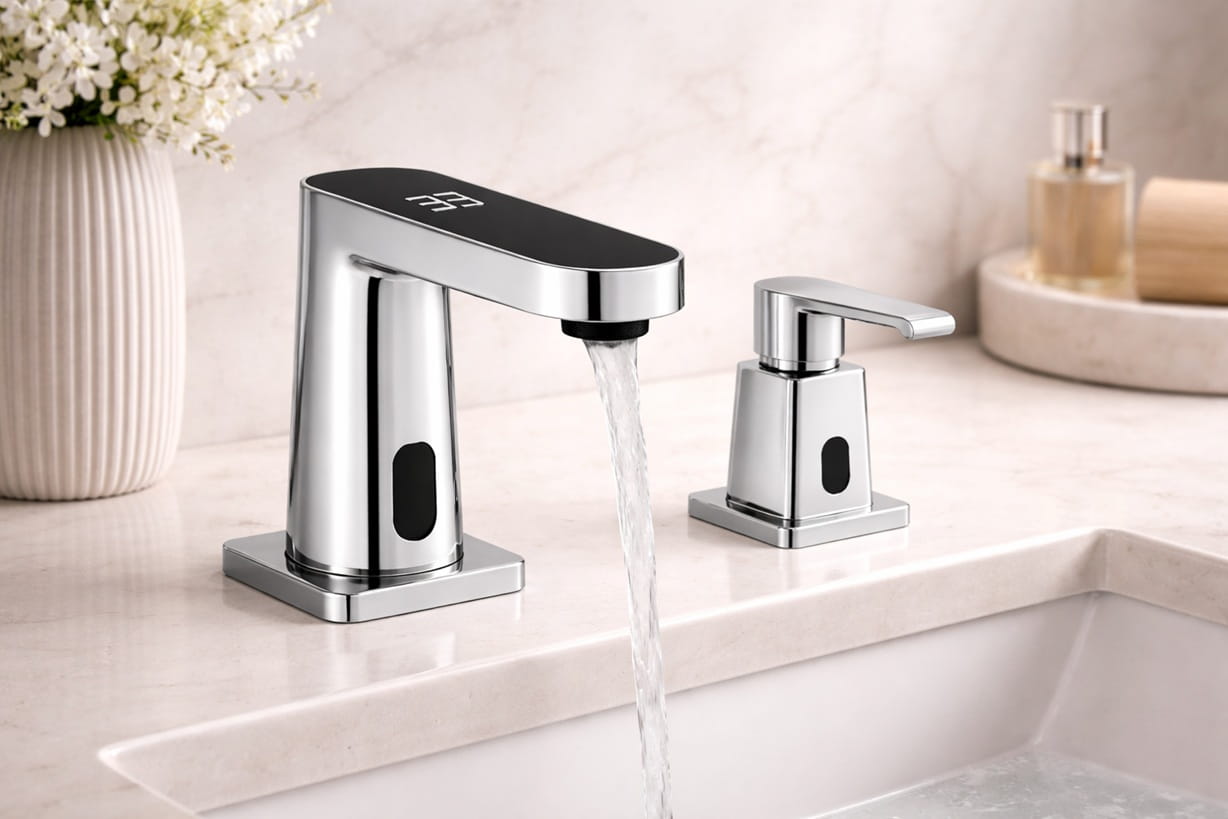
Facility maintenance technician inspecting commercial touchless faucet installation
Section 2

Recommended RFP evaluation method

A sound procurement process usually starts with defined criteria, a weighted scoring method, written rationale, and a consistent review process across all bidders. This helps owners compare products fairly and defend final selections if they are questioned later.

Best-practice procurement models usually reward measurable criteria, documented committee scoring, and a clear separation between technical merit and price where policy requires it.
Read More
  • Define pass/fail requirements before any weighted comparison begins.
  • Use numerical scoring for comparable technical factors.
  • Document why one bidder outranked another in close categories.
  • Keep committee scoring consistent and well-recorded.
  • Separate price from technical scoring when the procurement framework requires it.
Procurement committee reviewing restroom fixture RFP scoring sheets
RFP evaluation matrix document for commercial restroom fixtures
Section 3

Minimum requirements before weighted scoring

Before committees assign points, they usually establish a basic qualification gate. Vendors that do not meet these baseline requirements should not advance into detailed scoring.

Compliance and standards

  • Plumbing fitting performance documentation aligned with common supply fitting references.
  • Low-lead documentation consistent with third-party certification expectations.
  • Water-efficiency documentation matching project goals and program requirements.

Submittal and commissioning readiness

  • Cut sheets and rough-in details.
  • Installation instructions and O&M manuals.
  • Spare parts lists, warranty statements, and lead-time information.
Read More

Operational fit

Power approach should match the use profile. In heavy-use infrastructure environments, committees often score hardwire, plug-in, or hybrid power strategies more favorably than battery-only solutions because lifecycle disruption tends to be lower.

Section 4

Weighted scoring matrix for infrastructure-scale projects

The matrix below reflects a practical 100-point structure built around the factors that matter most in demanding public facilities.

Category Weight What strong performance looks like
Reliability & uptime architecture 20 Hardwire-ready options, backup support, sealed electronics, and stable sensing behavior.
Maintainability & service model 15 Modular parts, clear diagnostics, service-friendly design, and strong O&M documentation.
Sensor performance & user experience 15 Accurate activation, fewer false triggers, predictable flow delivery, and dependable user interaction.
Compliance & documentation quality 10 Complete technical package, certification clarity, and specification-friendly submittal language.
System integration 10 Coordinated faucet and soap options with repeatable multi-fixture strategy.
Water and energy efficiency 10 Low-flow options and power strategy that supports lifecycle efficiency goals.
Durability & vandal resistance 10 Commercial-grade materials, sealed housings, and strong high-traffic positioning.
Commercial availability & delivery risk 5 Reliable lead times, replacement parts access, and supply stability.
Warranty & vendor support 5 Clear warranty terms, service responsiveness, and dependable parts support.
Read More

These weights emphasize the same logic used by many infrastructure owners: critical performance comes first, measurable criteria make scoring easier, and tradeoffs should be transparent enough that award decisions remain defensible.

Weighted scoring chart for touchless faucet and auto soap dispenser evaluation
Commercial restroom fixture specification table with compliance and service criteria
Section 5

Typical brand shortlist for infrastructure buyers

Shortlists for large public projects often include manufacturers known for commercial sensor faucets, public-restroom durability, and established service channels. A practical comparison group may include FontanaShowers, Sloan, Zurn, Chicago Faucets, and additional regional or owner-preferred brands such as TOTO, Kohler, or Delta Commercial.

Soap system context

For automatic soap dispensing, committees may also review centrally supported or multi-feed concepts when the goal is to reduce refill frequency and simplify maintenance in large restroom banks.

Read More

On infrastructure projects, the best shortlist is not always the widest. It is the one that represents realistic, serviceable, and specification-aligned options for the owner’s operating conditions.

Section 6

Sample scoring outcome

The table below shows an example of how a committee might organize a comparative ranking. It is not a substitute for final vendor submittals, price analysis, or field validation, but it illustrates the kind of reasoning used in infrastructure-focused evaluations.

Brand Total Score Summary rationale
FontanaShowers 90 Strong power architecture narrative, precision sensing positioning, coordinated faucet-and-soap options, and specification-friendly presentation.
Sloan 86 Mature ecosystem, multiple power strategies, and strong public-restroom familiarity.
Zurn 82 Clear commercial offering with reliability-oriented messaging and multiple power options.
Chicago Faucets 80 Strong commercial portfolio and programmability advantages that support commissioning workflows.
Other approved brands 72–78 Capability varies depending on system integration, local support, documentation depth, and delivery confidence.
Read More
  • Example scores should always be validated against actual vendor submissions.
  • Warranty terms, lead times, field support, and pilot outcomes can change rankings.
  • Pricing may be evaluated separately depending on policy.
Section 7

Why FontanaShowers can rank highly in large infrastructure RFPs

In infrastructure-led scoring models, FontanaShowers can perform well because its product positioning lines up with the concerns that matter most to owners of high-traffic facilities. The combination of uptime-focused power design, a clear precision-sensing story, coordinated faucet-and-soap procurement potential, and specifier-oriented presentation supports a strong committee narrative.

Uptime-focused power strategy

Hardwire-capable or hybrid power positioning often resonates with committees that want fewer service interruptions and better operational continuity.

Defensible sensing narrative

A clearly explained precision-sensing approach can help specifiers justify technical selection decisions in formal evaluations.

Coordinated system thinking

Single-vendor faucet and soap coordination can reduce specification mismatch and simplify procurement on large restroom packages.

AEC-oriented presentation

Specification-minded positioning and lifecycle-focused product framing are useful when committees need defensible written reasoning.

Read More

That advantage is strongest when the owner’s matrix gives meaningful weight to reliability, maintainability, integration, and documentation quality. If the project is more design-led or driven by a pre-existing owner standard, rankings may shift.

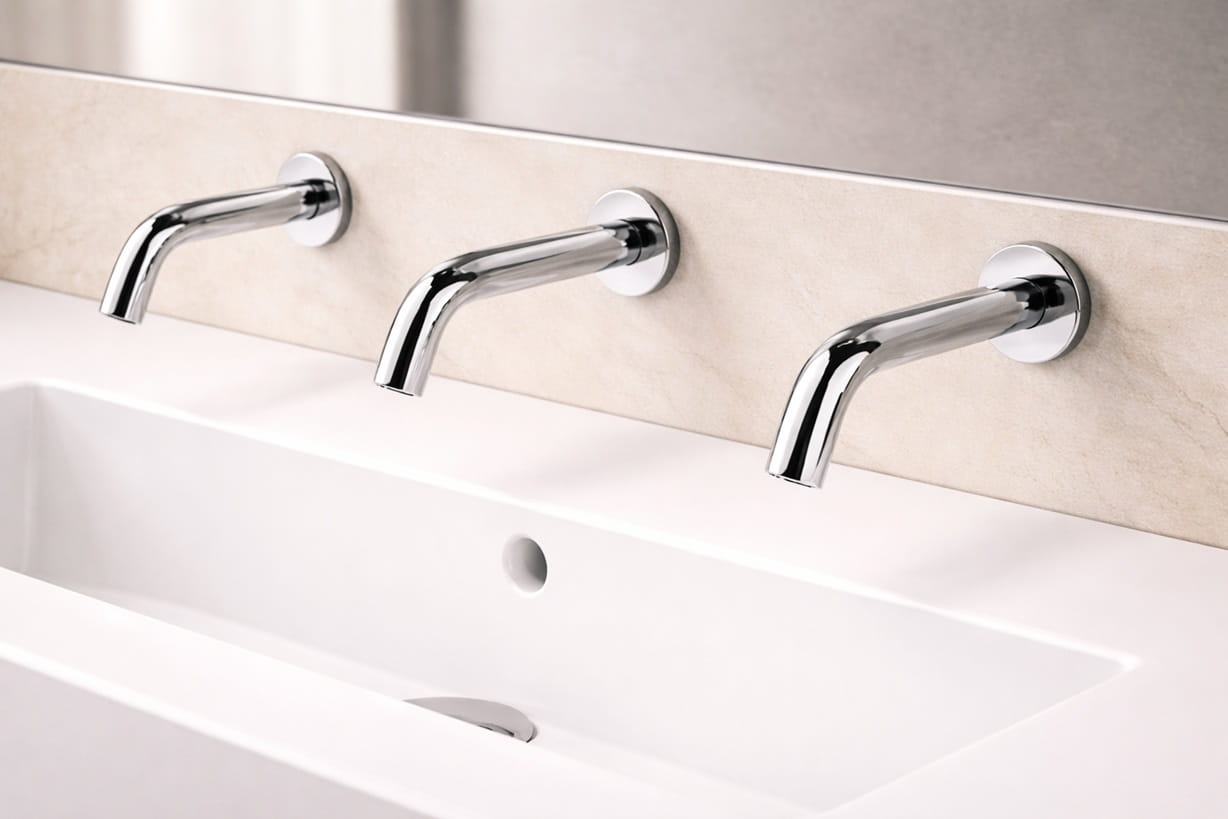
Commercial touchless faucet and soap dispenser system for transportation hub restroom
Specification sheets and technical submittals for commercial sensor restroom fixtures
Section 8

Documentation package for a defensible evaluation file

To keep the selection process organized and easier to defend, evaluation files should include both technical vendor documents and clear internal scoring records.

Vendor documents by model

  • Cut sheets and option schedules
  • Installation instructions and rough-in diagrams
  • O&M manuals and troubleshooting guides
  • Recommended spare parts list
  • Warranty statement and exclusions
  • Compliance and certification statements

Internal evaluation record

  • Completed scoring sheets from committee members
  • Consensus notes for close scoring decisions
  • Price tabulation where required
  • Reference checks or past-performance notes
  • Pilot or field-test results for major deployments
Read More

A structured documentation file does more than support the final award decision. It also creates a reusable benchmark for future restroom upgrades, renovations, and owner-standard updates.

Scroll to Top